How to Catch Swordfish: The Ultimate Deep-Dropping Guide
Swordfish Fishing: The Ultimate Masterclass
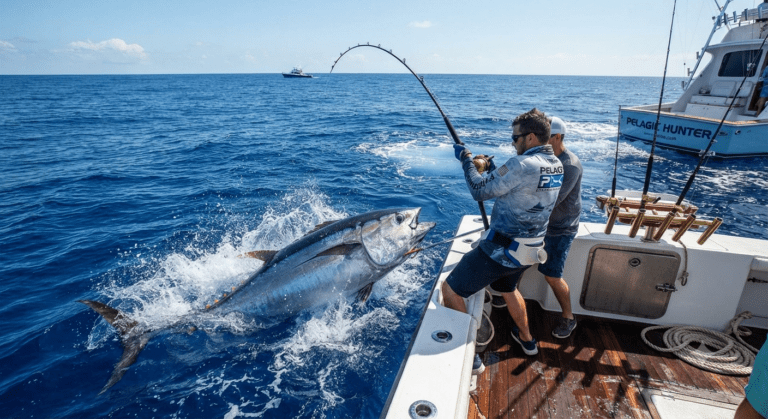
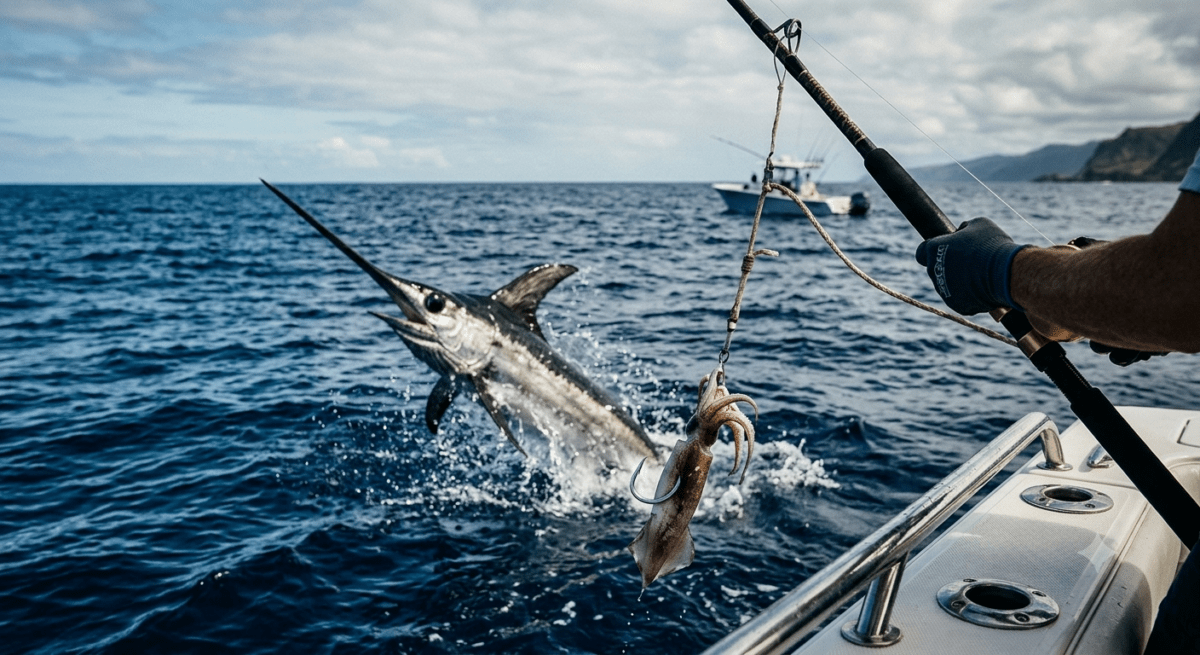
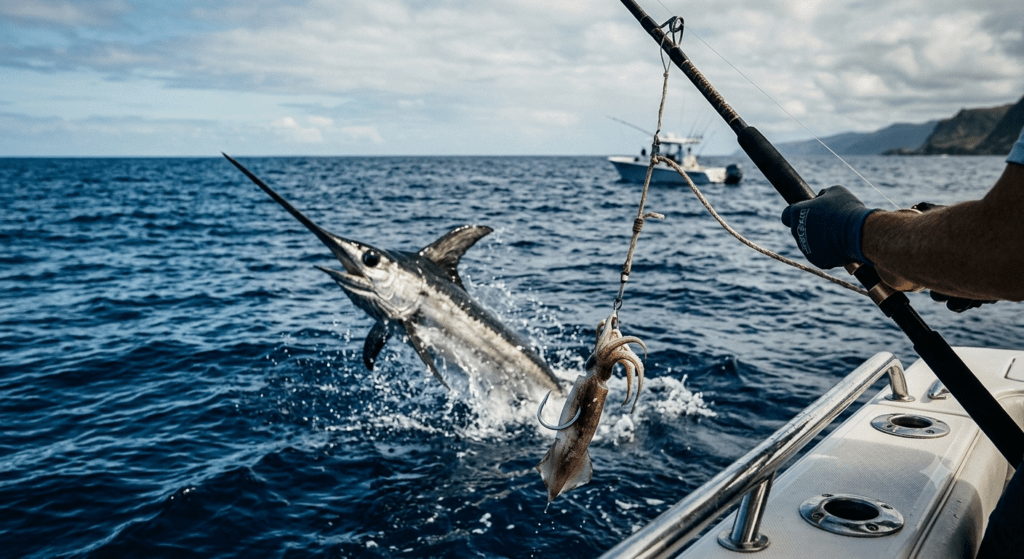
Swordfish (Xiphias gladius) represent the absolute pinnacle of offshore saltwater sportfishing. Known globally as the “Gladiator of the Sea,” this apex predator is legendary for its incredible strength, violent bill-slapping defenses, and its ability to survive in the brutal, freezing depths of the open ocean.
To successfully target swordfish, you cannot rely on luck. You need specialized knowledge of their biology, heavy-duty tactical gear, and a precise understanding of how their hunting habits change from day to night. This comprehensive guide covers everything required to hook and land a true ocean gladiator.
The Biology and Behavior of a Deep-Sea Killer
To catch a swordfish consistently
, an angler must understand the extreme environment these fish inhabit. Swordfish are highly evolved biological machines designed to hunt where other predators cannot survive.
Vertical Migration Patterns
The defining characteristic of swordfish behavior is diurnal vertical migration. Their entire lives revolve around the movement of their primary prey: squid and deep-sea teleost fish.
Daytime Depths: During daylight hours, swordfish retreat to the dark zones of the ocean, holding at depths between 1,000 and 1,800 feet (300 to 550 meters).
Nighttime Shallows: As the sun sets, the marine life they feed on moves up toward the surface. The swordfish follow them up, rising into the upper water column—usually between 50 and 300 feet from the surface—to feed under the cover of darkness.
Specialized Adaptations
The Heating System: Swordfish possess a unique organ next to their eyes that warms their brain and eyes. This allows them to see sharply and react instantly in pitch-black waters that hover just above freezing temperatures.
The Weapon: The flat, sharp bill (the “sword”) is not used to spear prey, but rather to slash wildly through schools of fish or squid, stunning or crippling them before the swordfish turns around to swallow them.
Daytime Deep-Dropping: Tactics and Gear
Daytime deep-dropping is a highly technical discipline. You are presenting a bait to a fish that is over a quarter-mile beneath your boat, fighting massive underwater currents.
The Essential Tackle Setup
You cannot use standard offshore gear for daytime deep-dropping. The physical stress of the depth and heavy weights requires industrial-grade equipment.
The Reel: High-capacity electric reels (such as the Shimano Beastmaster 9000, Daiwa Marine Power, or Lindgren-Pitman SV-1200) are the industry standard. They allow you to check baits quickly without manually cranking a quarter-mile of line.
The Rod: A specialized deep-drop rod with a heavy-duty bent butt and swivel-tip guides to handle the intense downward pressure of heavy leads.
The Mainline: 80 to 100 lb braided line is mandatory. Braided line has a thin diameter that cuts through ocean currents and features zero stretch, which is vital for feeling a bite at 1,500 feet.
Rigging for the Deep
The presentation of your bait at the bottom of the ocean requires a precise breakdown system to prevent tangles during the descent.
The Wind-On Leader: A 100 to 150-foot section of 200–250 lb monofilament or fluorocarbon leader is attached to the braid.
Attracting Lights: Because it is pitch black at 1,500 feet, you must attach heavy-duty, water-activated LED strobe lights or diamond lights to the leader about 30 feet above the bait.
The Break-Away Weight: To get your bait down through gulf stream currents, you need 8 to 14 pounds of lead. This weight is attached via a sacrificial longline clip or a light breakaway monofilament loop. When a swordfish hits or during the fight, the heavy weight is designed to break off, allowing you to fight just the fish.
Nighttime Drifting: Tactics and Gear
When the sun goes down, the heavy electric reels are put away, and swordfishing turns into an exciting, visual game played out in the upper layers of the ocean.
The Night Spread Setup
When drifting at night, you want to cover as much of the water column as possible by hanging multiple baits at different depths. A standard night spread consists of 3 to 4 rods:
The Deep Rod: Set at roughly 300 feet down.
The Mid Rod: Set at roughly 150 to 200 feet down.
The Shallow Rod: Set at 50 to 100 feet down.
The Surface Tip: A bait deployed far behind the boat with no weight, floating naturally near the surface.
Visibility and Floats
To keep your lines from tangling while the boat drifts with the wind, you use colored glow-sticks or battery-powered LED lights attached directly to your monofilament fishing lines. Floating buoys or balloons are clipped to the line to hold the baits at their designated depths. As you drift, you watch the glowing balloons behind the boat—when a balloon vanishes underwater or flies across the surface, you are hooked up.
The Ultimate Swordfish Bait Selection
A swordfish will rarely pass up a perfectly rigged, natural bait. The presentation must look clean and swim straight without spinning, which twists and ruins your leader.
| Bait Type | Best Use Case | Why It Works |
| Large Squid (10-14 inches) | Daytime & Nighttime | The natural staple food of the swordfish. Must be stitched carefully to the hook to withstand high trolling or dropping speeds. |
| Mahi or Bonito Belly Strips | Daytime Deep-Drop | Cut into a sleek, streamlined “V” shape. These tough belly skins are incredibly durable and survive smaller nuisance fish attacks at the bottom. |
| Eel Baits | Nighttime Drifting | Rigged to swim completely straight. The undulating movement of an eel creates massive vibrations in the water column at night. |
How to Handle the Fight and the Endgame
The battle with a swordfish is a test of endurance that can last anywhere from 45 minutes to several hours.
Recognizing the Bite
At 1,500 feet deep, a bite from a 300-pound swordfish does not look like a massive strike. Because of the water pressure and line scope, it often looks like a tiny, rhythmic bounce or a sudden loss of tension (the fish taking the weight and swimming upward). You must reel aggressively immediately to clear the slack and drive the hook home.
The Battle Tactics
The Head Shakes: Swordfish are famous for violent, steady head-shaking. This is them trying to use their bill to saw through your heavy fluorocarbon leader. Keeping steady, heavy pressure is the only way to counteract this.
The Surface Charge: A hooked swordfish will often swim straight up from the depths at terrifying speed. Be prepared to reel as fast as possible to keep the line tight before the fish breaches the surface and jumps.
Safe Boat Landing
Bringing a green, thrashing swordfish next to the boat hull is highly dangerous. Their bills can easily pierce fiberglass or seriously injure a crew member.
Clear the Deck: Ensure all other lines, floats, and weights are cleared out of the way.
The Harpoon/Gaff: For keeper fish, a professional heavy-duty harpoon or multiple large gaffs must be ready. Secure the fish firmly before attempting to pull it over the gunwale.
Secure the Weapon: Immediately place the fish into a designated fish box and secure the bill to prevent it from thrashing on the open deck.
Advanced Rigging: The “Broadbill” Harpoon & Longline Clip System
When you want to target tournament-sized swordfish, your rigging setup needs to be flawless. Standard knots will fail under the immense pressure of a 500+ lb fish pulling against heavy drag at 1,500 feet.
Constructing the Perfect Daytime Stitch Rig
To make a large 12-inch squid survive the brutal descent without spinning or ripping apart, you must stitch it manually using waxed rigging floss.
The Hook Placement: Use a heavy-duty 11/0 to 12/0 mustad hook (either a J-hook or a circle hook depending on local tournament regulations). Insert the hook through the mantle of the squid so the point exits cleanly between the eyes.
Waxed Floss Stitching: Run a rigging needle with waxed floss through the top of the squid’s mantle, wrapping it securely around the hook shank. Stitch the tail tightly so that water pressure forces the squid to ride perfectly straight down into the current.
Skirt Protection: Slide a heavy-duty silicone or rubber glow-skirt over the head of the squid. This protects the bait from being torn apart by smaller deep-sea bait-stealers and adds extra bioluminescent color.
Boat Maneuvering and Current Drift Tactics
Dropping a line straight down sounds simple, but in reality, ocean currents (like the Gulf Stream) move your boat in one direction while subsurface currents might push your line in another. If you don’t manage your boat position, your line will scope out, and you will lose all contact with your bait.
Driving into the Current (The “Heavy Drop”)
To keep your line perfectly vertical during a daytime drop:
Positioning: Drive your boat roughly 100 to 200 yards ahead of the deep-sea drop zone, facing directly into the current.
The Drop: Throw the heavy 10-12 lb lead overboard while keeping the boat in slow forward gear. This ensures the bait trails safely behind the weight and prevents the hook from tangling into your mainline braid.
The Settle: Once the weight hits the bottom, immediately put the boat in neutral or reverse to back down with the current. You want your mainline pointing straight up and down into the water.
Worldwide Swordfish Hotspots and Seasonal Migrations
Swordfish can be found globally, but they thrive in specific underwater topography where deep canyons, drop-offs, and sea-mounts force baitfish upward.
Top Global Destinations
The Florida Straits (USA): The undisputed capital for both daytime deep-dropping and nighttime drifting. The intense Gulf Stream current provides a constant highway of food.
The Canyons of the Northeast (USA): From New Jersey up to Nova Scotia. Massive swordfish move here during late summer and autumn to gorge on squid before the winter chill.
The Mediterranean Sea: Excellent grounds for smaller, faster swordfish, usually targeted with drifting longlines and specialized sportfishing gear during warmer months.
The Pacific Coast (Cabo San Lucas & Chile): Known for producing absolute monsters. The cold Humboldt current brings massive squid populations, resulting in world-record-class broadbills.
Swordfish Fishing Checklist for Anglers
Before leaving the dock for a serious swordfish run, make sure your boat is equipped with this mandatory gear:
1. High-Output Strobe Lights: At least 6-8 water-activated LED lights in different colors (Green, Blue, and White are best).
2. Sacrificial Bricks or Leads: Multiple 8 to 14 lb weights. Expect to lose at least 3-4 weights per trip due to the breakaway system.
3. Rigging Floss & Needles: For stitching squid and securing wind-on leaders.
4. Heavy Duty Gaffs & Harpoon: A minimum of two 8-foot gaffs and a heavy flying harpoon with a line and buoy setup for large fish.
5. Tail Ropes: To secure the fish safely behind the boat or inside the fish box once landed.
Advanced Swordfish Processing and Culinary Masterclass
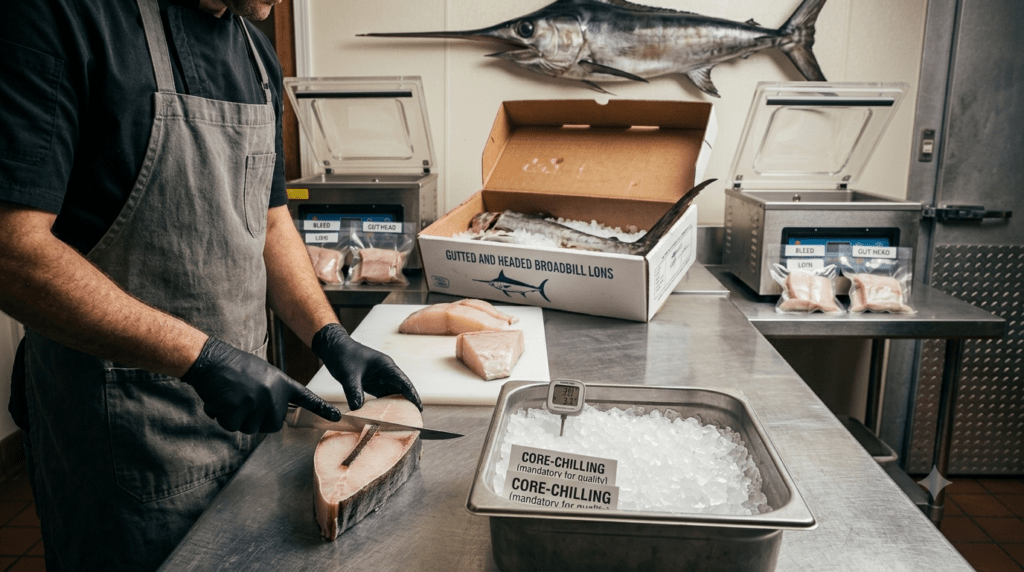
Once the battle is won and the fish is safely secured in your boat’s insulated fish box, the clock starts ticking. Proper handling of swordfish meat on the water dictates the final quality of the steaks on the dinner table. Because swordfish possess a high core body temperature from fighting, immediate core-chilling is mandatory to prevent “milky” or soft flesh.
On-Board Bleeding and Gutting
Bleeding: As soon as the fish is deceased, make a deep cut right behind the pectoral fin into the lateral line, or cut the gill arches. Let the fish bleed out completely in the water or over a splash guard to remove blood from the vascular system, ensuring clean, white-to-pink meat.
Gutting and Heading: Remove the bill, head, and entrails. Use a clean brush to scrub the dark kidney line along the spine inside the cavity. Wash the inside thoroughly with cold saltwater.
Icing: Pack the completely empty stomach cavity full of crushed ice. Submerge the entire carcass in a saltwater ice slurry (slush ice) inside your cooler.
____________________________________________
The Ultimate Culinary Preparation: Pan-Seared Broadbill Steaks
Swordfish has a firm, dense texture often compared to beef ribeye. It holds up exceptionally well to high-heat grilling, searing, and heavy marinades that would destroy flakier whitefish.
Prep Time: 15 mins | Cook Time: 8 mins
Ingredients:
4 fresh swordfish steaks (approx. 1 inch thick)
3 tablespoons extra virgin olive oil
4 cloves of garlic, smashed
1 tablespoon fresh rosemary, finely chopped
1 organic lemon (zest and juice)
Sea salt and coarsely cracked black pepper to taste
Step-by-Step Cooking Instructions:
Dry the Meat: Remove the swordfish steaks from the refrigerator and pat them completely dry with paper towels. Moisture is the enemy of a good sear. Let them sit for 10 minutes to reach room temperature.
Season Seasonally: Coat both sides of the steaks generously with high-quality olive oil, sea salt, and cracked black pepper.
Heat the Cast Iron: Place a heavy cast-iron skillet over high heat until it begins to smoke slightly.
The Sear: Lay the steaks in the hot skillet. Cook undisturbed for 3 to 4 minutes until a golden-brown, crispy crust forms. Do not move them around.
Aromatize: Flip the steaks over. Immediately drop the smashed garlic, chopped rosemary, and a touch of extra butter into the pan. Tilt the pan and spoon the melted, aromatic butter over the top of the steaks for the remaining 3 minutes of cooking.
The Finish: Remove from heat just before the center is completely solid (internal temp around 130°F / 54°C). Squeeze fresh lemon juice over the top and let the steaks rest for 5 minutes before serving.
____________________________________________________________________________
Complete Swordfish Troubleshooting & Pro-Tips
Even with the best gear, swordfishing presents unique challenges that confuse beginner offshore anglers. Use these tactical adjustments to solve common issues on the water:
Issue: Your line is scoping out at a 45-degree angle during a daytime deep drop.
Solution: Your lead weight is too light for the current, or your boat is drifting too fast. Increase your lead by 2 to 4 pounds, or use your engines in reverse to back down directly into the current to bring your line back to a perfectly vertical 90-degree position.
Issue: You keep getting “mystery bites” where the rod tip twitches but no fish hooks up.
Solution: Deep-sea sharks, squid, or smaller fish are attacking your bait. Switch from a soft squid bait to a tough, durable Bonito belly strip cut into a sleek “V” shape. This prevents smaller pests from ripping your bait off the hook before a large broadbill arrives.
Issue: Your braided line twists up and tangles during the drop.
Solution: Your bait is spinning like a propeller on the way down. You must use high-quality ball-bearing swivels rated for 300+ lbs on both ends of your wind-on leader, and make sure your squid bait is stitched completely straight down the centerline.
Global Swordfish Conservation and Regulations
As a responsible digital content creator and angler, always emphasize sustainable fishing practices to your global audience.
Size Limits: Always check local maritime authority regulations (such as NOAA in the US or ICCAT in Europe) for minimum lower-jaw-fork-length (LJFL) requirements before keeping a fish.
Circle Hooks: Whenever possible, transition to heavy-duty circle hooks for nighttime drifting. Circle hooks drastically reduce jaw-hooking mortalities and allow for a clean, safe release if the swordfish is undersized.
Deep-Drop Electronic Diagnostics and Power Management
When you commit to daytime deep-dropping, your boat’s electrical system becomes just as critical as your fishing tackle. Powering heavy-duty electric reels like a Lindgren-Pitman SV-1200 or a Shimano Beastmaster 9000 requires continuous, clean voltage. A drop in power can cause your reel to reset, lose its depth-tracking calibration, or stall completely while fighting a heavy broadbill deep in the water column.
Marine Battery Infrastructure
Running high-amperage electric reels directly off your standard engine cranking batteries is a recipe for disaster.
The Dedicated House Bank: You should always install a dedicated deep-cycle Marine AGM or Lithium LiFePO4 battery bank solely for your electronics and fishing reels.
Voltage Stability: Electric reels are highly sensitive to voltage drops. If your system drops below 11.8V under a heavy load, the reel’s internal computer may trigger an error code. Keep a digital voltage monitor visible on your dash or gunwale.
Gunwale Plug Wiring Specifications
Do not rely on cheap alligator clips connected directly to a loose battery on the deck. This creates a massive tripping hazard and invites salt-spray corrosion.
Hubbell Marine Plugs: Install heavy-duty, weatherproof 30A or 50A Hubbell sockets directly into the gunwale under the rod holders.
Wire Gauge: Run a minimum of 8-gauge marine-grade tinned copper wire from the battery bank to the plug. If the wire run from your console to the stern is longer than 15 feet, upgrade to 6-gauge wire to eliminate voltage drop over distance.
Circuit Protection: Every single electric reel outlet must be protected by a dedicated 30A to 40A manual-reset waterproof circuit breaker positioned close to the power source.
Advanced Rigging: The “Swordfish Harpoon” Assembly
When a massive swordfish finally surfaces after a grueling multi-hour battle, using a standard hand gaff can be highly dangerous. The skin of a swordfish is exceptionally tough, and their powerful tails can easily wrench a standard gaff out of an angler’s hands. For fish weighing over 200 pounds, a heavy-duty flying harpoon system is the safest option.
Anatomy of a Professional Swordfish Harpoon
A professional harpoon setup consists of three main components: the handle, the dart, and the basket line.
[Aluminum/Stainless Handle] —> [Tapered Penetrator Shaft] —> [Brass/Stainless Dart] —> [Mainline & Buoy]
1.The Handle: A heavy, 8 to 10-foot anodized aluminum or weighted stainless steel pole. The weight is necessary to drive the dart through the thick muscle and skin of the fish.
2.The Dart (Lily Iron): A triangular, razor-sharp brass or stainless steel dart. The dart is loosely fitted onto a tapered rod at the end of the handle. It is attached directly to a coated stainless steel cable or heavy Amsteel rope leader.
Executing the Perfect Harpoon Strike The Target Area: Aim for the “meat” of the fish, specifically just behind the dorsal fin along the upper third of the body. Avoid hitting the head, bill, or the thick spine directly.
3.The Line and Buoy System: The dart leader connects to 100-150 feet of high-tensile 3/8-inch braided nylon rope stored neatly in a basket. The end of this rope is clipped to a highly visible, heavy-duty inflatable marine buoy (like a Polyform A-1 or A-2).
The Driving Force: You must throw or thrust the harpoon downward with maximum downward force to ensure complete penetration.
The Release: Once the dart pierces completely through the fish, the handle is pulled back cleanly by the deckhand. The dart turns sideways inside or behind the fish’s skin, toggling itself into place.
Throwing the Buoy: If the fish decides to make an explosive final run down to the deep, you immediately throw the rope and the attached buoy overboard. The fish fights the buoyancy of the float on the surface, wearing itself out safely away from the boat hull until it can be retrieved.
The Complete Swordfish Equipment Investment Breakdown
To help your global audience understand the financial commitment needed to enter the offshore swordfishing game, here is a detailed breakdown of a professional-tier setup compared to a budget-conscious entry setup.
| Gear Category | Professional Tier Setup | Budget/Entry Tier Setup |
| Reel | Lindgren-Pitman SV-1200 ($4,500 – $5,500) | Shimano Beastmaster 9000 ($1,500 – $1,800) |
| Rod | Custom Carbon Fiber Bent Butt ($700 – $1,000) | Commercial Series Fiberglass Deep Drop ($250 – $400) |
| Mainline | 1500yds of 100lb Hollow-Core Braid ($250) | 1200yds of 80lb Solid-Core Braid ($120) |
| Terminal Tackle | Custom Wind-On Leaders & Diamond Lights ($200) | DIY Monofilament Leaders & Standard Glow Sticks ($60) |
| Landing Gear | Custom Weighted Harpoon Kit ($450 – $600) | Dual 8ft Heavy Duty Outbarbed Gaffs ($180) |
| Total Investment | Approx. $6,100 – $7,550 | Approx. $2,310 – $2,560 |
Summary FAQ for Quick Search Optimization
To close out this masterclass, here are the direct, high-impact answers to the most common questions searched on Google regarding broadbill swordfish:
What is the best time of year to catch swordfish?
While swordfish can be caught year-round in tropical waters, autumn (September through November) is widely considered the peak season globally. During this time, fish feed aggressively to prepare for winter migrations, leading to higher catch rates and heavier body weights.
How deep do you fish for swordfish during the day?
During the daytime, you should focus your efforts between 1,400 and 1,800 feet deep. Look for underwater structural features like canyon edges, deep ledges, and drop-offs where the ocean depth transitions sharply.
Can you catch a swordfish without an electric reel?
Yes. Nighttime drifting allows you to hook swordfish in the shallow upper layers of the water column (50-300 feet), where heavy-duty conventional stand-up trolling reels (50W or 80W classes) can easily handle the fish manually without the aid of electric power.
Advanced Hydrographic Reading: Locating Productive Swordfish Grounds
To become a top-tier swordfish angler, you cannot just drop your bait anywhere in the open ocean. You must learn how to read hydrographic data, bathymetric charts, and satellite imagery before you even leave the dock. Swordfish are highly dependent on specific underwater topography and temperature boundaries to hunt efficiently.
Reading Bathymetric Charts (Underwater Topography)
When looking at your GPS chartplotter or marine mapping software, you are searching for areas where the ocean floor rises or drops drastically.
The Canyon Ledges: Look for tightly packed contour lines on your charts. When contour lines are close together, it indicates a steep underwater cliff or canyon wall. These walls force deep-sea currents upward, pushing nutrients and squid schools right into the path of waiting swordfish.
Seamounts and Pinnacles: Underwater mountains that rise up from 3,000 feet deep to around 1,200 feet are absolute magnets for broadbills. The current hitting the side of a seamount creates an eddy effect, trapping baitfish and squid on the upcurrent side of the structure. Always position your drift to pass directly over or along the edges of these pinnacles.
Analyzing Sea Surface Temperature (SST) and Altimetry
Even though daytime swordfishing happens thousands of feet down, surface conditions tell you exactly where the bait is moving.
Thermal Fronts: Use satellite SST charts to find sharp temperature breaks where warm water meets cooler water masses (e.g., a transition from 78°F to 74°F). These fronts act as invisible walls in the open ocean, concentrating pelagic life along the boundary line.
Sea Surface Altimetry (Hill and Valley Eddies): Satellite altimetry measures changes in the ocean surface height caused by spinning currents. You want to look for “Upwelling Eddies” (cyclonic eddies), which show up as depressions or lower surface heights on your charts. These areas indicate that nutrient-rich, cold deep water is being drawn up toward the surface, kicking off a massive marine food chain.
Weather Windows and Barometric Pressure Tactics
Swordfishing requires heavy boats and calm conditions to be executed safely and effectively. Trying to manage an 11-pound lead weight in 6-foot seas is not only miserable, but it also makes detecting the subtle, soft bite of a daytime swordfish nearly impossible.
The Ideal Weather Window
Wind Conditions: Look for days with a steady wind of less than 10-12 knots. Ideally, you want the wind moving in the same direction as the surface current, which prevents the sea from building into sharp, choppy waves (“wind-against-current”).
The Slack Tide Factor: While current is necessary to keep your bait moving and lifelike, an overly aggressive current makes it incredibly difficult to keep your bait on the bottom. Pay close attention to tidal movements; the period right around a slack tide or a slow tidal shift often provides the perfect window where your bait hangs completely vertical under the boat.
Barometric Pressure Shifts
Like most apex predators, swordfish are highly sensitive to rapid fluctuations in barometric pressure.
Falling Barometer (The Pre-Front Frenzy): Just before a major weather system or storm front arrives, the barometric pressure drops sharply. This pressure shift triggers an intense feeding response. Swordfish will feed aggressively during this window, making them much more likely to attack your stitched squid or belly cuts.
High-Pressure Bluebird Days: After a front passes and the barometer stabilizes at a high level, the bite often slows down. During these high-pressure periods, you need to rely on ultra-clean bait presentations, thinner fluorocarbon leaders, and maximum bioluminescent lighting systems to entice a strike.
Complete Swordfish Rigging Glossary
To make sure you understand all the technical industry jargon used by tournament crews worldwide, here is a quick-reference glossary of essential swordfishing terminology:
Wind-On Leader: A long leader (usually 100 to 150 feet of heavy monofilament) that is connected to the braided mainline via a loop-to-loop connection. It is designed to be wound completely through the rod guides and onto the reel spool, allowing a deckhand to bring the fish within gaffing range safely without having to hand-line the fish at the side of the boat.
Braid-to-Mono Connection: A seamless, knotless connection method where the braided mainline is served or spliced into hollow-core monofilament using wax floss and super glue, ensuring 100% line strength with zero bulk.
Breakaway Weight: A heavy lead weight or concrete brick tied to the leader using a low-tensile monofilament loop (usually 15-20 lb test) or a specialized release clip. The weight holds the bait in place at the bottom but instantly snaps off the line when a swordfish strikes, freeing the angler to fight the fish cleanly.
Diamond Light: A small, ultra-bright, water-activated LED strobe light shaped like a diamond. It is clipped onto the wind-on leader to mimic deep-sea bioluminescence and attract swordfish from long distances in the pitch-black deep zones.
Stitch Rig: A professional bait-rigging technique where waxed dental or rigging floss is threaded through a dead squid’s mantle and tied directly to the hook shank, preventing the bait from washing out, spinning, or tearing apart in high currents.
Advanced Hook Mechanics: Circle Hooks vs. J-Hooks
Choosing the right hook pattern changes your hook-up ratio and determines how you handle the fish at the boat deck. In modern offshore swordfishing, the debate between traditional J-hooks and specialized inline circle hooks comes down to your fishing style and local tournament regulations.
Traditional J-Hooks (e.g., Mustad 7691S)
J-hooks are the historical standard for daytime deep-dropping.
The Mechanics: A J-hook relies on a direct, aggressive hook set. When you feel the subtle twitch of a swordfish at 1,500 feet, you immediately wind in the slack and use the power of the electric reel or a sharp rod sweep to drive the point directly into whatever tissue it is touching.
The Placement: J-hooks typically lodge in the throat, stomach, or deep inside the jaw. While this offers an incredibly secure hold during a long battle, it makes releasing an undersized fish safely almost impossible due to severe internal bleeding.
The Rigging Benefit: J-hooks sit perfectly flat inside a stitched squid mantle, making it much easier to create a completely streamlined, hydrodynamic bait that doesn’t spin during a high-speed drop.
Inline Circle Hooks (e.g., Owner Mutu Hybrid)
Circle hooks are increasingly mandated by international conservation bodies and tournament directors to reduce billfish mortality.
The Mechanics: You never hook-set a circle hook. When a swordfish attacks the bait, you let the fish turn and swim away. As the line tightens, the hook slides out of the throat and naturally rotates, embedding itself perfectly in the corner of the jaw.
The Placement: Nearly 90% of circle hook hook-ups occur cleanly in the corner of the mouth. This minimizes internal damage, keeps the leader away from the swordfish’s abrasive bill, and allows for a clean, live release if the fish doesn’t meet your target size.
The Rigging Adjustment: Because the hook point curves inward toward the shank, rigging a squid on a circle hook requires bridging the bait with dental floss or using a rigging small loop (bridle) so the hook gap remains completely exposed to catch the jaw hinge.
Nighttime Moon Phases and Oceanic Illumination
The lunar cycle plays a massive role in nighttime swordfish drifting tactics. Because these fish rely heavily on their advanced eyesight to hunt in the dark upper water column, changes in ambient moonlight directly alter their feeding depth and aggression levels.
[Full Moon: Fish Scattered / Deeper] <—> [New Moon: Fish Concentrated / Closer to Surface]
The New Moon Phase (Pitch Black Nights)
During a new moon or heavily overcast nights, the surface of the ocean is completely dark.
Depth Adjustment
Swordfish will ascend much higher in the water column, often feeding anywhere from 50 to 150 feet down. Because there is no ambient light, they rely entirely on the bioluminescence of their prey.
Tackle Strategy: This is when your battery-operated LED lights and heavy-duty green glow sticks are most effective. The stark contrast of a glowing bait in pitch-black water makes it highly visible from long distances. Concentrate your drift spread closer to the surface.
The Full Moon Phase (Bright Nights)
When the moon is bright and high, light penetrates significantly deeper into the clear blue offshore waters.
Depth Adjustment: Swordfish are much more cautious on bright nights and will hold deeper, typically staying between 200 and 400 feet down where the moonlight begins to fade.
Tackle Strategy: Drop your drift spread deeper into the water column. Because the natural visibility is higher, swordfish can inspect baits more closely. Drop your leader size down to a stealthier, ultra-clear 150 lb fluorocarbon instead of heavy 250 lb monofilament, and reduce the number of flashing strobe lights to avoid spooking wary fish.
Emergency Action Protocol: Dealing with Shark Attacks
One of the most frustrating aspects of deep-drop fishing is the “tax man”—deep-sea sharks (such as Mako, Blue, and Silky sharks) that patrol the same structures as broadbill swordfish. A long, exhausting battle with a swordfish creates massive low-frequency vibrations in the water, acting as a dinner bell for nearby sharks.
Identifying a Shark Attack During the Fight
Sudden Weight Change: If your rod tip is steadily pulsing under the weight of a heavy swordfish and suddenly goes completely slack before loading up with dead, heavy weight, a shark has likely severed the fish.
Erratic, Fast Runs: If the reel’s drag suddenly begins screaming at high speed in short, erratic bursts, it often means a shark is actively chasing your hooked swordfish near the surface.
Defensive Countermeasures
Increase the Drag: The moment you suspect sharks are in the area, increase your reel’s drag pressure to its maximum safe limit. You must force the swordfish to the surface as fast as possible, even if it risks pulling the hook. The longer the fish stays deep, the more time sharks have to locate it.
Keep the Boat Moving: If a shark is circling directly under the boat hull during the endgame, keep the boat’s engines in gear. The noise and vibration of the spinning propellers often deter sharks from committing to a final strike right at the swim platform.
Immediate Gaffing: Have your crew ready with multiple gaffs or the harpoon the absolute second the fish comes into view. Winch the fish over the gunwale without hesitation to secure your catch before it can be mutilated.
Marine Electronics Deep Dive: Sonar and CHIRP Frequencies
You cannot catch a deep-water swordfish if you are dropping your bait into a barren wasteland. Standard fishfinders are useless at depths exceeding 1,000 feet. To actively mark swordfish, massive bait balls, and the Deep Scattering Layer (DSL), you need commercial-grade marine electronics.
Transducer Power and Placement
To push an acoustic sonar ping 1,500 feet down and receive a readable return bounce, raw wattage is mandatory.
The 1kW Minimum: A 1,000-watt (1kW) transducer is the absolute bare minimum for daytime swordfishing.
The 2kW to 3kW Standard: Serious offshore vessels upgrade to 2kW or 3kW transducers (such as the Airmar R109 or R599). These transducers are physically massive and are usually installed “in-hull” or flush-mounted through the fiberglass to prevent turbulent water from distorting the sonar picture.
Tuning Your CHIRP Frequencies
Modern CHIRP (Compressed High-Intensity Radiated Pulse) sonar sends a continuous sweep of frequencies into the water rather than a single ping.
Low-Frequency CHIRP (30-60 kHz): Low frequencies have longer wavelengths, allowing them to penetrate deep into the water column. You must lock your sonar into the low-frequency band to read the bottom at 1,500 feet.
High-Frequency CHIRP (130-210 kHz): High frequencies give incredible detail but cannot penetrate deep water. Use high-frequency CHIRP strictly for nighttime drifting when the swordfish and bait move up into the top 300 feet of the water column.
Marking the Deep Scattering Layer (DSL)
The DSL is a massive, dense layer of marine organisms, squid, and lanternfish that migrate vertically every day. On your sonar screen, the DSL looks like a thick, fuzzy red or blue cloud suspended in the middle of the water column. Swordfish do not hunt directly inside this dense cloud; they patrol the top and bottom edges of it to pick off stragglers. Position your baits directly on the fringes of the DSL on your sonar screen for maximum strike potential.
Terminal Tackle Science: Advanced Crimping and Chafe Protection
When a 400-pound broadbill slaps your leader with its bill or shakes its head violently under 30 pounds of reel drag, a standard fishing knot will fail. For lines exceeding 150 lbs, professional crews rely entirely on mechanical crimps (sleeves) instead of knots.
The Rules of Flawless Crimping
A bad crimp will slip under pressure or pinch the line, reducing its breaking strength by 50%.
Match the Sleeve to the Line: Never guess sleeve sizes. If you are using 250 lb fluorocarbon with a diameter of 1.40mm, you must use an aluminum sleeve sized exactly for 1.40mm to 1.50mm.
Aluminum vs. Copper: Use aluminum sleeves for monofilament and fluorocarbon leaders. Use copper sleeves strictly for stainless steel cable. Mixing these up causes galvanic corrosion and cuts the soft monofilament.
The Flare: When using a heavy-duty swaging tool to compress the crimp, leave a tiny bit of the sleeve un-crimped at both ends. This creates a “flare” that prevents the sharp metal edge of the sleeve from digging into the line when under extreme tension.
Chafe Protection
Every loop on your wind-on leader must be protected from metal-to-plastic friction.
Stainless Steel Thimbles: When attaching your leader to the eye of a massive 11/0 J-hook or a heavy-duty ball-bearing swivel, thread the line through a stainless steel thimble before crimping. This creates a solid metal-to-metal connection and completely shields the fluorocarbon line from abrasive friction during a 3-hour fight.
Chafe Tubing: For smaller connections, slipping a half-inch piece of flexible nylon chafe tubing over the line before crimping serves the same purpose without adding the heavy bulk of a metal thimble.
The Bycatch Factor: Managing Deep-Water Non-Target Species
Dropping a fresh squid to the bottom of the ocean attracts everything that lives in the dark. Dealing with deep-water bycatch is an unavoidable part of daytime swordfishing, and you must know how to handle these strange species quickly to get your bait back in the strike zone.
Common Deep-Drop Bycatch Species
Pomfret (Ray’s Bream): A highly aggressive, silver, disc-shaped fish with a blunt face. They often attack baits intended for swordfish. Fortunately, pomfret are exceptionally delicious and yield fantastic white-meat fillets. Keep them for the cooler.
Escolar (Oilfish): A dark, serpentine fish with terrifyingly sharp teeth. While they fight hard, their meat is packed with indigestible wax esters. Consuming more than a few ounces of Escolar causes severe gastrointestinal distress (keriorrhea). Release them safely at the side of the boat.
Deep-Water Rays and Skates: If your rod slowly bends over completely with zero head shakes, and it feels like you are trying to reel in a sunken submarine, you have likely hooked a massive bottom-dwelling ray. You will have to slowly winch it to the surface, cut the leader as close to the hook as possible, and let it sink back down.
Drift Management: Sea Anchors and Gyrostabilizers
Keeping your baits in the strike zone requires precise control over your boat’s drift speed. If the wind blows your boat faster than 2 knots, your nighttime drift baits will rise to the surface, and your daytime deep-drop lines will angle out too far to feel a bite.
Deploying a Sea Anchor (Drift Sock)
A sea anchor is a massive, parachute-like canvas bag deployed into the water and tied to the bow or midship cleat.
The Braking Effect: As the wind pushes the boat, the sea anchor catches water and acts as a massive underwater brake, slowing your drift speed down to a manageable 0.5 to 1 knot.
Vessel Orientation: Tying the sea anchor to the bow keeps the nose of the boat pointed into the incoming waves, creating a much more comfortable and stable platform for the crew to rig baits and fight fish.
Modern Marine Gyrostabilizers (Seakeeper)
For professional crews and high-end sportfishing yachts, the marine gyrostabilizer is the ultimate game-changer.
A Seakeeper is a computer-controlled vacuum sphere containing a massive flywheel spinning at thousands of RPMs. When installed in the hull, it completely eliminates up to 95% of boat roll.
In a choppy 4-foot sea, a boat with an active gyrostabilizer sits almost perfectly flat, allowing anglers to stand safely at the gunwale without holding on, making harpooning, gaffing, and deep-dropping infinitely safer and more efficient.
The Physical and Psychological Demands of the Fight
Hooking a broadbill swordfish is only 10% of the battle. Fighting a 300+ lb fish manually (without an electric reel) on stand-up tackle tests the absolute physical limits of human endurance.
Harness Systems for Stand-Up Angling
You cannot hold 35 lbs of reel drag with your arms for three hours. The lactic acid buildup will cause complete muscle failure.
The Kidney Harness: A padded belt that sits low on the angler’s lower back, attaching to the reel lugs via stainless steel clips. This transfers the pressure from the arms to the angler’s back and core.
The Bucket Harness (Sit-In Harness)
For extreme heavy tackle (80W or 130W reels), the bucket harness wraps under the angler’s thighs and buttocks. This allows the angler to sit back essentially in a squatting position, using the massive muscles of the legs (quads and glutes) to pull against the fish.
Managing Lactic Acid and Fatigue
When a swordfish decides to hold its ground at 500 feet deep and refuses to move, it results in a stalemate.
The “Rest” Phase: If the fish isn’t taking line, do not waste energy trying to force it. Sit deep in your harness, keep the line tight, and breathe. Drink water and let the boat’s movement and the drag pressure slowly wear the fish down.
Short Stroking: When you do gain an advantage, do not use long, sweeping rod pulls. Use “short strokes”—lifting the rod tip merely 12 inches and quickly reeling down to gain a single crank of line. This breaks the fish’s will without exhausting the angler.
The Gladiator of the Deep
The swordfish (Xiphias gladius) is the ultimate ocean predator, widely known as the “gladiator of the sea.” Instantly recognizable by its long, sword-like bill and powerful, hydrodynamic body, this apex predator offers the ultimate challenge for offshore anglers. Driven by incredible strength and speed, hooking a swordfish is the beginning of an epic, adrenaline-fueled battle that tests every fisherman’s limits.
Master the Offshore Chase
Targeting swordfish requires specialized tactics, heavy-duty tackle, and relentless patience. Whether you are deep-dropping into the abyss during the day or drifting with squid baits under the stars at night, precision is everything. Master the art of proper rigging, bait presentation, and deep-sea navigation to conquer these magnificent giants and secure your ultimate fishing trophy.
If you enjoyed this guide and found it helpful, consider buying me a coffee to support more deep-sea fishing content! [Buy Me a Coffee Button]