Tarpon Fishing: The Ultimate Guide to the Best Success in 2026.
The Prehistoric Origin and Evolution of Tarpon
Fossil Ancestry and Ancient Adaptations of Tarpon
The Atlantic tarpon (Megalops atlanticus) is often referred to by marine biologists and veteran anglers alike as a living fossil. Fossilized remains of tarpon relatives date back over 100 million years to the Cretaceous period, surviving major extinction events that wiped out the dinosaurs. These ancient fish have retained biological traits developed during prehistoric epochs, allowing them to remain virtually unchanged while adapting seamlessly to changing ocean climates and coastal ecosystems. Understanding the deep evolutionary roots of the tarpon gives anglers a newfound appreciation for their strength, durability, and survival instincts in various aquatic environments.
Tarpon Swim Bladder Mechanics and Atmospheric Breathing
One of the most distinctive anatomical adaptations of the tarpon is its modified swim bladder. Unlike most marine gamefish that rely solely on their gills for oxygen uptake, the tarpon possesses a swim bladder lined with respiratory tissue that functions much like a rudimentary lung. This unique organ allows the tarpon to rise to the surface and gulp atmospheric air when dissolved oxygen levels in coastal waters, shallow flats, or stagnant estuaries drop extremely low. When anglers witness a tarpon “rolling” at the surface, the fish is actively gulping air to oxygenate its bloodstream, giving astute fishermen a visual indicator of where tarpon are holding.
Coastal Migration Patterns of Wild Tarpon
Tarpon are highly migratory predators that follow seasonal water temperature shifts, ocean currents, and baitfish movements across thousands of miles. During early spring and summer, congregate in massive schools along the coastal beaches, passes, and inlets of Florida, the Gulf of Mexico, and the Caribbean. As water temperatures rise above 75°F (24°C), these fish push into shallow bays and estuaries before moving offshore into deeper oceanic waters to spawn. Tracking these annual tarpon migrations requires paying close attention to moon phases, water temperature thresholds, and seasonal bait movements.
Environmental Factors Influencing Tarpon Distribution
Environmental variables such as water salinity, clarity, depth, and tidal flow play crucial roles in determining where tarpon gather. While adult tarpon favor warm, coastal ocean waters and deep channel passes during spawning season, juvenile frequently thrive in brackish creeks, mangroves, and low-salinity marshlands where larger predators cannot easily follow. Exhibit extreme tolerance for varying salinity levels, moving effortlessly between pure freshwater rivers and full-salinity ocean environments in search of food and favorable water temperatures.
Tarpon Behavior, Location Strategies, and Fight Dynamics
Locating Tarpon in Coastal Waters and Estuaries
Reading Water Currents to Spot Tarpon Pools
Finding tarpon consistently requires an acute ability to read water behavior around underwater structures, drop-offs, and tidal bottlenecks. Tarpon rely heavily on tidal currents to carry prey directly to them, often positioning themselves downstream of deep channels, bridge pilings, and point bars. By staging in deep pools located near heavy current flows, tarpon conserve energy while ambushing disoriented baitfish, crabs, and shrimp swept along by incoming or outgoing tides.
Identifying Tarpon Rolling and Feeding Signs
Visual identification is one of the most thrilling aspects of tarpon fishing. Anglers should continuously scan the surface for the characteristic breaking of water accompanied by a flash of silver scales—a behavior known as “rolling.” In addition to surface rolling, feeding tarpon often produce large surface boils, sharp tail-flashes in shallow flats, or visible wakes as they push through shallow water. Distinguishing between a non-feeding tarpon gulping air and an actively feeding tarpon crushing bait is a key skill every angler must develop.
Shallow Water Flats versus Deep Channel Tarpon Locations
Strategies for targeting tarpon differ significantly depending on whether you are fishing shallow backcountry flats or deep navigation channels. On shallow flats, tarpon are skittish, highly alert, and easily spooked by engine noise, hull slap, or heavy line splashes. Poling silently across flats requires stealth and delicate presentations. Conversely, deep channel fishing often involves anchoring or drifting near deep ledges, using heavier tackle, sinkers, and live baits suspended at specific depths where schools of tarpon gather during tide shifts.
Seasonal Shifts in Coastal Tarpon Movement
As seasons change, tarpon alter their habitat preferences and feeding schedules. Spring marks the arrival of large migrating tarpon schools migrating northward along coastline routes. Summer provides peak action on shallow flats, passes, and beaches as fish feed aggressively around spawning cycles. By autumn, begin dispersing into estuaries, rivers, and southern wintering grounds as ocean temperatures begin to drop, requiring anglers to adjust their geographic focus and tactical approach throughout the year.
Understanding the Fighting Spirit
Acrobatics and Jumping Behaviors of Hooked Tarpon
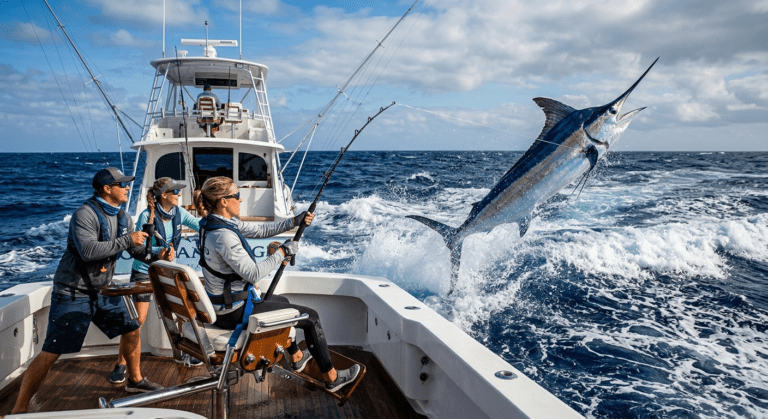
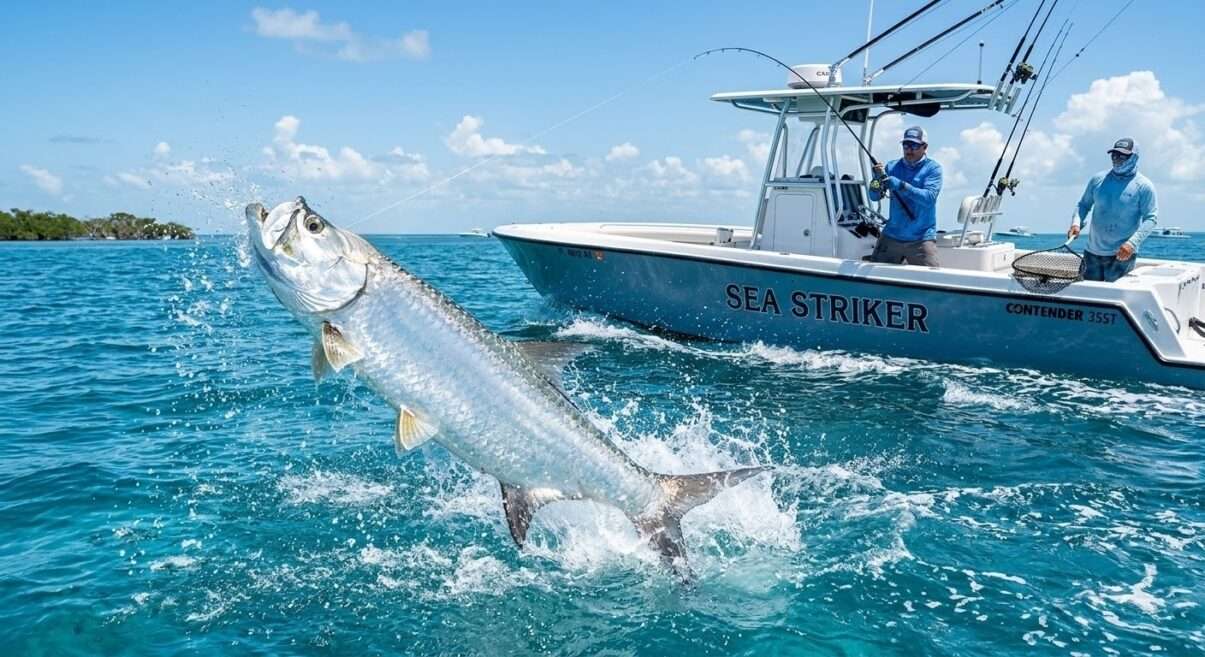
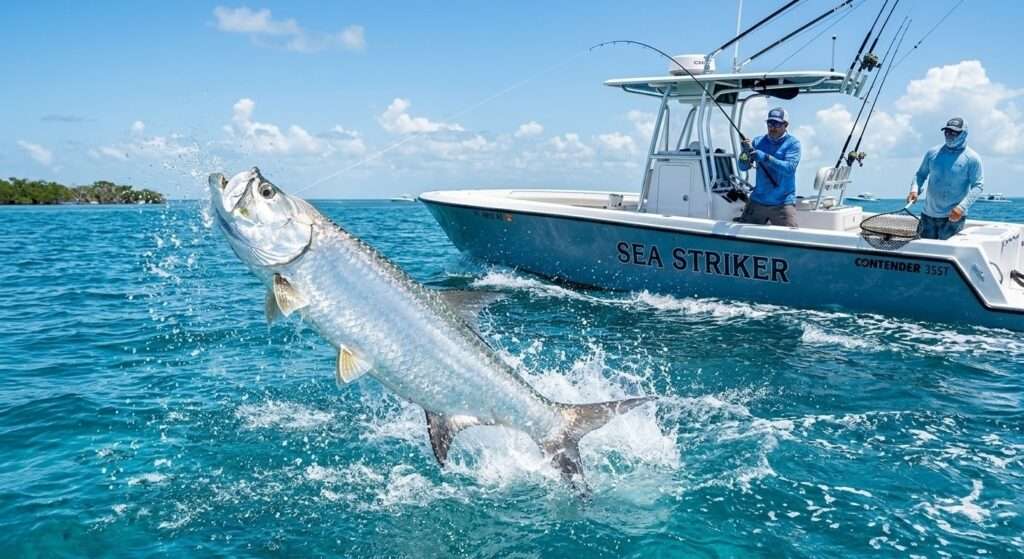
The legendary for its aerial acrobatics once a hook is set. Immediately upon feeling the resistance of the line, a tarpon will execute explosive leaps, jumping several feet clear of the water while violently shaking its head to dislodge the hook. These magnificent leaps put immense strain on fishing gear, leader material, and knot connections, making the initial moments of a tarpon battle some of the most heart-pounding experiences in sportfishing.
Managing Drag and Line Tension During a Battle
Sustaining control during a fight with a large demands proper reel drag settings and precise rod angles. Setting the drag too tight during an explosive leap risks breaking heavy monofilament or fluorocarbon leaders instantly, while setting the drag too loose allows to strip hundreds of yards of line and find underwater structures. Maintaining steady, firm pressure with low rod angles forces the tarpon to pull against the full power of the rod butt without overloading the tip.
How to Bow to Prevent Line Snaps
“Bowing to the King” is an essential technique every angler must master. The moment a launches itself into the air, the angler must rapidly extend their arms and drop the rod tip toward the fish, creating slack in the fishing line. Because a falling landing on a tight line will instantly snap heavy leaders due to its immense body weight, bowing absorbs the force of the jump and keeps the hook securely pinned in the fish’s hard, bony mouth.
Landing and Releasing Safely
Proper handling is critical for their survival after a grueling battle. Because of fight to absolute exhaustion, prolonged battles should be avoided by using appropriately heavy tackle. Large should never be pulled out of the water or dragged over gunwales, as their internal organs are not supported without water buoyancy. Anglers should keep the tarpon in the water beside the boat, use dehooking tools to free the lure, gently revive the fish by moving it forward to circulate water over its gills, and release it safely.
Recommended Baits, Lures, and Tackle for Tarpon
Live and Natural Baits for Fishing
Rigging Live Crabs
Pass crabs and blue crabs represent some of the most effective live baits for enticing large adult , especially during outgoing spring tides. To rig a live crab properly, remove the sharp side points of the shell to prevent line tangles and allow scent dispersion. Pass a heavy circle hook through the corner of the shell or through the base of a swimming leg, ensuring the hook point remains completely exposed for maximum penetration into the tarpon’s bony jaw.
Using Live Mullet and Pinfish
Free-lining or float-rigging live baitfish like striped mullet, pinfish, or threadfin herring is extremely effective along beach migration routes and channel edges. Hooking live baitfish through the upper lip or just behind the dorsal fin allows them to swim naturally in the current, triggering predatory instincts in patrolling tarpon. Using stout fluorocarbon leaders ranging from 60 to 80 pounds prevents premature line abrasion against the tarpon’s rough, raspy lips.
Dead Bait Strategies for Bottom Feeding
When they holding along deep channel bottoms or resting in calm bayous, fresh dead bait presented directly on the sea floor can be deadly. Cut mullet chunks, fresh ladyfish, or whole dead shade laid flat on the bottom allow scent trails to drift downcurrent. frequently cruise deep structures using their keen sense of smell to pick up easy meals off the substrate without wasting energy chasing fast-moving prey.
Chumming Techniques to Attract
Chumming is an underutilized method to gather and hold in a specific fishing location. By cutting fresh baitfish like pilchards or threadfins into small pieces and drifting them steadily in a tidal current, anglers can create a scent corridor that draws distant right to the boat. Once tarpon enter the chum line and begin feeding, drifting a hook-laden bait matching the chum stream usually results in an immediate bite.
Artificial Lures and Flies
Topwater Plugs and Soft Plastics
Casting artificial lures to rolling combines sight-fishing excitement with aggressive strikes. Heavy-duty walk-the-dog topwater plugs, large swimming jerkbaits, and soft plastic swimbaits mounted on heavy jigheads produce reaction strikes from hungry . Retrieving lures with steady, rhythmic twitches mimics injured baitfish, drawing explosive surface strikes from curious tarpon cruising the water column.
Selecting the Best Flies for Sight Fishing
Fly fishing represents the ultimate challenge in saltwater angling. Popular fly patterns include the Toad, Black Death, Cockroach, and various splayed-wing streamer patterns. Flies should be tied on ultra-sharp, heavy-wire saltwater hooks capable of penetrating thick jaw cartilage without bending open under high drag pressure during long fights.
Color Selection and Presentation for Lures
Selecting the correct color palette for lures and flies depends heavily on water clarity, sunlight conditions, and depth. In clear water over sand flats, natural shades such as tan, brown, olive, and translucent white work best. In murky, stained estuary waters or during night fishing sessions around illuminated bridges, high-contrast dark colors like black, purple, and chartreuse create crisp silhouettes that tarpon can easily track.
Hook Size and Leader Rigging
Terminal tackle strength is non-negotiable when targeting. Using sharp, heavy-gauge circle hooks (sizes 6/0 to 10/0 depending on bait size) significantly increases hookup rates while ensuring fish are hooked safely in the corner of the mouth. Leader construction typically involves a bite leader of 60- to 100-pound fluorocarbon tied to a class loop or main line via strong connection knots like the FG knot or Bimini Twist to withstand intense tarpon jaw friction.
Community Forum Insights and Proven Tarpon Hacks
Popular Forum Advice for Anglers
Angler Forum Debates on Ideal Tides
Online fishing forums frequently debate the best tidal stages for success. A common consensus among experienced community members highlights the first two hours of an outgoing tide as prime time. During this phase, falling water flushes crabs, shrimp, and baitfish out of shallow estuaries into deep channels where tarpon wait in staging positions to feed effortlessly.
Stealth Boating Tactics Shared in Forums
Experienced forum contributors repeatedly stress the critical importance of stealth when hunting in clear, shallow water. Running outboard motors, slamming hatch lids, running heavy depth sounders, or dropping anchors onto aluminum boat hulls generates low-frequency vibrations that instantly spook nearby schools. Utilizing electric trolling motors at low speed, push poles, or shallow-water anchors keeps your presence concealed.
Weather Changes and Feeding Windows
Community discussions emphasize how barometric pressure changes influence activity. Right before major summer thunderstorms or cold fronts arrive, falling atmospheric pressure often triggers intense, aggressive feeding frenzies among.Conversely, bright sunny days following major weather fronts can cause lock down and refuse even perfectly presented live baits.
Forum Recommended Knots for Heavy Leaders
Knots are frequently cited on forums as the single most common failure point during battles. Experienced forum members strongly advocate using the FG Knot or Non-Slip Mono Loop for joining main line braid to fluorocarbon leaders, and loop knots for attaching flies and lures. These knots retain maximum line breaking strength and allow artificial lures to maintain natural swim action under water.
Common Beginner Mistakes Discussed in Forums
Analyzing forum threads reveals that the most frequent mistake novice anglers make is setting the hook like a bass fisherman. Pulling up vertically on the rod when a tarpon strikes usually pulls the hook clean out of its mouth. Instead, forum veterans advise line-striking or strip-striking laterally while pointing the rod directly at the tarpon until firm resistance is felt, driving the hook point into tough cartilage.
How Moon Phases Influence Feeding Patterns
The lunar cycle plays a critical role in behavior, influencing their movement, feeding intensity, and overall activity levels. They rely heavily on tidal currents driven by the gravitational pull of the moon to transport their primary prey, such as crabs and baitfish. Understanding how different lunar phases affect water movement helps anglers predict the best times for a successful strike.
Full Moon Phase: High Energy and Night Feeding
During the full moon, strong tides create powerful water flow in passes and channels. Tarpon become exceptionally active, often shifting a significant portion of their feeding activity to nighttime when visibility under the moonlight is high. While day fishing can be challenging during this phase due to satiated fish, early morning and night tides offer incredible action.
New Moon Phase: Peak Daylight Aggression
The new moon produces equally strong tides but with pitch-black nights. Without ambient moonlight, conserve energy after dark and feed aggressively during daylight hours. This makes the new moon one of the most reliable phases for sight-fishing in shallow flats and coastlines.
First Quarter Phase: Steady Tidal Movements
The first quarter brings moderate tides and predictable water flow. Tarpon spread out along coastal routes and feed consistently throughout the day. Anglers can target them effectively using both live bait and artificial lures during transitional tide changes.
Third Quarter Phase: Strategic Offshore and Pass Position
As the moon wanes toward the third quarter, tidal currents slow down. Focus on key pinch points like deep channels and structure where current remains concentrated. Precision casting and natural drift presentations are essential to trigger strikes during this phase.
If you want to learn more details about how the moon affects tarpon fishing, click here.

Traditional Tarpon Recipe and Culinary Preparation
Cooking : Traditional Preparation Methods
Culinary Note: While modern sportfishing practices strongly encourage catch-and-release due to conservation status, local harvest regulations, and the bony texture of tarpon meat, traditional coastal recipes exist in certain Latin American and Caribbean cultures where tarpon is traditionally prepared using heavy marination and slow cooking.
Cleaning and Deboning Large Cuts
Preparing tarpon for culinary use requires significant effort due to its extensive intermuscular Y-bone network and firm muscle fibers. Fileting a tarpon involves removing the thick skin and scales with a heavy knife, followed by carefully stripping away dark lateral bloodlines which hold strong fishy flavors. The white meat must be meticulously scraped or carved into thin boneless strips or ground patties to manage small internal bones effectively.
Marinating to Enhance Natural Flavor
Due to the strong flavor and dense texture of tarpon meat, acidic marinades are vital for tenderizing the protein fibers and neutralizing gamey tones. A traditional Caribbean marinade incorporates freshly squeezed lime juice, bitter orange juice, crushed garlic, scotch bonnet peppers, sea salt, and fresh cilantro. Soaking tarpon fillets in this acidic mixture for 4 to 6 hours helps break down tough connective tissue while infusing bright citrus flavors deep into the meat.
Pan-Searing and Grilling Techniques
Cooking marinated requires medium-high heat to sear the exterior quickly while keeping the interior moist. For pan-searing, cast-iron skillets brushed with olive oil or lard create a delicious crispy crust on spiced tarpon fillets. On an open fire grill, cooking wrapped in banana leaves preserves internal moisture while imparting subtle smoky aromas, preventing the lean fish protein from drying out during heat exposure.
Serving Suggestions and Caribbean Tarpon Dishes
In traditional coastal cooking, prepared tarpon meat is commonly used in flavorful dishes like fish tacos, ceviche, croquettes, or rich coconut milk curries. Flaking cooked, marinated meat into seasoned rice with onions, bell peppers, tomatoes, and Creole spices masks any remaining toughness, turning a challenging gamefish into a savory, authentic coastal seafood meal.