Blog

  • Kako pročitati vodu: Školski znaci da je krupan som u lovu na Tisi

    Kako pročitati vodu: Školski znaci da je krupan som u lovu na Tisi

    Iako ovi znaci mogu važiti i za druge velike reke, Tisa ima svoja specifična pravila. Kada na našoj lepotici zavlada prividni mir, a temperatura vode dostigne idealnih 20 stepeni, njeno karakteristično muljevito dno i specifične mikro-lokacije, poput starih pontona i skrivenih limana, postaju poprište ozbiljne akcije. Som je ovde apsolutni gospodar dubina, a kada krene u lov, iza sebe ostavlja tragove koje iskusno oko ribolovca na Tisi može nepogrešivo da dešifruje.


    Evo kako da povežeš jedinstveno ponašanje tiske vode, mehuriće, krugove i paničan beg ribica u jasan znak da je “brka” aktivan.


    Prvi znak: Pokretni mehurići na površini (Čišćenje terena)
    Za razliku od statičnih balona prirodnog gasa koji izbijaju na jednom mestu usled truljenja mulja, mehurići koje pokreće som imaju svoju dinamiku:
    Kako nastaju: Kada krupan som krene da se pomera sa svog ležaja ili pretražuje dno blizu pontona i prepreka, on svojom masom i repom bukvalno “ore” kroz naslage mulja.
    Ključni dokaz: Ti mehurići se pojavljuju u liniji ili se odjednom pomere nekoliko metara u stranu. To je znak da riba pliva nisko i podiže zarobljeni gas iz rečnog korita dok se kreće ka svojoj zoni lova.


    Drugi znak: Paničan beg ribica (Formiranje zone napada)
    Sledeća faza koja najavljuje akciju jeste naglo komešanje sitne ribe.
    Kako prepoznati: Kederi i bela riba imaju savršeno bočno čulo i prvi osete vibraciju krupnog predatora koji im se približava.
    Ponašanje: Ako vidiš da na površini, par metara ispred mesta gde su izbili mehurići, ribice odjednom počnu panično da beže i “pršte” po vodi, to nije uobičajeno igranje sitne ribe. To je jasan znak da ispred sebe guraju talas straha jer im je som za petama.
    Treći znak: Koncentrični okrugli talas (Snažan udarac – Raub)
    Krunski dokaz da je som na lokaciji i da je završio svoj napad jeste veliki, pravilni okrugli vrtlog na površini vode
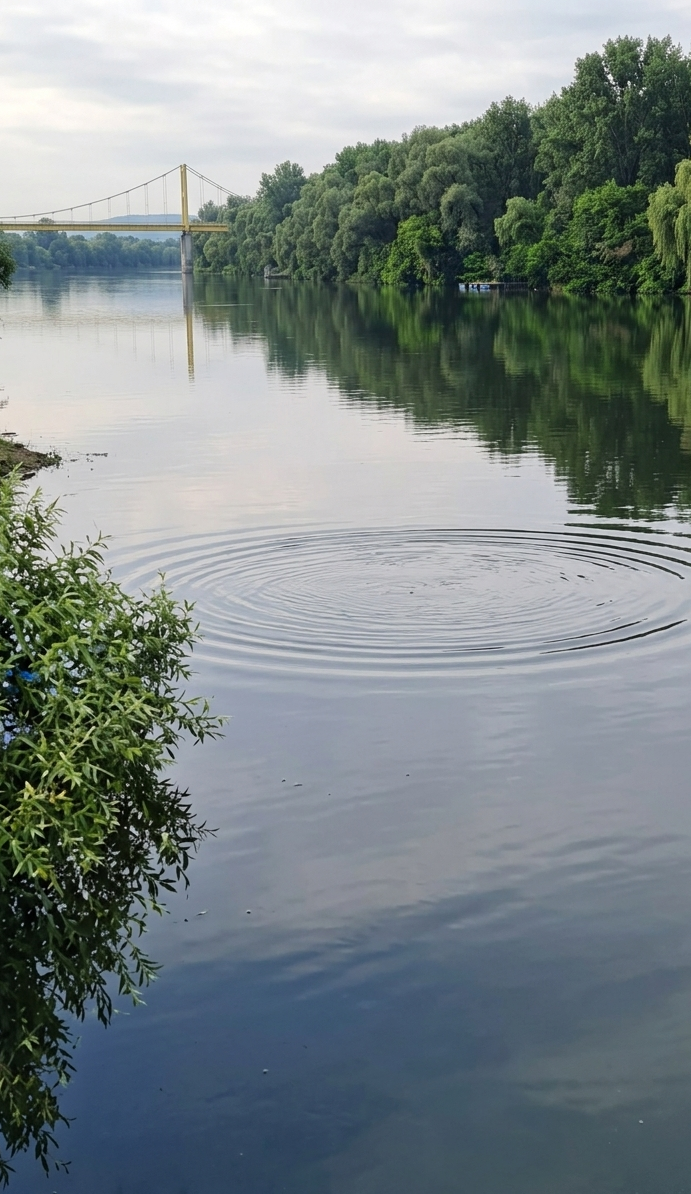

    Anatomija talasa: Kada som locira jato, on se silovito podiže, otvara svoja ogromna usta stvarajući potisak koji guta sve ispred sebe, a zatim pravi oštar zaokret repom nazad ka dubini.
    Rezultat: Taj manevar na površini ostavlja masivan, okrugli talas koji se širi u koncentričnim krugovima. To je potpis krupnog soma koji je upravo izveo uspešan ili neuspešan napad na belu ribu.


    Četvrti znak: Zatišje i mirna voda (Vreme za akciju)
    Nakon eksplozije i formiranja velikog kruga, voda odjednom postaje potpuno mirna.
    Šta se dešava dole: To nije znak da je riba otišla. Preživela bela riba se u šoku “zakucala” za dno ili pobegla pod pontone i čeka da opasnost prođe. Som je spustio nivo svog kretanja, ali je i dalje tu, ohrabren prisustvom hrane.
    Taktika za ribolovca: Na temperaturi vode od 20 stepeni, metabolizam soma je u vrhuncu. Kada se voda primiri nakon ovakvog scenarija, to je idealan trenutak da se na tu “vruću tačku” (par metara desno ili levo od viđenog talasa) spusti krupan mamac – snop ritskih glista, durdubak ili živ keder. On je tu, gladan je i traži sledeću metu.

    Bistro!!!

  • Ribolovački eldorado: Kako su Tara i Drina postale prestonica sportskog ribolova

    Ribolovački eldorado: Kako su Tara i Drina postale prestonica sportskog ribolova

    Postoje vode na kojima pecate da biste ispunili vreme, i postoje vode koje vam se urezuju pod kožu za ceo život. Ako ste ikada u rano jutro stajali u hladnoj, smaragdnozelenoj Drini dok se magla podiže sa vira, ili gledali u nestvarni kanjon Tare, znate tačno o čemu pričam. Ove dve reke nisu samo obični vodotokovi – one su ribolovački eldorado Balkana.


    Divlja snaga koja ne prašta greške
    Drina i Tara su surove, brze i kristalno čiste. To su vode koje zahtevaju maksimalnu koncentraciju, ozbiljan pribor i vrhunsku fizičku spremnost. Ovde riba ne skače sama u čamac; svaki ulov se krvavo zarađuje gazenjem kroz jake struje i stotine zabačaja po hladnom vremenu. Ali baš zato je svaki uspeh ovde duplo vredniji nego bilo gde drugde.


    Kraljica brzaka i drinske nemani
    Kada se priča o Drini, prva asocijacija je ona – mladica. Kraljica naših virova, mitska riba koja testira i najiskusnije varaličare. Lov na drinsku mladicu je poseban ritual. Ovde se bacaju krupni vobleri, teške glavinjare i čuveni “drinski sunđer” u duboke, stenovite virove oko Bajine Bašte i Perućca. Priče starih ribolovaca i drinskih splavara o nemanima koje su lomile drvene plove i kidale najdeblje najlone nisu bajke – te ribe i dalje krstare ovim dubinama.


    Sa druge strane, Tara je raj za mušičarenje. Njen kanjon, drugi najdublji na svetu odmah iza Kolorada, krije autohtonu potočnu pastrmku i lipljana koji se hrane u brzacima. Pecanje na Tari zahteva lagan pribor, precizan zabačaj suve muve i neizmerno poštovanje prema prirodi. Voda je toliko čista da ribu možete videti na nekoliko metara dubine kako kreće ka vašoj imitaciji insekta – osećaj koji podiže adrenalin na maksimum.


    Spakujte pribor i pravac na vodu
    Tara i Drina su s razlogom postale prestonica našeg sportskog ribolova. One nude sve: od ekstremnog varaličarenja u zimskim uslovima do fine, hirurški precizne mušićarske taktike leti. Ako do sada niste osetili snagu drinskog toka na svom štapu, vreme je da planirate sledeći izlazak. Vidimo se na vodi!

    Bistro!

  • Fishing Eldorado: How Tara and Drina Became Europe’s Sport Fishing Capitals

    Fishing Eldorado: How Tara and Drina Became Europe’s Sport Fishing Capitals

    There are fishing destinations that offer a relaxing weekend, and then there are wild, untamed waters that challenge your very soul as an angler. In the heart of the Balkan region lie two rivers that every passionate fisherman dreams of conquering: the Tara and the Drina. This is not just a fishing spot; it is Europe’s ultimate sport fishing Eldorado.
    Untamed Wilderness in the Heart of Europe
    While many anglers spend thousands of dollars traveling to Alaska or Mongolia in search of wild rivers, the Balkan peninsula hides a spectacular gem. The Tara River flows through the second deepest canyon in the world, right after the Grand Canyon in the USA. Its water is so pure and crystal-clear that you can literally drink straight from the river while wading.
    As the Tara merges with the Piva, it creates the mighty Drina River—a fast, powerful, and emerald-green monster known for its deep pools, massive underwater rocks, and aggressive fish.
    The Mythical Target: The Huchen (Danube Salmon)
    For international anglers, the main attraction here is one specific predator: the Huchen (Hucho hucho), also known as the Danube Salmon. This is a mythical, prehistoric-looking fish that can grow well over 15 to 20 kilograms (30–45 lbs).
    Chasing the Huchen in the freezing winter waters of the Drina is considered the ultimate test for any spin or fly fisherman. These predators hide in deep, turbulent pools beneath heavy rapids. To catch one, you need heavy-duty gear, massive artificial lures or specialized local streamers, and extreme patience. It is often called “the fish of a thousand casts,” but the moment a 30-pound river monster hits your lure in the middle of a misty canyon, everything else vanishes.
    A Fly Fishing Heaven
    If extreme winter spinning isn’t your style, summer on the Tara River offers some of the finest fly fishing on the continent. The river holds a massive population of wild Brown Trout and European Grayling. Because the water is incredibly transparent, you can actually sight-fish. Watching a beautiful grayling rise from a three-meter-deep pool to confidently take your dry fly is an adrenaline rush you will never forget.
    Why You Need to Visit


    The Tara and Drina rivers have rightfully earned their reputation as Europe’s sport fishing capitals. They offer a rare combination of breathtaking, untouched scenery, rich cultural heritage, and the chance to hook into the fish of a lifetime. If you are looking for your next true fishing adventure, the wild rivers of the Balkans are calling.


    If you enjoyed this fishing guide and want to support my work and future river expeditions, feel free to buy me a coffee! Tight lines!

  • Pecanje na Đerdapu: Carstvo somova kapitalaca, potopljenih šuma i teškog ribolova

    Pecanje na Đerdapu: Carstvo somova kapitalaca, potopljenih šuma i teškog ribolova

    U prošlom tekstu smo prošli kroz istoriju i lepote koje se vide sa površine, ali za nas koji živimo za divlju vodu, prava magija i surova borba dešavaju se ispod površine ovog moćnog dela Dunava.

    Đerdap nije voda za lagan pribor, tanke strune i opušteno zabacivanje uz kafu. Ovde Dunav ulazi u uske tesnace Velikog i Malog Kazana, gde dubine idu do neverovatnih 90 metara. Zamisli taj pritisak, te podvodne grebene, procepe i snagu matice koja valja sve pred sobom. Ovo je teren gde se oprema testira do krajnjih granica, a ulov života vas deli od sekunde nepažnje. Ako planiraš da baciš udicu u đerdapske dubine, evo šta te stvarno čeka i kako da se spremiš.

    Tekija i som na bućku: Kada zver krene sa 50 metara dubine

    Tekija nije bez razloga svetska prestonica alasa. Kada ovde počne sezona i krene čuvena „Zlatna bućka Đerdapa“, zvuk drvenog ili plastičnog alata odjekuje klisurom. Ali nemoj da misliš da je ovo laka zabava.

    Taktika i dubina: Ovde somove ne tražiš u plićaku pored panja. Oni leže u dubokim procepima i rupama na 40, 50 ili više metara. Zvuk bućke ih iritira, budi im radoznalost i tera ih da krenu gore, ka površini, pravo prema tvom mamcu.

    Pribor: Zaboravi na kompromise. Ovde ti treba jak, krut štap, ozbiljna multiplikatorska mašinica ili stacionarna rola sa vrhunskom kočnicom, i struna koja može da izdrži vuču teretnog voza.

    Borba: Đerdapski som nije „baba“ iz mirne stajaće vode. To je čist mišić odgojen u najjačoj rečnoj struji. Kada udari na 30 metara dubine i iskoristi snagu dunavske matice, borba traje satima, a svaki labav čvor ili loša vrtilica znače gubitak ribe.

    Džigovanje smuđa: Ples po potopljenim šumama

    Kada je izgrađena brana, Dunav je progutao stare šume, sela i obale. Danas je dno oko Donjeg Milanovca i Golupca groblje potopljenih stabala, panjeva i krša. Za prosečnog turistu to je nevidljivo, ali za ribolovca – to je zlatna žila.

    Gde je krš, tu je smuđ: Ove potopljene šume su savršeno stanište i zaklon za krupnog, kapitalnog smuđa i ozbiljne štuke. Riba je tu sigurna, ima hrane u izobilju i ne mora da se bori sa najjačom strujom.

    Cena uspeha (Kidanje): Ako nisi spreman da pokidaš 10 ili 15 džigova za jedno popodne, Đerdap nije za tebe. Ovde se peca „u stopu“ sa preprekom. Koriste se teške džig glave (često od 30 do preko 50 grama, u zavisnosti od mesta i toka) kako bi uspeo da probiješ struju i spustiš silikonac direktno među grane.

    Caka: Koristi offset udice (skrivene u telu silikonca) da smanjiš zapinjanje, ali budi spreman na munjevitu kontru čim osetiš onaj karakterističan, tupi „tup“ na štapu. Ako ga ne odlepiš od dna u prve dve sekunde, smuđ se podvlači pod panj i tu je kraj priče.

    Đerdapski šaran: Divljak koji lomi štapove

    Ako misliš da znaš kako vuče šaran jer si pecao po komercijalnim revirima i mirnim kanalima, spremi se da promeniš mišljenje. Đerdapski divljak je sasvim druga vrsta zveri.

    Pribor za ekstremne uslove: Da bi tvoj mamac uopšte ostao na dnu i da ga matica ne bi odnela u Rumuniju, zaboravi na lagana olova. Ovde se koriste “pljoci” i teška olova od 150, pa i preko 200 grama. Najlon mora biti maksimalno otporan na krzanje jer su stene i školjke na dnu oštre kao žilet.

    Strpljenje na maksimumu: Pecanje šarana ovde traži ozbiljno hranjenje mesta i čekanje. Ali kada taj divlji, vretenasti šaran uzme mamac i krene niz struju, imaćeš osećaj da si zakačio torpedo. To su ribe neverovatne snage koje ne praštaju ni najmanju grešku u podešavanju kočnice.

    Par reči sa obale: Zakon i dozvole

    Pre nego što spakuješ pribor i kreneš na put, sedi i dobro proveri pravila. Kompletan ovaj teren spada pod Nacionalni park Đerdap.

    To znači da ti obična jedinstvena dozvola ovde ne završava posao – potrebna ti je doplata ili posebna dozvola za zaštićena područja. Takođe, obrati pažnju na zone mrestilišta i delove gde je ribolov strogo zabranjen tokom cele godine. Čuvari su stalno na vodi, kontrole su rigorozne, a kazne previsoke da bi se igrao sa tim. Zato, sve po zakonu, pa mirne glave na vodu.

    Đerdap traži poštovanje. To je voda koja uzima mnogo pribora i živaca, ali kada ti se jednom upiše kapitalac iz ovih dubina, sve ostale vode će ti delovati kao plitak potok.

    Bistro na vodi, čuvaj prirodu i vidimo se na Dunavu!

  • Moćni Đerdap: Spoj divljeg ribolova, drevnih statua i krstarenja Dunavom

    Moćni Đerdap: Spoj divljeg ribolova, drevnih statua i krstarenja Dunavom

    Kada neko pomene Đerdapsku klisuru, većina ljudi prvo pomisli na prelepe vidikovce, krstarenje Dunavom i monumentalnu statuu kralja Decebala koja prkosi vremenu uklesana u steni. I sve je to tačno – Đerdap jeste turistički biser Evrope. Ali za nas koji živimo za zvuk kočnice na mašinici i trzaj na vrhu štapa, Đerdap je nešto sasvim drugo.

    To je najmoćnija, najdublja i najnepredvidivija pecaroška voda u Srbiji. Mesto gde se turizam i istorija savršeno preklapaju sa surovim, divljim ribolovom na kojem se lome i pribor i muški karakteri.

    Gde se spajaju istorija i dubina: Šta videti sa vode

    Ono što Đerdap čini jedinstvenim jeste osećaj kada ploviš čamcem ili pecaš sa obale, a pred očima ti se smenjuju prizori od kojih zastaje dah:

    Statua kralja Decebala: Ogromna klesana skulptura na rumunskoj strani (visoka preko 40 metara) dominira Malim Kazanom. Izgleda nestvarno, a ribolovcima je odličan orijentir jer se u njenoj blizini Dunav naglo sužava i krije ozbiljne dubine.

    Trajanova tabla: Nalazi se na našoj strani, uklesana u liticu tik iznad same površine vode. Može joj se prići samo sa reke, pa dok je posmatraš iz čamca, svestan si da prolaziš putevima kojima su rimski carevi išli pre dve hiljade godina.

    Golubačka tvrđava: Ova kamena lepotica sa devet kula stoji na samom ulazu u klisuru, na mestu gde je Dunav širok skoro 6 kilometara i više liči na more nego na reku.

    Savet za putovanje: Spoj lepo i korisno

    Ako planiraš dolazak na Đerdap, najbolja opcija je da spojiš aktivan odmor i uživanje u prirodi. Sredinu dana, kada riba miruje, iskoristi za turizam: obiđi tvrđavu, prošetaj do vidikovaca na Miroču odakle se klisura vidi kao na dlanu, ili sedi u neki od lokalnih restorana u Tekiji ili Kladovu na čuvenu đerdapsku riblju čorbu i vlaški sir.

    U sledećem tekstu prelazimo na ono pravo detaljno analiziramo carstvo dubina, potopljene šume i taktike za đerdapske somove i smuđeve!

  • How to Catch Carp: The Ultimate Global Guide to Tactics, Baits, and Techniques

    How to Catch Carp: The Ultimate Global Guide to Tactics, Baits, and Techniques

    Catching a common carp (Cyprinus carpio) is one of the most rewarding challenges in freshwater angling. Known worldwide for their incredible power, stamina, and surprising intelligence, these fish require a tactical approach. To consistently land them, you must understand the right techniques and know exactly how to feed them.

    Here is a breakdown of the world’s most effective carp fishing techniques and bait setups used by top specimen anglers globally.

    Top Global Carp Fishing Techniques
    ​Depending on the venue—whether it is a fast-flowing Balkan river like the Danube, a massive French reservoir, or a heavily pressured UK syndicate lake—your choice of technique will determine your success.

    The Classic Hair Rig (Specimen Bolt Rig)
    This is the undisputed king of modern carp fishing worldwide. Carp are incredibly cautious; if they feel a bare hook in their mouth, they will instantly spit it out.

    -How it works: The bait is not put directly on the hook. Instead, it sits on a small piece of line (the “hair”) just below the hook, leaving the hook completely exposed. When the carp vacuums up the bait and tries to blow it out, the bare hook catches on its bottom lip.
    -The Lead System: This is paired with a heavy lead (usually 2.5 to 4 oz). When the fish shakes its head, the weight of the lead drives the hook home automatically (the “bolt” effect).

    Method Feeder Fishing
    Originating in the UK match fishing scene, the Method Feeder has exploded in global popularity because it is incredibly efficient for high-action days.

    How it works: A specialized flat-sided feeder is packed tightly with damp groundbait or micro-pellets. Your hook bait (usually a small mini-boilie or bright dummy corn) is tucked directly into the bait mix on the feeder.
    Why it kills: It creates a highly concentrated, irresistible pile of food on the lake bed with your hook bait sitting right in the center of it. A passing carp cannot resist taking a massive gulp.

    Surface / Floater Fishing
    When the summer heat drives carp to bask right under the surface, bottom fishing becomes useless. This is when surface fishing shines.

    How it works: Anglers use specialized floating controllers (surface floats) and free-line floating baits like dog biscuits, crusty bread, or floating pellets.
    The Thrill: You have to actively stalk the fish, cast ahead of its cruising path, and watch the carp break the surface to engulf your bait. It requires absolute stealth and visual precision.

    The Ultimate Carp Bait Guide

    Carp are highly driven by nutrition, scent profiles, and amino acids. To catch them consistently, your bait needs to appeal to their senses.

    Standard Match Baits
    Boilies: The ultimate global standard. These are boiled paste balls made from fishmeals, milk proteins, and bird foods, loaded with flavors (like Scopex, squid, or plum). They come as Bottom Baits (sit on the bed) or Pop-Ups (buoyant baits that hover just above the lake bed or weed lines).
    Sweetcorn & Maize: The universal carp magnet. The bright yellow color provides a massive visual trigger, and the natural sugars drive carp crazy. It is cheap, highly effective, and works on every water on earth.
    Pellets: High-protein oil pellets (like Halibut or Trout pellets) break down slowly in the water, sending out a massive scent trail that draws shoals from deep water.

    Natural Predators on the Silt
    Earthworms & Maggots: When waters are cold or fish are highly pressured, natural live bait is unbeatable. A big bunch of wriggling earthworms or a “medusa” rig of maggots offers natural movement and an undeniable amino-acid profile that carp instinctively trust.
    Particle Attractants
    Hemp Seed: Boiled hemp seed releases intense natural oils. Because the tiny black seeds with white shoots look and crunch exactly like tiny freshwater snails, carp will lock onto a bed of hemp and feed aggressively for hours, losing all caution.
    Tiger Nuts: A crunchy, naturally sweet nut that carp find highly addictive. They are incredibly resilient, meaning smaller nuisance fish (like roach or bream) cannot destroy them, making them perfect for targeting only the biggest carp.

    Advanced Tactical Tips for Success

    Pre-Baiting (The Long Game): If you are fishing wild rivers or large lakes, introducing bait (maize, boilies, and hemp) to a specific spot 2 to 3 days before you actually fish introduces the carp to your food source. Once they feel safe feeding there, catching them becomes twice as easy.
    Match the Hatch: Always try to make your hook bait look like your free offerings. If you feed the swim with 15mm krill boilies, use a 15mm krill boilie on your hair rig.
    The “Reset” Rule: Carp are notorious for picking up baits and dropping them without registering a full run on your bite alarms. If your rig has been sitting in the water for hours after experiencing light taps or “line bites,” reel it in, check your hook sharpness, and reset your

  • Traditional Recipe: The Ultimate Balkan Carp Chowder (Riblja Čorba)

    Traditional Recipe: The Ultimate Balkan Carp Chowder (Riblja Čorba)

    In the Balkans, particularly along the Danube and Tisa rivers, a rich, spicy fish chowder is the ultimate way to enjoy carp. Carp is the perfect fish for this because its fat content creates a thick, flavorful broth without needing artificial thickeners.

    Ingredients:

    •1 kg of fresh carp (heads, tails, and steaks for the best broth)
    •3-4 large yellow onions (finely minced or blended into a paste)
    •2 tablespoons of high-quality sweet ground paprika (for that deep red color)
    •1 teaspoon of hot ground paprika or crushed chili flakes (to taste)
    •150 ml of tomato juice (pasirani paradajz)
    •1 clove of garlic (finely chopped)
    •Salt and black pepper to taste
    •A splash of white wine or white vinegar (helps keep the fish chunks from breaking apart)
    •2.5 liters of water

    Instructions:
    1.The Base: In a large pot (traditionally a copper cauldron over an open fire), add the finely minced onions and a little water. Cook them slowly until they completely break down and turn into a thick, smooth paste. This is the secret to a thick chowder.
    2.The Spices: Add the sweet and hot ground paprika directly into the onion paste and stir for about 30 seconds to release the aromatic oils.
    3.The Liquid: Immediately pour in the 2.5 liters of water and the tomato juice so the paprika doesn’t burn. Bring the mixture to a heavy boil.
    Once boiling, carefully add the carp pieces, the chopped garlic, and a splash of white wine/vinegar.
    4.The Cook: Reduce the heat to a steady simmer. Do not stir the pot with a spoon, as this will break the delicate carp meat. Instead, gently shake and rotate the pot from side to side every few minutes. Let it simmer for about 35 to 40 minutes until the fish is perfectly tender and the soup is rich and dark red.
    Finishing: Season with salt and pepper to taste right at the end. Serve piping hot with homemade bread or over fresh noodles.

  • The Ultimate Guide to Common Carp: Distribution, Seasonal Habits, and Angling Popularity

    The Ultimate Guide to Common Carp: Distribution, Seasonal Habits, and Angling Popularity

    Global Distribution & Angling Popularity
    The common carp (Cyprinus carpio) is originally native to Europe and Asia (specifically the Danube River basin and the Caspian/Black Sea basins). Today, due to its incredible adaptability, it can be found on every continent except Antarctica.


    In Western Europe and the UK, carp fishing is not just a hobby—it is the undisputed king of freshwater sports. It is a highly tactical, multi-million dollar industry built entirely around specimen hunting and strict “Catch and Release” ethics. Anglers track specific, historically named fish in heavily managed lakes, using highly advanced tactics and specialized gear to outsmart these long-lived, highly intelligent giants.

    Diet & Favorite Foods: The Carp’s Menu
    Carp are highly opportunistic, omnivorous bottom-feeders. They vacuum up the river or lake bed, using their sensitive barbels (whiskers) to taste and locate food hidden deep in the silt.

    Natural Favorites
    Freshwater Mussels & Snails (Školjke i Puževi): This is their ultimate power food. Carp possess powerful pharyngeal teeth (crushing teeth located deep in the back of their throat) that easily crunch through hard shells to get to the nutrient-rich meat inside.
    Earthworms (Gliste): Packed with natural amino acids and movement, worms are an irresistible target. Carp find them via vibrations and scent profiles in the mud, especially after heavy rains wash them into the water.
    The Angler’s Secret Weapon
    Hemp Seed (Seme konoplje): Hemp seed is arguably the greatest carp attractant ever discovered. When boiled, the seeds split open to reveal a small white shoot that perfectly resembles a tiny freshwater snail. Packed with natural oils and a distinct crunch factor, once a shoal of carp begins feeding on hemp seed, they enter a total “feeding frenzy” and will stay in the swim for hours, cleaning out every single grain.

    Water Temperature: The Internal Switch
    As cold-blooded creatures, a carp’s behavior, digestion speed, and movement are entirely governed by water temperature:
    •Below 8°C: Their metabolism slows to a crawl. A carp takes days to digest a single meal, meaning they feed very rarely and in tiny, unpredictable windows.
    10°C to 15°C: The transition zones (Spring/Autumn). Carp feed heavily to prepare for either spawning or the upcoming winter.
    18°C to 24°C: The optimum temperature zone. Digestion is rapid, and carp require massive amounts of daily food to maintain their energy levels.

    Seasonal Movement & Hiding Spots
    ☀️ Summer
    Behavior: Highly active but easily stressed by low oxygen on scorching days. They feed aggressively at night, during first light, and late in the evening.
    Hiding Spots: Heavy aquatic vegetation, lily pads, under overhanging willow trees, and deep underwater snags. On hot afternoons, they will often cruise right under the surface, basking in the sun’s warmth and ignoring the bottom.
    🍁 Autumn (Fall)
    Behavior: The premium season for big fish. Carp go on a massive feeding campaign to build up fat reserves for the winter ahead.
    Hiding Spots: They move out of shallow, dying weed beds into cleaner areas. Look for silt beds where natural food settles, and drop-offs (where shallow water suddenly transitions to deep basins). They heavily follow the wind—a strong, warm autumn wind pushes natural food to the windward bank, and the carp follow it closely.
    ❄️ Winter
    Behavior: Maximum lethargy. They move very little to conserve energy.
    Hiding Spots: They crowd into tight groups (shoals) in the deepest, most temperature-stable areas of the water body. They look for zones with zero current—deep river bends, underwater thermal springs, or the absolute center basins of lakes. They will sit dead-still inside heavy underwater snags for weeks.

    Reproduction (Spawning)
    The Trigger: Spawning relies entirely on water temperature hitting a stable 17°C to 20°C (usually late May to mid-June).
    The Ritual: Carp migrate into flooded grassy meadows, shallow reedy bays, or thick margins. The spawning is incredibly chaotic and violent—multiple males chase a heavy female, thrashing wildly and splashing loudly in water so shallow their backs are completely exposed.
    Angling Impact: During the spawn, carp completely stop feeding. Ethical anglers and commercial fisheries pause fishing entirely during this window to preserve the fish and protect them from stress and injury.

    The Lunar Effect: How the Moon Influences Carp
    Experienced carp anglers track moon phases religiously. While the moon does not change a carp’s biology, it dramatically changes their environment.
    The Full Moon & New Moon Factor: These two phases create the strongest atmospheric and gravitational shifts. A Full Moon often triggers heavy nighttime feeding. Because carp can see better in clear, moonlit water, they feel safer moving into shallow banks under the cover of night to feed.
    The Spawning Connection: If the water temperature is right, the arrival of a Full Moon in May or June almost always acts as the final catalyst to trigger the mass spawn.
    Barometric Stability: The moon often correlates with specific weather patterns. A low-pressure system combined with a dark New Moon creates prime, dark, aggressive feeding conditions on the lake bed, making it a favorite among veteran anglers.

    Nutritional Value: High-Protein Freshwater Fuel
    While sport anglers focus on the chase, carp is also a highly nutritious food source, traditionally prized in Central and Eastern Europe.
    Protein Content: Carp meat is an excellent source of high-quality, easily digestible protein. On average, 100 grams of raw carp meat contains between 17.5g and 18g of pure protein.
    Healthy Fats: It is rich in essential Omega-3 and Omega-6 fatty acids, which are crucial for heart health and reducing inflammation.
    Vitamins & Minerals: It is packed with Vitamin B12, phosphorus, and selenium, making it an incredibly healthy option for lean muscle recovery and overall vitality.

    Bistro!

  • The Global Catfish Phenomenon: Giants of the World’s Rivers, Extreme Fishing, and Culinary Value

    Catfish are among the most successful, diverse, and widespread predators on the planet. Found on every continent except Antarctica, these whiskers-bearing giants adapt to almost any environment—from mud-bottomed ponds to roaring river channels.
    Whether it is the high-tech boat angling of Europe, the extreme hand-fishing of America, or the massive river monsters of Asia, catfish command respect worldwide.

    1. Global Distribution: Where Do the Giants Live?
      The catfish family (Siluriformes) includes over 3,000 species, but three regions stand out for producing true river monsters:

    •Europe (The Danube, Ebro, and Po Rivers): Home to the legendary Wels Catfish (Silurus glanis). This is Europe’s largest freshwater predator, thriving from Germany and France down to Spain, Italy, and the Balkan Peninsula (Dunav, Tisa, Sava).


    •North America (The Mississippi and Missouri Basins): Dominated by the Blue Catfish and the predatory Flathead Catfish, which love heavy timber and deep river bends.


    •South America (The Amazon and Orinoco Basins): Home to the incredibly powerful Piraíba (Lau-Lau) and Redtail Catfish. These fish patrol the massive, fast-flowing currents of the rainforest.


    •Asia (The Mekong River Basin): Home to the Mekong Giant Catfish, one of the largest strictly freshwater fish species in the world, adapted to the massive depths of Southeast Asia.

    1. World Records: The Heaviest Catches
      Different species reach mind-boggling sizes across the globe:

    SpeciesRegionRecord WeightFeature
    Mekong Giant CatfishSoutheastAsia646 lbs (293 kg)The absolute heaviest freshwater catfish ever recorded.
    •Wels CatfishEurope (Po River, Italy)281 lbs (127.5 kg)The European record, measuring over 2.85 meters.
    •Blue CatfishNorth America (Virginia)143 lbs (65 kg)

    •The North American heavy-tackle record.
    PiraíbaSouth America (Amazon)341 lbs (155 kg)The apex predator of the Amazonian currents.

    1. Diet: What Do Global Catfish Eat?
      While smaller species are scavengers, giant catfish are highly efficient apex predators:

    Fish and Crustaceans: The bulk of their diet consists of local fish (carp, bream, shad) and large crayfish or crabs.
    Terrestrial Prey: Large Wels catfish in Europe are famous for targeting pigeons and waterbirds at the river’s edge, launching themselves out of the water like killer whales.
    Mammals: Giant Amazonian and European catfish easily swallow rodents, muskrats, and any small mammal unfortunate enough to fall into the current.
    Scent and Vibration: They rely heavily on their whiskers (barbels) and a highly sensitive lateral line to detect vibrations and chemical trails in pitch-black or muddy water.

    1. Extreme Angling Methods
      The diversity of catfish has birthed diverse, adrenaline-pumping fishing styles across the globe.
      A. Rod and Reel: From Bank and Boat (Na štap sa obale i čamca)
      The Heavy Gear: Targeting global giants requires saltwater-grade tackle: stiff 2.4-3.0\text{ m} composite rods, massive spinning or multiplier reels, and 80 to 150 lb braided lines with thick steel, monofilament, or Kevlar leaders.
      Bank Fishing: Popular worldwide. Anglers use heavy lead weights (100–300g) to anchor large baits—like a 1 kg live carp, a bunch of nightcrawlers, or squid—directly on the river bed.
      The Circle Hook Revolution: Originally from commercial sea fishing, Circle Hooks (sizes 8/0 to 12/0) are now used globally. They prevent deep hooking, sliding perfectly into the corner of the fish’s mouth as it pulls away against the rod’s tension.
      Clonk Fishing : A traditional European method where anglers drift in a boat and use a wooden or plastic tool called a clonk to strike the water surface. The distinct “popping” sound mimics feeding catfish or air bubbles, drawing giants up from deep holes directly to suspended baits.

    B. Noodling: Hand-Fishing
    An extreme, traditional method popularized in the Southern United States (Oklahoma, Mississippi, Texas).
    During the summer spawning season, anglers dive underwater completely unarmed and slide their bare hands into hollow logs or mud caves where massive Flathead catfish guard their nests. The fish bites the angler’s hand out of aggression, allowing the “noodler” to grip its lower jaw and wrestle the 20-40 kg giant to the surface.

    1. Meat Quality: Flavor and Texture
      Catfish meat is highly valued in traditional cuisines globally, though its profile changes drastically between wild and farmed fish.
      Texture: Wild catfish meat is moist, firm, and flaky when cooked. Unlike the dense, chicken-like meat of the alligator gar, catfish offers classic, tender fish flakes.
      Wild Predators: Species like the Flathead (USA) or moderately sized Wels (Europe) have a very clean, sweet, and white meat because they feed primarily on live prey.
      TheMuddyFactor: Older, massive bottom-dwelling giants can sometimes develop an earthy or muddy taste if caught in stagnant, muddy waters.
      Global Culinary Styles:
      USA: Coated in seasoned cornmeal (kukuruzno brašno) and deep-fried into crispy strips.
      Europe / Balkans: Prepared as a rich, spicy fish stew  or cut into thick steaks, marinated in garlic and lemon, and grilled or fried.
      Asia: Grilled over charcoal with heavy soy and chili glazes, or used in highly aromatic curries.
    1. Nutritional Profile: Clean Energy and High Protein
      Wild catfish is a nutritional powerhouse, making it an excellent fuel source for active lifestyles and muscle recovery.
      Macronutrient Profile (Per 100g of raw fillet):
      Protein: 18g to 19g of highly bioavailable, complete protein containing all essential amino acids.
      Fat: ~4g–5g (Very low in bad saturated fats, but highly rich in Omega-3 and Omega-6 fatty acids which lower inflammation and protect heart health).
      Calories: ~130 kcal.
      Vitamins & Minerals: Exceptional source of Vitamin B12 (essential for brain function and energy production), Vitamin D, selenium, and potassium

    ⚠️ Sustainability Tip: For the best taste and health profile, anglers prefer harvesting fish in the 3 to 10 kg range. The ancient, triple-digit river monsters are typically full of tough meat and can accumulate higher levels of environmental contaminants due to their long lifespans—making them far better suited for a quick photo and a safe release back into the current.

    Bistro!!!

  • River Monster 101: Everything You Need to Know About the Alligator Gar

    River Monster 101: Everything You Need to Know About the Alligator Gar

    1. Habitat: Which Rivers Do They Inhabit? The alligator gar is native to North America, primarily found in the Southern United States and parts of Northern Mexico. They thrive in large, slow-moving rivers, bayous, reservoirs, backwaters, and brackish coastal waters (where salt and fresh water mix).


    Key Rivers: The absolute hotspot for this species is the Mississippi River Basin. They are heavily populated in major rivers like the Trinity River (Texas), Brazos River (Texas), Red River, and the Arkansas River.
    Unique Adaptation: They have a specialized swim bladder that allows them to breathe atmospheric air. This enables them to survive in stagnant, low-oxygen waters where other large fish would suffocate.


    2. World Record: The Largest Catch
    For decades, the official and legendary world record has belonged to an absolute monster pulled from the waters of Mississippi.
    The Record Holder: Caught in Lake Chotard, Mississippi in 2011 by commercial fisherman Kenny Williams.
    The Dimensions: The massive fish weighed 327 pounds and measured 8 feet 5 inches  in length.


    The Age: Experts estimated that this specific prehistoric giant was between 70 and 95 years old.


    3. Diet: What Do They Eat?
    Despite their terrifying appearance and rows of razor-sharp teeth, alligator gar are not aggressive man-eaters. They are opportunistic apex predators and ambush hunters.
    Primary Food Source: Their diet consists mainly of fish (such as carp, gizzard shad, buffalo fish, and mullet).
    Other Prey: They will easily snap up waterfowl (ducks and wading birds), small mammals (like nutria or muskrats), and crustaceans (crabs and crayfish).
    Hunting Style: They typically lie motionless near the surface or log jams, looking like a floating log, and then execute a lightning-fast sideways strike to pin their prey.
    4. How to Catch Them: Quick Guide
    To successfully target an alligator gar, your strategy must handle their bony jaws and patient feeding habits.
    The Rig: A large float or “balloon” rig is used to keep a large piece of cut bait (like a 1 kg carp chunk) suspended mid-water.
    The Free Spool: When the gar bites, do not set the hook immediately. You must leave the reel spool completely open. The fish will run with the bait in its teeth, stop to reposition it, and swallow it.
    The Strike: You only engage the reel and strike hard once the fish begins its second run, ensuring the hook penetrates deep into the throat or corner of the mouth rather than sliding off the bony beak.


    5. Nutritional Value: Meat, Health, and Proteins (Meso i proteini)
    Alligator gar meat is highly nutritious, clean, and acts as an excellent source of lean protein, very similar to wild game or alligator meat.
    Macronutrient Profile (Per 100g of raw meat):
    Calories: ~110–120 kcal
    Protein: 21g to 23g (Extremely high, equivalent to chicken breast or beef).
    Fat: ~2g–3g (Very low in fat, making it a very lean protein source).
    Carbohydrates: 0g
    Health Benefits & Safety:
    Lean and Clean: Because it is incredibly low in saturated fats and high in pure protein, it is excellent for muscle recovery and overall fitness diets.
    Nutrients: It contains high amounts of B-vitamins (especially B12) and essential minerals like phosphorus and potassium.
    Mercury Consideration: Because they are long-lived apex predators, older, massive individuals can accumulate higher levels of mercury. If harvesting for food, anglers typically keep smaller, younger fish  because their meat is much more tender and has lower contaminant levels.
    The Danger (Reminder): While the meat is healthy and safe, the roe (eggs) is toxic and must never be consumed.