The Ultimate Fishing Guide to Fishing for Beginners: Master Essential Fishing Techniques and Gear in 2026
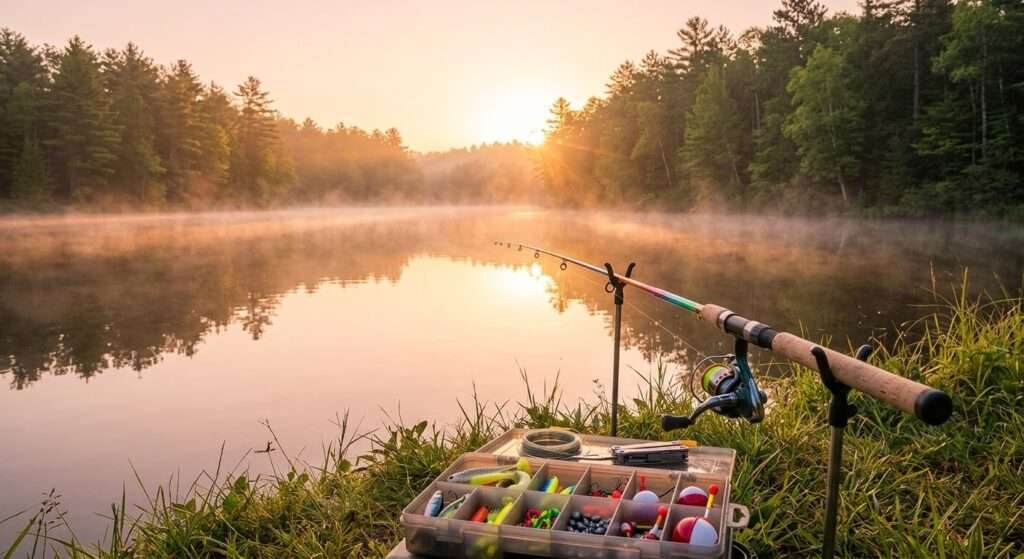
Complete Beginner’s Fishing Roadmap: How to Start Fishing with Confidence
Stepping into the world of fishing can feel like entering a vast, unfamiliar territory filled with specialized terminology, technical gear, and endless strategies. However, learning how to fish does not need to be complicated. At its core, angling is a rewarding outdoor practice rooted in patience, observation, and an understanding of aquatic ecosystems. This ultimate guide is specifically designed to transform complete novices into knowledgeable, capable anglers by breaking down every fundamental aspect of freshwater fishing.
To build a solid foundation, every beginner must grasp the basic mechanics of how fish interact with their environment. Fish are driven by three primary survival instincts: finding food, conserving energy, and seeking safety from predators. When you learn to evaluate a body of water through these core principles, your approach changes from random guessing to strategic angling. Whether you plan to fish in local ponds, peaceful lakes, or winding rivers, mastering the basics step-by-step will ensure consistent success and enjoyable days on the water.
Understanding the Fishing Basics: What Every New Angler Should Know
Before buying equipment or heading to the bank, it is vital to understand the primary concepts of freshwater angling. Fishing is fundamentally divided into active and passive techniques. Passive techniques involve setting a static bait at a specific depth and waiting for a fish to detect it by scent or visual appeal. Active techniques, on the other hand, require continuously casting and retrieving artificial lures to mimic moving prey and trigger a predatory strike.
As a beginner, starting with passive or semi-active methods allows you to focus on the essential fundamentals: learning how your line behaves, recognizing subtle bites, and practicing safe fish handling. Acquiring a basic understanding of fish biology, water clarity, and seasonal movements will dramatically shorten your learning curve and make your initial outings far more productive.
Insights from the Fishing Forum: Tips from Veteran Anglers to Beginners
Online angling communities and local fishing forums are treasure troves of practical wisdom passed down through generations of experienced fishermen. A common piece of advice from veteran anglers is to avoid overcomplicating your initial setup. Beginners often fall into the trap of purchasing heavy, specialized tackle designed for advanced techniques, which leads to confusion and frustration on the water.
Experienced anglers consistently emphasize three golden rules for newcomers:
Keep It Simple First for Fishing
Master one basic setup—such as a simple bobber and live bait rig—before attempting to learn complex lure presentations or specialized techniques.
Patience Over Fishing Gear
Expensive equipment will never compensate for a lack of observation. Spend more time watching the water, identifying structure, and learning fish behavior than worrying about high-end tackle.
Ask Local Bait Shops About Fishing
Local tackle shops possess invaluable, real-time knowledge about what bait is currently working, exact water conditions, and where fish are holding. Never hesitate to ask local experts for advice.
The Vital Role of Water Temperature on Fishing and Fish Behavior
Water temperature is arguably the most influential environmental factor dictating fish behavior, metabolism, and feeding habits. Because fish are cold-blooded organisms, their internal body temperature and metabolic rates are governed entirely by the surrounding water. Understanding these thermal dynamics allows you to predict where fish are located and how aggressively they will feed throughout the day.
During cold weather or early spring, a fish’s metabolism slows down significantly, requiring less food and causing them to move sluggishly in deeper, more stable water layers. As the water warms toward their optimal temperature range, their metabolic rate increases, driving them to feed actively in shallow flats and weed lines. However, if water becomes excessively hot during peak summer, oxygen levels drop, forcing fish to retreat to deeper, cooler thermal layers or seek shade near oxygen-rich current edges.
Lunar Cycles and Their Impact on Fishing Success
The gravitational pull of the moon exerts a powerful influence on marine and freshwater environments alike. Known as solunar theory, the positions of the moon and sun directly affect the activity periods of wildlife, including fish. Recognizing how lunar phases correlate with feeding windows can give you a major advantage when planning your fishing trips.
The major feeding windows typically occur during the New Moon and Full Moon phases, when the gravitational forces are strongest. During these periods, fish often experience heightened feeding activity lasting two to three hours around moonrise and moonset. Incorporating basic solunar charts into your planning helps you target the exact hours when fish are most likely to feed actively, maximizing your efficiency on the water.
Essential Fishing Tackle Breakdown: From Rods to Small Accessories
Navigating a tackle shop can be overwhelming due to the sheer volume of options available. To build a reliable, multi-purpose tackle setup, you need to understand the function of each individual component, from the rod backbone to the point of the hook. Investing in balanced, quality entry-level gear ensures durability and a much better experience on the water.
Choosing the Right Fishing Rod: Power, Action, and Length
The fishing rod serves as an extension of your arm, providing the leverage needed to cast lures and play fish safely. When selecting your first rod, focus on three primary specifications: power, action, and overall length.
Fishing Rod Power
Power refers to the rod’s resistance to bending under weight. For general freshwater fishing targeting species like bass, trout, and panfish, a Medium or Medium-Light power rod offers the perfect balance of strength and sensitivity.
Fishing Rod Action
Action describes where along the blank the rod flexes when pressure is applied. A Fast Action rod flexes primarily near the tip, providing fast hook sets and higher sensitivity, whereas a Moderate Action rod flexes deeper into the middle section, offering more forgiveness when fighting jumping fish.
Fishing Rod Length
For all-around versatility, a rod length between 6 foot 6 inches and 7 feet is ideal for beginners, providing a great blend of casting distance and pinpoint accuracy.
Demystifying Fishing Reels: Spinning vs. Baitcasting
Selecting the right reel is critical for smooth casting and hassle-free line management. While there are several reel types on the market, the spinning reel remains the undisputed choice for beginners due to its intuitive operation and resistance to line tangles.
Spinning Reels for Fishing (The Beginner Standard)
Mounted underneath the rod, spinning reels feature an open-spool design where line flows off freely during a cast. A size 2500 or 3000 spinning reel paired with a medium-power rod provides an exceptionally versatile setup capable of handling a wide variety of freshwater fishing techniques without the frequent backlashes associated with other reel types.
Baitcasting Reels for Fishing (Advanced Option)
Mounted on top of the rod, baitcasting reels utilize a revolving spool that requires manual thumb control to prevent overruns (known as “bird’s nests”). While they offer superior accuracy and winch power for heavy cover, they require a steep learning curve and are best reserved for after you have mastered spinning gear.
Types of Fishing Lines: Monofilament, Fluorocarbon, and Braid
Your fishing line is the only direct connection between you and the fish. Choosing the correct line type and breaking strength (pound test) is crucial for proper lure presentation and landing strength.
Monofilament Fishing Line
Monofilament (mono) is the absolute best choice for beginners. It is affordable, easy to tie knots with, and possesses built-in stretch that absorbs sudden shocks when a fish strikes or surges near the bank.
Fluorocarbon Fishing Line
Fluorocarbon is virtually invisible underwater and sinks faster than monofilament. It offers high abrasion resistance and sensitivity, making it an excellent main line or leader material when fishing clear water or sharp structure.
Braided Fishing Line
Composed of woven synthetic fibers, braided line has zero stretch, incredible strength-to-diameter ratio, and ultimate sensitivity. However, its high visibility and slick texture require specialized knots and leader line tie-ins.
Hooks, Weights, and Swivels: Small Fishing Essentials
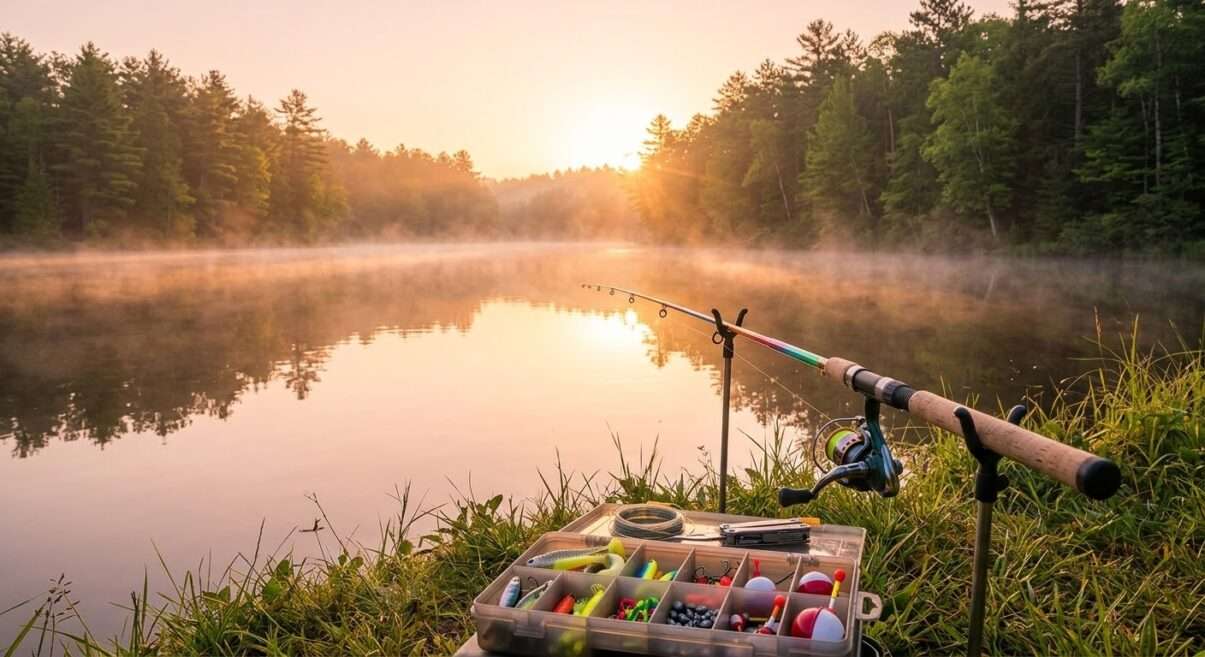
Terminal tackle consists of the small hardware tied to the end of your line. Having a properly organized assortment of basic hooks, weights, and connectors ensures you are prepared for any fishing scenario.
Fishing Hooks
Hook sizing can be confusing: standard sizes run numerically from small (Size 12) to large (Size 1), while oversized hook sizes are designated with a slash zero (e.g., 1/0, 2/0). For general live bait fishing, stock your box with Size 6 to Size 2 Aberdeens or octopus hooks.
Fishing Weights and Sinkers
Weights carry your bait down to the target depth. Split-shot weights are small, pinch-on lead or steel weights that can be easily added or removed without retying your line, making them essential for fine-tuning your presentation.
Swivels and Snaps for Fishing
Barrel swivels prevent line twist caused by spinning lures or moving water currents. Quality snap swivels allow you to switch lures quickly without retying knots every time.
Step-by-Step Fishing Guide: Your First Day on the Water
Putting theory into practice requires a clear, methodical approach. Following a structured checklist on your first outing ensures safety, proper technique execution, and higher odds of hooking your first fish.
Tying Essential Fishing Knots
A chain is only as strong as its weakest link, and in fishing, that weak link is almost always an improperly tied knot. Master these two simple knots before leaving home:
The Improved Clinch Fishing Knot
The go-to knot for tying monofilament line to hooks, swivels, and lures. Thread the line through the hook eye, wrap the tag end around the standing line 5 to 6 times, pass the tag end through the small loop near the eye, pull it back through the larger loop created, wet the line, and cinch tight.
The Palomar Fishing Knot
Renowned for its incredible strength and simplicity, the Palomar knot is perfect for all line types, especially braid. Double 6 inches of line, pass the loop through the hook eye, tie a simple overhand knot with the doubled line, slip the loop over the entire hook, wet the line, and pull both ends to tighten securely.
Rigging Live Bait and Artificial Lures for Fishing
For your initial setup, construct a classic live bait rig. Attach a clip-on bobber to your main line roughly 3 feet above your hook. Pinch one or two small split-shot weights onto the line 10 inches above the hook to keep the line hanging vertically. Thread a live nightcrawler onto a Size 6 hook, leaving the ends exposed to wiggle naturally in the water column.
Casting Techniques, Fishing Bite Detection, and Hook Setting
To cast a spinning reel, hold the rod handle with the reel stem between your middle fingers. Index finger hooks the line while you open the metal bail arm. Bring the rod back over your shoulder, sweep it smoothly forward toward your target, and release the line with your index finger just as the rod tip reaches eye level. Close the bail manually by hand once the bait hits the water.
Watch your bobber attentively. When a fish strikes, the float may twitch, drag across the surface, or pull completely underwater. Wait until the bobber disappears underwater for one to two seconds, wind up any slack line until you feel resistance, and firmly lift the rod tip upward in a smooth motion to set the hook into the fish’s jaw.
Safe Fish Handling and Ethical Catch-and-Release Fishing
Handling fish responsibly protects both the angler and the fish. Always wet your hands before touching a fish to preserve its protective slime layer, which shields it against harmful pathogens. Hold the fish securely around its body or lip (for non-toothed species like bass) while using long needle-nose pliers to back the hook out smoothly. If releasing the fish, gently submerge it in the water, supporting its belly until it revives fully and swims away under its own power.