Muskie The Best Ultimate Fishing Guide 2026
Complete Muskie Species Overview and Geographical Origin
Evolutionary History of the Muskie
The apex freshwater predator represents a deeply rooted evolutionary success story within North American aquatic ecosystems. Belonging to the family Esocidae, this giant fish diverged from related pike species millions of years ago, adapting specifically to large, cool-water environments rich in diverse forage and complex cover. Early fossil records indicate that these top-tier carnivores have maintained their anatomical design for eons, relying on stealth, speed, and camouflage to dominate their native river systems and glacial lakes.
Prehistoric Roots of the Muskie
Geological evidence places the ancestral origins of this predator in the post-glacial waterways of North America. As ancient glaciers retreated, vast interconnected river networks and lake basins formed, providing ideal habitats characterized by clear, oxygenated water and abundant submerged structures. Over thousands of years, natural selection refined its sleek, elongated body, sharp sight, and acute lateral line sensitivity, turning it into one of the most efficient apex hunters in fresh water.
Native Ranges and Habitats of the Muskie
Historically, the native distribution spanned across the Great Lakes basin, the St. Lawrence River, the upper Mississippi River valley, and the expansive Ohio River system. These regions provided the precise blend of water clarity, aquatic vegetation, rocky structures, and thermal refuge necessary to sustain healthy populations across generations.
Great Lakes Drainage and the Muskie
The vast interconnected bays and tributaries of the Great Lakes served as the primary cradle for the species. Waters like Georgian Bay, Green Bay, Lake St. Clair, and the Thousand Islands region provided expansive spawning marshes and massive populations of high-fat forage species such as cisco, whitefish, and suckers. These sprawling water bodies allowed individuals to attain massive physical dimensions, establishing world-renowned trophy fisheries.
Riverine Ecosystems and the Muskie
In addition to massive lake systems, natural river networks throughout the Midwest and Eastern United States offered optimal conditions. Fast-flowing river channels featured deep pool refuges, fallen timber obstructions, and gravel bars. Predators inhabiting river systems adapted to dynamic current shifts, using eddies, wing dams, and boulder fields as permanent ambush positions to intercept drifting prey items.
Comprehensive Muskie Anatomy and Physical Traits
Jaw Structure and Dentition of the Muskie
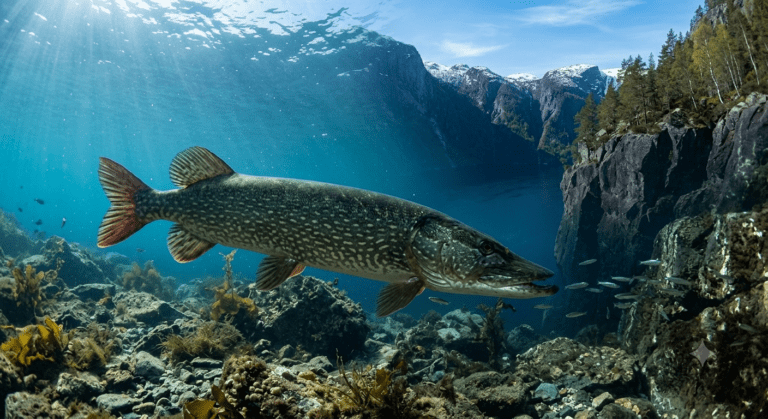
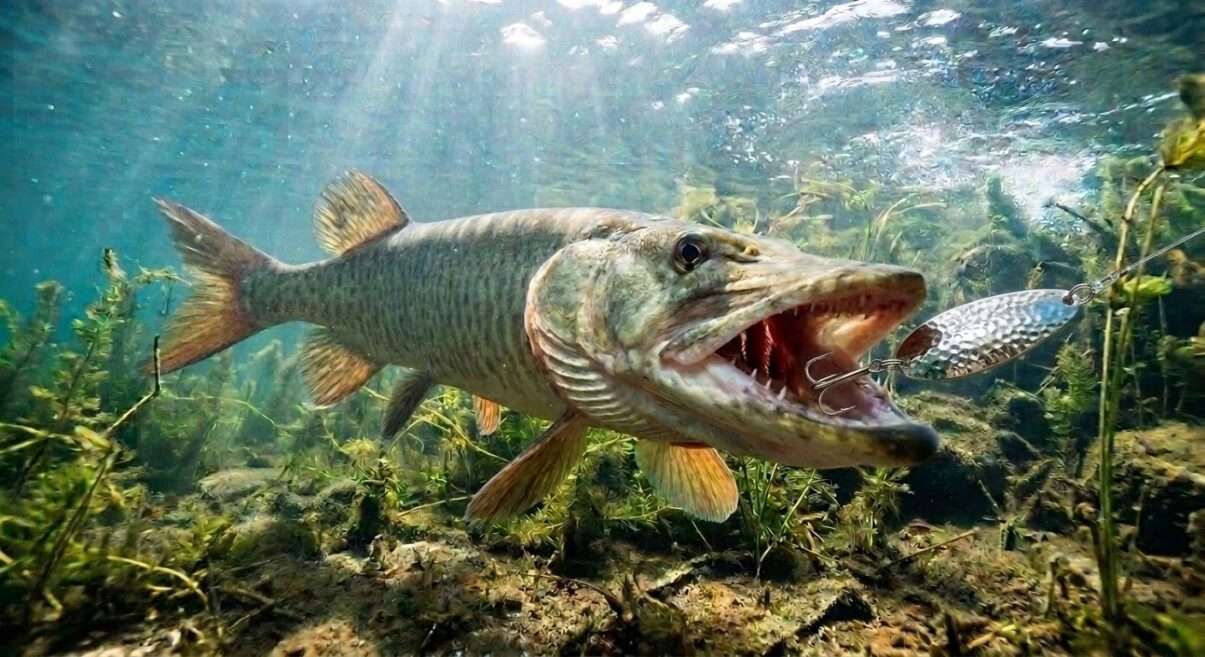
The head structure is broad and flattened, ending in a duckbill-shaped snout built for snapping shut with immense velocity. Inside the mouth lies an intimidating array of razor-sharp teeth designed to trap, puncture, and incapacitate prey instantly upon contact.
Razor-Sharp Teeth of the Muskie
The lower jaw features large, sharp, needle-like canine teeth set vertically to pierce through tough scales and flesh. Meanwhile, the roof of the mouth and tongue are covered in thousands of smaller, backward-curved vomerine teeth. When prey is seized, these smaller interior teeth prevent any backward escape, forcing the captured fish down the gullet head-first.
Hydrodynamics and Fin Configuration of the Muskie
Physiologically, the body is an engineering marvel designed for explosive acceleration rather than long-distance endurance cruising. Its elongated, torpedo-like profile minimizes water resistance, allowing it to remain completely motionless before lunging forward with incredible force.
Burst Speed Capabilities of the Muskie
Unlike species with centrally located dorsal fins built for constant swimming, this predator features dorsal and anal fins set far back near the tail. This rear-weighted fin alignment acts like a high-powered propeller, generating immediate thrust when flexing its muscular tail. Within milliseconds, it can launch from a stationary hold into a high-speed strike exceeding twenty miles per hour over short distances.
Seasonal Behavior Patterns of the Muskie
Spring Spawning and Post-Spawn Dynamics of the Muskie
As ice melts and water temperatures begin to rise in early spring, adults emerge from deeper winter sanctuaries and migrate toward shallow spawning grounds. This transition marks a critical ecological phase governed by water temperature, light duration, and weather patterns.
Shallow Warming Bays and the Muskie
Spawning occurs primarily in soft-bottomed, shallow bays, flooded river marshes, and sheltered coves with abundant organic debris and emerging vegetation. Water temperatures between forty-eight and sixty degrees Fahrenheit trigger egg deposition. Unlike many other nest-building freshwater fish, eggs are broadcast randomly over submerged weeds and logs. Following spawning, females enter an inactive post-spawn recuperation period in shallow water before resuming aggressive feeding.
Summer Thermocline and Forage Patterns of the Muskie
Summer brings warmer surface temperatures, pushing mature individuals into dynamic summer holding patterns. As lakes stratify, water temperature and dissolved oxygen levels dictate exact depth distribution.
Deep Weedlines and the Muskie
During summer peak heat, heavy weed beds—such as cabbage, milfoil, and coontail—become primary activity centers. These dense aquatic forests offer oxygen, shade, thermal relief, and endless ambush opportunities. Predators hover along the deep outer weed edges, timber points, or humps, darting out to strike panfish, perch, and gizzard shad patrolling the open-water margins.
Autumn Pre-Winter Feeding Frenzy of the Muskie
Fall represents the premier trophy season. As water temperatures drop below sixty degrees, vegetation begins to die off, and forage fish group together in vast schools, triggering an intense pre-winter feeding period.
Large Forage Selection by the Muskie
During late autumn, the predator prioritizes massive, calorie-dense prey to build lipid reserves for the upcoming winter. Soft-rayed forage species like ciscoes, whitefish, suckers, and shad are heavily targeted near shallow rocky reefs, main-lake points, and remaining green weed patches. Large individuals will spend minimum energy hunting smaller prey, choosing instead to target single meals weighing several pounds.
Winter Deep Basin Survival of the Muskie
Under ice cover or in freezing open waters, metabolic rates slow dramatically. Survival depends on energy conservation, positioning near stable dissolved oxygen sources, and minimal swimming activity.
Cold Water Lethargy of the Muskie
In winter, fish suspend over deep mud basins, river channel drop-offs, or deep hole structures where water temperatures remain relatively stable around thirty-nine degrees Fahrenheit. Feeding events become rare, brief, and highly opportunistic, with individuals consuming slow-moving bottom prey or dying forage drifting within close proximity.
Environmental Factors Affecting the Muskie
Water Temperature Thresholds for the Muskie
Water temperature acts as the primary driver of metabolism, digestion rates, movement, and feeding willingness. Understanding thermal boundaries is essential for predicting daily and seasonal behavior.
Critical Thermal Maxima for the Muskie
Optimal feeding activity occurs in water temperatures between sixty-five and seventy-two degrees Fahrenheit. When surface temperatures climb past seventy-eight degrees, mortality risks increase drastically due to metabolic stress and oxygen depletion. Responsible anglers monitor surface temp gauges constantly, avoiding targeting large fish in excessively warm summer waters to prevent delayed handling mortality.
Lunar Cycles and Solunar Periods for the Muskie
Solunar theory plays an exceptionally strong role in triggering feeding windows for large solitary predators. Tracking celestial alignments allows anglers to predict brief windows of heightened activity.
Major and Minor Moon Phases for the Muskie
Major solunar windows occur when the moon is directly overhead or directly underfoot, while minor periods correspond to moonrise and moonset. Full moon and new moon phases consistently yield elevated bite rates. Even on days with poor weather or high barometric pressure, a major solunar event often triggers a ninety-minute feeding frenzy among otherwise dormant fish.
Water Flow and Current Dynamics for the Muskie
In riverine systems and flow-regulated reservoirs, current velocity dictates positioning and hunting strategies far more than substrate or cover type.
River Tides and Current Shifts for the Muskie
Flow increases caused by dam releases, rain events, or tidal forces push forage into predictable seams and eddies. Predators position themselves on the calm side of current breaks—such as wing dams, gravel points, or bridge abutments—facing upstream to ambush unsuspecting prey swept down by the flow.
Advanced Tackle and Gear Selection for the Muskie
Heavy-Duty Rods and Reels for the Muskie
Targeting powerful, heavy predators with large, high-resistance lures requires specialized heavy-action fishing tackle. Standard freshwater bass or walleye rods will fracture quickly under these demands.
High-Capacity Baitcasting Reels for the Muskie
Rods typically measure between eight and a half to ten feet in length, constructed from heavy-power graphite or composite materials designed to cast lures weighing up to sixteen ounces. These long rods are paired with heavy-duty baitcasting reels equipped with solid brass or stainless steel gears, high-capacity spools, and smooth carbon-fiber drag systems capable of stopping sudden high-velocity runs near the boat.
Specialized Lines and Leaders for the Muskie
Main line and leader connections form the critical link between angler and target. Equipment failures usually result from inadequate line strength or improper leader materials.
Wire and Fluorocarbon Leaders for the Muskie
Braided main lines testing between eighty and one hundred pounds test are standard, providing zero stretch for solid hook sets and high abrasion resistance against structure. To prevent sharp teeth from slicing through braid, heavy single-strand wire, solid titanium, or heavy fluorocarbon leaders testing between one hundred and one hundred thirty pounds are mandatory components of every rig.
| Criterion | Famous Brands (Megabass, Rapala, Musky Innovations) | Temu Alternatives |
|---|---|---|
| Price per Piece | $25 – $80+ | $3 – $12 |
| Build & Plastic Quality | Top-tier, heavy-duty plastic/wood, built to withstand crushing bites | Decent appearance, but plastic can be more brittle and prone to cracking |
| Hooks & Split Rings (Hardware) | High-grade, sharp, heavy-duty Mustad/Owner hooks ready for battle | Softer hooks and weaker split rings – replacement recommended before fishing |
| Swimming Action | Consistent, fine-tuned action across all retrieval speeds and conditions | Varies from lure to lure; may require tuning straight out of the box |
| Finish & Paint Durability | Multi-layered, durable clear coats resistant to teeth and wear | Visually appealing, but paint flakes off faster after a few strikes |
| Frustration Level Upon Loss | Extremely high (losing a $50+ lure stings all day) | Minimal (easy to write off when snagged in heavy cover) |
| Best Tactical Use | Proven spots, open water structure, and high-stakes situations | Scouting unknown waters, heavy timber, and risky snag-prone areas |
Tactical Lure Categories and Presentations for the Muskie
Inline Spinners and Bucktails for the Muskie
Featuring dual metal blades, heavy brass bodies, and natural hair or synthetic skirts, inline spinners are fundamental search lures. Retrieved quickly over shallow weed flats or along drop-offs, the intense vibration and flash trigger aggressive reaction strikes from active predators.
Topwater Surface Presentations for the Muskie
Surface lures—including prop baits, walk-the-dog devices, and crawler-style lures—create loud sound signatures and churning water displacement. Used primarily during calm low-light conditions, morning periods, or warm summer nights, topwater strikes produce some of the most explosive visual moments in sport fishing.
Crankbaits, Jerkbaits, and Glide Baits for the Muskie
Hard plastic and wooden dive baits allow anglers to cover specific depth zones in the water column. Jerkbaits and glide baits move side-to-side in erratic darting patterns when twitched with the rod tip, perfectly mimicking wounded or disoriented forage fish.
Soft Plastics and Swimbaits for the Muskie
Large rubber swimbaits, dual-tail grubs, and oversized plastic creatures offer lifelike swimming action and substantial displacement profiles. These lures excel when retrieved slowly through deep structures, cold water post-front environments, or open-water bait schools.
Forum Secrets and Expert Tactics for the Muskie
The Boat-Side Figure-Eight Technique for the Muskie
An indispensable maneuver on every single retrieve is executing a boat-side lure pattern. Because these curious predators frequently follow lures right to the boat without striking, finishing the retrieve properly is critical.
Turn Execution and Depth Control for the Muskie
As the lure approaches the water surface near the rod tip, the angler plunges the rod tip deep into the water and begins tracing a wide, continuous figure-eight or large oval shape against the side of the boat. Plunging the tip deep keeps the lure fully submerged during hard turns. Pushing the lure wide on the turns forces following fish to accelerate and turn, triggering reflex strikes right at the surface.
Speed Alterations and Trigger Responses for the Muskie
Experienced anglers know that a steady, monotonous retrieve often yields long trailing follows rather than strikes. Sudden changes in speed, direction, or depth are necessary to turn passive curiosity into an immediate feeding reaction.
Downsizing Strategies Under Pressure for the Muskie
On heavily pressured public waters or immediately following severe cold fronts, massive twelve-inch lures often fail. Downsizing to smaller four-to-six-inch crankbaits, compact spinners, or subtle tube jigs frequently fools educated fish that ignore traditional large presentations.
Catch and Release Best Practices for the Muskie
Proper Landing and Netting Gear for the Muskie
Safe handling begins with appropriate landing gear. Extra-large rubberized landing nets with flat bottoms prevent fin damage, scale loss, and line tangles, allowing the capture to remain fully submerged while unhooking.
Safe Unhooking and Handling of the Muskie
Essential landing tools include heavy long-nose pliers, split-ring pliers, jaw spreaders, and heavy-duty wire bolt cutters. If a hook is embedded near delicate gills or throat tissue, cutting the hook point directly with bolt cutters is vastly preferred over tearing vital organs.
Water Recovery and Release Mechanics for the Muskie
Out-of-water handling time for photographs must be kept under thirty seconds. Support the body weight horizontally with two hands—one beneath the head behind the gill cover without touching gill filaments, and the other beneath the belly. Never hold heavy fish vertically. Upon returning to the water, hold the specimen horizontally facing into the current until it regains full equilibrium and swims away under its own power.
Conservation and Environmental Threats to the Muskie
Habitat Protection and Spawning Marshes for the Muskie
Long-term population health depends directly on preserving natural shoreline habitats, emergent vegetation zones, and pristine spawning wetlands. Shoreline development, shoreline hardening, and marsh drainage severely diminish natural reproductive success.
Impact of Climate and Invasive Species on the Muskie
Rising water temperatures due to shifting climate trends, alongside invasive species competition—such as zebra mussels clearing water and disrupting food webs—present modern challenges for fishery managers. Conservation groups and angler-funded stocking efforts play vital roles in restoring degraded habitats, managing sustainable catch-and-release rules, and preserving trophy waters for future generations.