Fly Fishing: The Ultimate Master Guide to Gear, Techniques, and History 2026
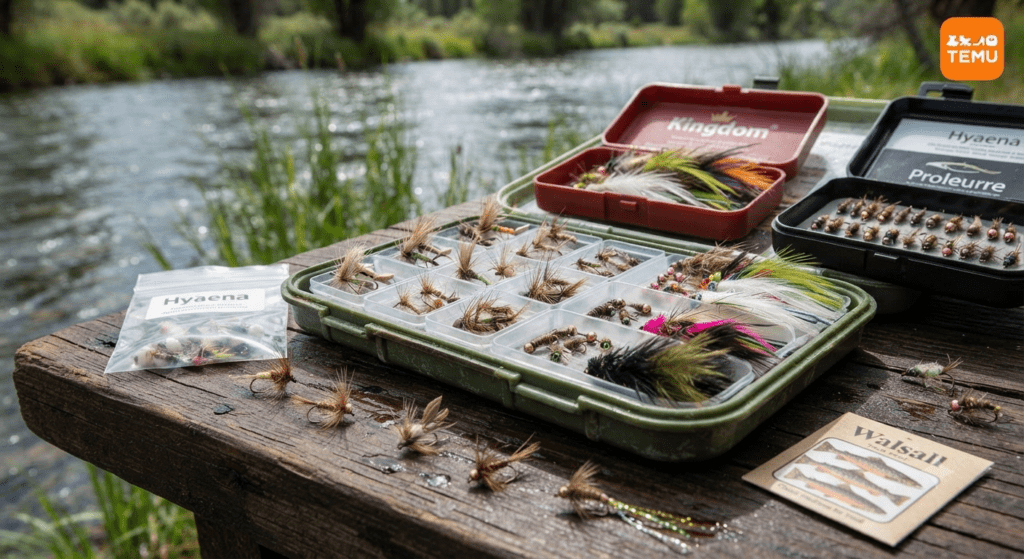
Fly fishing stands as one of the most sophisticated, enriching, and historically rich methods of angling known to humanity. Rather than relying on the heavy mechanical weight of a metal spoon or a lead-weighted lure to carry your bait across the water, fly fishing utilizes the aerodynamic properties and physical weight of a specialized, tapered fly line itself.
This delicate technique enables an angler to propel a virtually weightless, meticulously crafted artificial fly through the air and present it with absolute stealth onto the surface film or deep currents of a river. The roots of this discipline stretch back deep into history. The earliest recorded mention of fly fishing dates all the way back to the 2nd century AD, when the Roman author Claudius Aelianus detailed in his literary work De Natura Animalium how Macedonian fishermen operated along the banks of the Astraeus River.
These ancient anglers successfully targeted trout by utilizing artificial flies constructed from red wool and rooster feathers bound securely to hooks. Centuries later, the sport experienced a massive leap forward in documentation and formal structure with the publication of the very first official manual dedicated to the craft: The Treatyse of Fysshynge with an Angle, printed in 1496 by the nun Dame Juliana Berners as an integral, celebrated section of The Boke of St. Albans.
The Definitive Master Guide to Fly Fishing: History, Gear Mechanics, Entomology, Advanced Techniques, Species Strategies, and Expert Forum Tips
This comprehensive, exhaustive master guide is meticulously structured to provide everything an enthusiast needs to understand, navigate, and completely master the intricate world of fly fishing. Whether you are stepping into a dynamic mountain stream for the very first time or refining your advanced presentations for seasoned trophy fish, this guide covers every single technical, tactical, and practical element of the sport.
The Historical Evolution of Fly Fishing
The transformation of fly fishing from a primitive method of survival and food gathering into a refined, meditative art form highlights human creativity and our connection to nature. From ancient Mediterranean rivers to the legendary chalk streams of the United Kingdom, the core objective has always remained identical: outsmarting cautious, highly perceptive fish by accurately matching their natural food sources with artificial imitations.
Over hundreds of years of evolution, craftsmanship shifted dramatically. Anglers moved away from crude animal fibers, makeshift threads, and hand-bent hooks, stepping into an era defined by high-modulus carbon-fiber rods, scientifically engineered weight-forward lines, and incredibly realistic artificial patterns designed to mimic every single stage of an insect’s life cycle, from deep underwater larval stages to fluttering adult emergences on the surface film.
Core Equipment and Gear Mechanics
A comprehensive understanding of your tackle is the fundamental building block of success on the water. Because fly fishing operates on entirely different mechanical principles than conventional spin casting, assembling the right combination of gear is paramount.
- The Fly Rod: For nearly all freshwater applications targeting species like trout, bass, and panfish, a 9-foot rod rated for a 5-weight or 6-weight line serves as the absolute best all-around choice. This specific length and stiffness configuration provides the optimal balance of backbone, sensitivity, and precise casting control across diverse rivers and lakes.
- The Fly Reel: Unlike conventional reels that actively assist in retrieving heavy lures under high tension, a fly reel primarily serves as a mechanical storage device for your backing and running line. However, it also houses a critical, ultra-smooth drag system designed to absorb the intense, fast-paced runs of powerful freshwater game fish.
- Fly Lines: Choosing the correct line profile is vital. Weight-Forward (WF) lines feature extra mass concentrated near the front to easily load the rod and achieve long, precise casts. Double Taper (DT) lines offer a symmetrical taper ideal for ultra-delicate presentations on small creeks. Sinking lines are engineered with dense materials designed to submerge rapidly, allowing you to bypass surface currents and reach deep river pools.
- Leaders and Tippets: The leader is a tapered monofilament or fluorocarbon section attached directly to your fly line, stepping down smoothly in diameter. The tippet is tied to the end of the leader, serving as the final, nearly invisible section of line to which the hook is tied. Forum tip: Always ensure your connections and hook attachments are tied using a reliable, high-strength knot—such as the Snell knot, which seasoned anglers heavily prefer for its exceptional security and reliability on both spade-end and eyed hooks.
Entomology: Understanding Flies and Matching the Hatch
Success in fly fishing is deeply rooted in aquatic entomology. To catch fish consistently, an angler must observe the water, identify active insect life cycles, and select a pattern that matches the natural hatch.
- Dry Flies: Engineered to float entirely on top of the surface film, faithfully imitating adult, winged insects such as mayflies, caddisflies, and stoneflies as they rest, flutter, or fall back exhausted onto the water.
- Wet Flies: Tied to ride just beneath the meniscus or swing actively across subsurface currents, closely mimicking emerging aquatic insects or drowning adults struggling in the film.
- Nymphs: Unweighted or heavily weighted subsurface patterns designed to sink straight down to the riverbed, accurately imitating aquatic insect larvae, nymphs, and pupae. Nymphing represents the vast majority of trout feeding behavior and statistically accounts for the highest volume of catches.
Advanced Casting Mechanics and Common Mistakes
Unlike conventional fishing where casting is a test of raw arm strength, fly casting is an exercise in timing, momentum, fluid motion, and rhythm.
- The Proper Stroke: The foundational casting motion involves accelerating the rod smoothly backward into a definitive, sharp stop (the backcast) until the line straightens completely out in the air behind you, followed immediately by a crisp, controlled forward delivery stroke to shoot the line cleanly toward your target zone.
- Common Mistakes to Avoid: Beginners frequently make the critical error of using excessive arm force—commonly referred to as “whipping” the rod—which introduces slack and collapses the casting loop. Additional common errors include failing to allow the backcast enough time to straighten in the air before moving forward, utilizing overly heavy or poorly matched leaders, and failing to manage loose running line efficiently on the water surface.
Reading Water and Locating Fish
To consistently locate and catch fish in moving water, an angler must develop the skill of reading the river structure. Fish do not distribute themselves randomly; they look for locations that offer maximum protection from predators coupled with a constant, effortless conveyor belt of drifting food. Look closely for natural holding structures such as deep holding pools, fast riffles, structural seam lines where fast and slow currents merge, and undercut banks or submerged timber piles.
Target Species in Fly Fishing
Different game fish possess unique behaviors, feeding habits, and habitat preferences, requiring tailored approaches and tactical adjustments:
- Trout: Universally regarded as the premier target in freshwater fly fishing, trout demand stealthy approaches, delicate presentations of dry patterns, or precise, dead-drift nymphing techniques right along the river bottom.
- Grayling: Characterized by smaller mouths and delicate feeding habits, grayling require smaller, subtle fly patterns paired with very fine tippet sections ranging from 0.10 mm to 0.12 mm to ensure a solid, secure hookset.
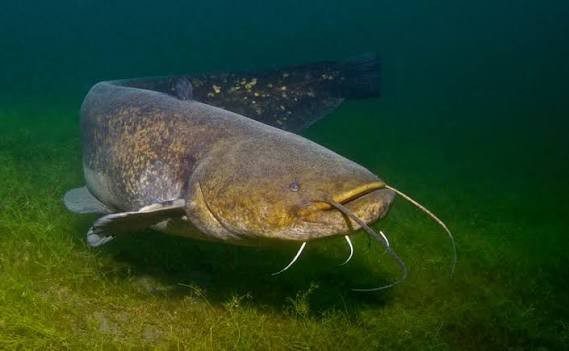
- Huchen (Danube Salmon): As massive apex freshwater predators, targeting huchen demands specialized, heavy-duty tackle including powerful two-handed Spey rods and large, articulated streamers designed to trigger aggressive, predatory strikes.
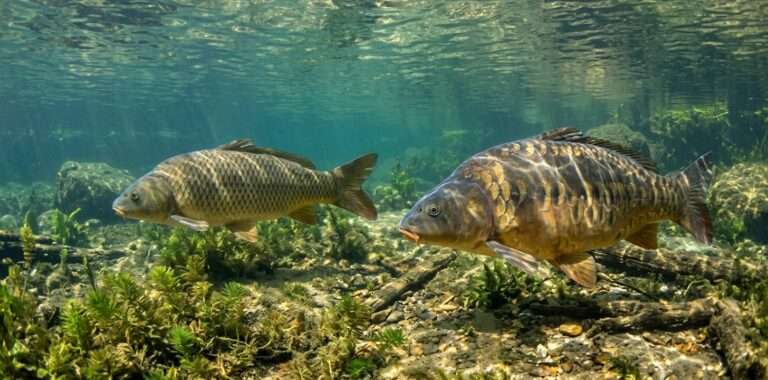
- Chub: Opportunistic, aggressive, and strong fighters, chub readily attack foam beetles, terrestrial insect imitations, and dry surface patterns during the warmth of the summer months.
Stillwater vs. River Angling Strategies
Fishing on lakes and stillwaters requires entirely different tactics, including longer, uninterrupted casts, specialized intermediate or sinking lines, and systematic retrieval cadences such as stripping streamers or slowly creeping chironomid patterns along weed beds. Conversely, river angling centers heavily on mastering varying current speeds, executing precise line mends to eliminate drag, and ensuring your fly drifts naturally at the exact speed of the underlying water current.
Environmental Factors: Weather and Water Temperature
Weather patterns heavily dictate aquatic activity and feeding windows. Overcast days featuring stable barometric pressures and gentle breezes frequently create ideal conditions, prompting heavy insect hatches and active surface feeding. Additionally, water temperature is critical: the optimal range for cold-water species like trout sits strictly between 10°C and 16°C. Excessively warm water severely depletes dissolved oxygen concentrations, driving fish into deep, lethargic states.
Seasonal Fly Fishing Strategies
- Spring: Characterized by high, cold flows and massive insect hatches, offering aggressive feeding windows for both dry flies and subsurface nymphs.
- Summer: Features lower water levels and higher temperatures, requiring anglers to focus efforts on early mornings, late evenings, and terrestrial insect patterns.
- Autumn: Brings cooling water temperatures and pre-spawn activity, making it the prime time for large streamers and heavy bug hatches.
- Winter: Dominated by cold, sluggish water conditions where success relies entirely on slow, methodical deep-nymphing during the warmest midday hours.
Fly Tying at Home
Tying your own flies is a deeply rewarding extension of the sport that deepens your understanding of aquatic entomology. By utilizing a tying vise, specialized spools of thread, hooks, feathers, tinsel, and synthetic dubbing materials, you can craft completely customized, highly effective patterns directly at your own workbench.
Fly Line Comparison Table
| Fly Line Type | Primary Characteristic | Best Used For |
|---|---|---|
| Weight-Forward (WF) | Extra weight concentrated near the front | Long, precise casts and general beginner use |
| Double Taper (DT) | Symmetrical taper along the entire length | Delicate dry fly presentation on small streams |
| Sinking Lines | Denser construction designed to submerge | Reaching deep pools and fast river bottoms |
Comparison of Fly Line Types
Seasonal Strategy Table
| Season | Water Conditions | Primary Angling Strategy |
|---|---|---|
| Spring | High, cold water with active insect hatches | Targeting aggressive feeding windows with dry flies and nymphs |
| Summer | Lower flows and warmer temperatures | Focusing on early mornings, late evenings, and terrestrial patterns |
| Autumn | Cooling water and pre-spawn activity | Using streamers and matching heavy bug hatches |
| Winter | Cold, sluggish water and deep holding pools | Slow, methodical deep-nymphing during peak warmth hours |
Seasonal Strategy Guide
On-Water Safety Essentials and Gear Budgeting
Safety should always be a primary concern when wading through natural river ecosystems. Always wear polarized sunglasses—not only to cut through surface glare and spot fish holding in the current, but to protect your eyes from stray hooks during windy conditions.
Utilize a secure wading belt, wear proper wading boots equipped with reliable rubber or felt traction, and exercise extreme caution when crossing heavy, fast-moving currents. For newcomers entering the sport on a budget, purchasing a pre-matched combo kit containing a balanced rod, reel, line, and backing offers peak performance and incredible value, with standard beginner packages typically ranging from $100 to $250.
Fly Fishing vs. Conventional Fishing
While conventional spin fishing relies heavily on casting weighted hardware, metal spoons, and split-shot sinkers, fly fishing represents a completely distinct, immersive discipline. Rooted heavily in aquatic entomology, delicate presentation, and fine motor skills, it establishes an intimate, respectful interaction with the natural ecosystem.
Frequently Asked Questions
How much does a basic fly fishing setup cost?
Quality beginner combo packages typically range from $100 to $250, providing all the fundamental equipment required to step straight onto the water.
What rod weight is best for a beginner?
A 5-weight rod is universally recognized as the absolute best all-around choice for pursuing freshwater trout, bass, and panfish across diverse environments.
Affordable Flies from Temu: Expanding Your Tackle Box on a Budget
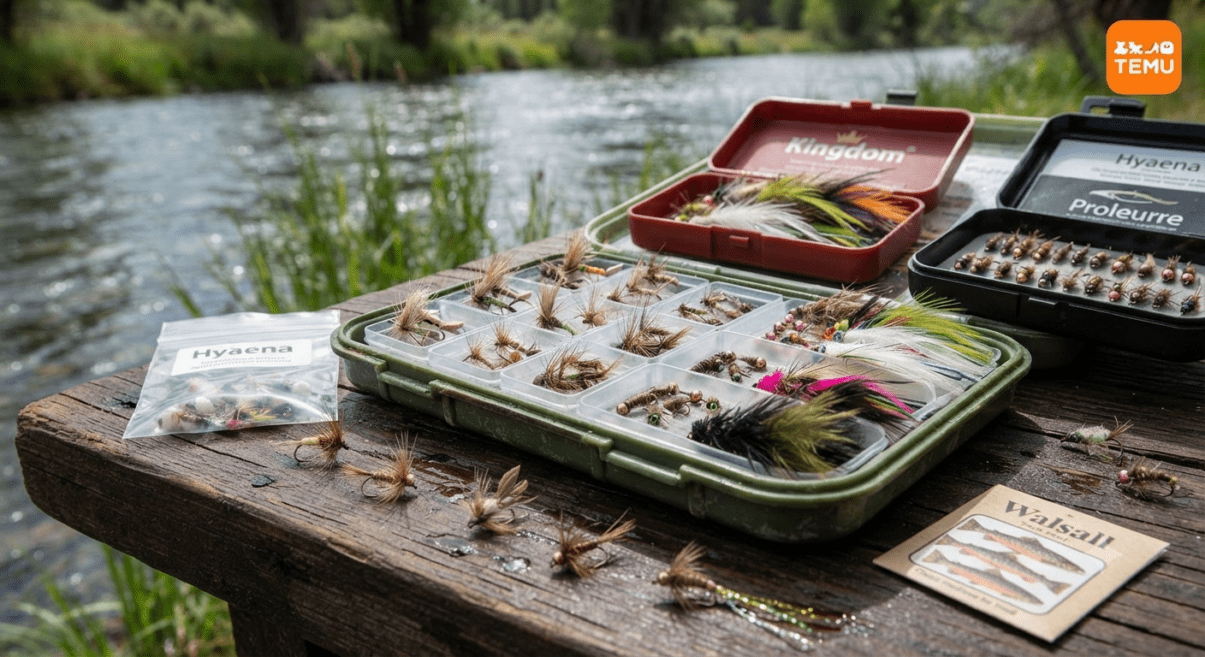
Building a comprehensive collection of artificial flies can quickly become an expensive endeavor, especially when purchasing high-end, hand-tied patterns from specialty fly-fishing shops. For anglers looking to expand their selection without breaking the bank, budget-friendly options have become widely available through global online marketplaces like Temu.
Sourcing affordable flies from Temu allows both beginners and experienced fishermen to stock up on a wide variety of dry flies, wet flies, nymphs, and streamers at a fraction of traditional retail costs. While these budget patterns are fantastic for filling your boxes and practicing on snag-heavy waters where losing a fly is inevitable, it is always a good practice to inspect the hook points and eyelets closely, and ensure your knots—such as a reliable Snell knot—are securely tied to handle aggressive strikes from fish without slipping.
Temu Budget Flies Brand & Supplier Table
| Manufacturer / Brand | Fly Types Offered | Price Range & Value |
|---|---|---|
| Kingdom | Streamers, Nymphs, Saltwater patterns | Affordable bulk packs, excellent durability for budget gear |
| Proleurre | Dry flies, Wet flies, Assorted insect kits | Extremely low cost per piece, ideal for beginners |
| Hyaena | Nymphs, Bead-head patterns, Popper flies | Budget-friendly mixed sets with diverse hook sizes |
| Walsall | Classic trout flies, Terrestrials, Caddis imitations | High quantity per set, great for stocking boxes cheaply |
Popular Budget Fly Manufacturers Available on Temu