How to Catch More Slab Crappie in 2026:Best Expert Fishing Guide
Understanding the Slab Crappie Phenotype and Biology
Defining the Term Slab in Modern Angling
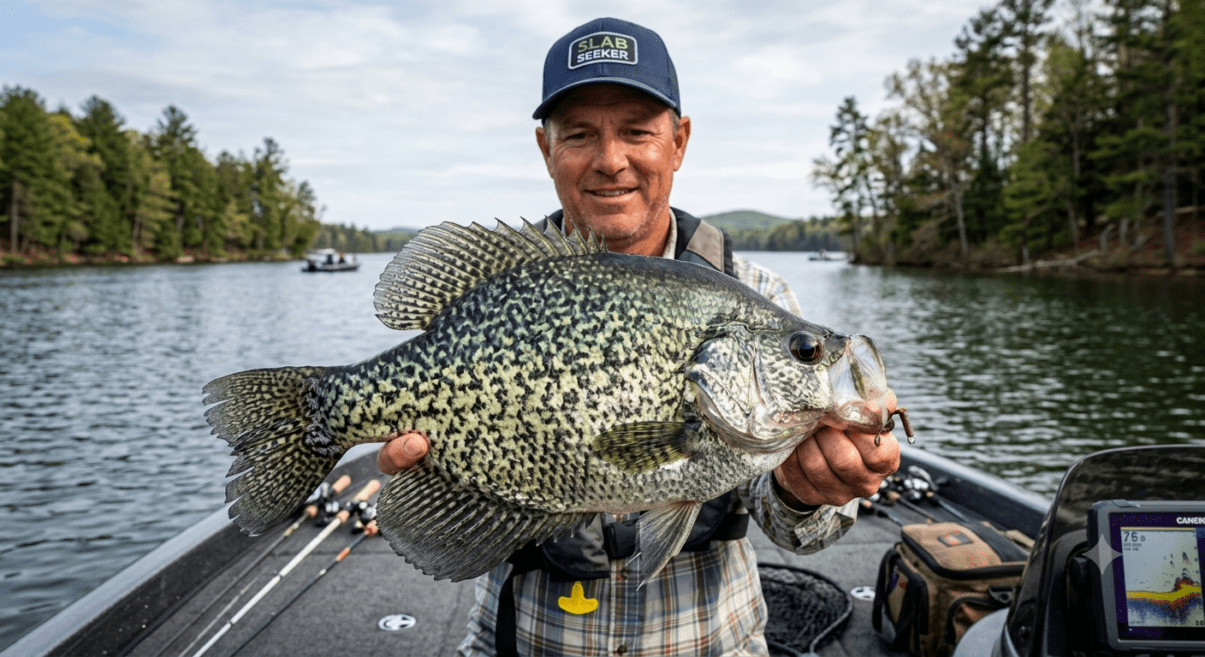
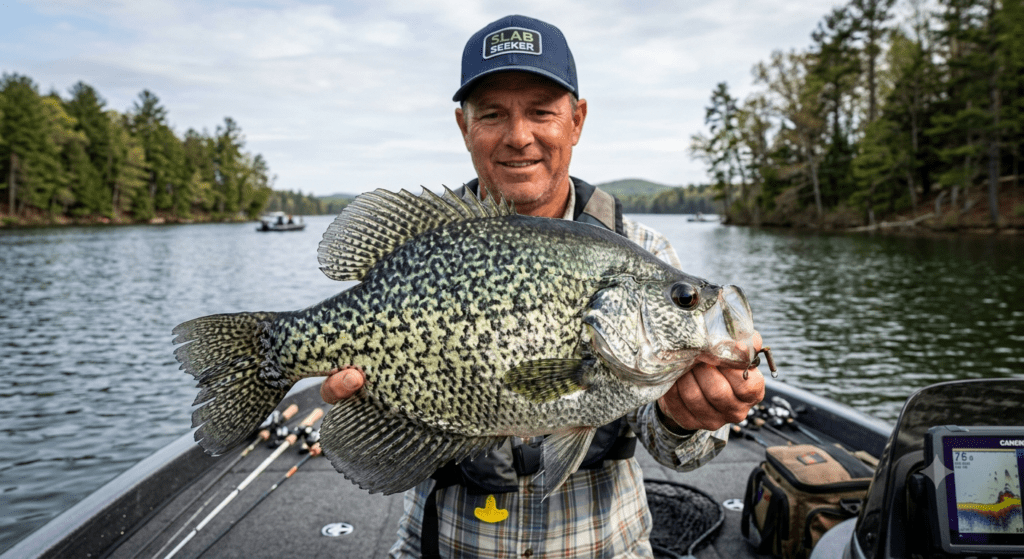
In North American freshwater angling, the word slab refers strictly to a trophy-sized crappie—typically a fish exceeding 12 to 14 inches in length and weighing upwards of 1.5 to 3+ pounds. These mature specimens display a wide, compressed body shape reminiscent of a thick wooden board or concrete slab, hence the moniker. Landing a true slab requires an understanding of how age, forage abundance, and genetic potential intersect within a fishery.
Physical Characteristics of a Slab
A true slab exhibits deep vertical body compression, a distinct dorsal hump immediately behind the head, and exceptional muscular mass along the fillet line. Unlike juvenile crappie, which present a slender, translucent appearance, a mature slab possesses thick skin, dense scale armor, and a wide mouth cavity capable of consuming 3- to 4-inch gizzard shad or native minnows easily.
Growth Rates and Lifespan of Slab Crappie
Achieving slab status demands specific environmental conditions over a prolonged duration. Under optimal growth conditions—rich forage bases like threadfin shad, minimal overpopulation, and balanced predator-prey dynamics—a crappie takes 4 to 6 years to reach 12 inches and 7 to 10 years to grow into a 3-pound slab. Cold northern waters slow this growth rate while extending longevity, whereas warm southern impoundments accelerate growth at the expense of overall lifespan.
Why Large Crappie Are Called Slabs
The term originated among southern crappie guides in the mid-20th century, who used the descriptor to distinguish thick, heavy panfish from smaller “papermouths.” When lifted vertically from the water, these panfish present a massive side profile that completely hides an angler’s hands, creating the visual illusion of a floating slab of timber.
The “Papermouth” Myth vs. Slab Anatomy
While crappie are broadly nicknamed “papermouths” due to the thin, delicate membrane connecting their upper and lower jaws, a true slab features significantly tougher, thicker maxillaries than juvenile fish. However, improperly setting the hook with stiff rods or heavy drag settings can still tear the mouth tissue, resulting in lost fish. Precision drag control and medium-light parabolic rod blanks are critical when handling these heavy specimens.
Black Crappie vs. White Crappie: Species Identification
Targeting slabs effectively requires distinguishing between the two main species: Black Crappie (Pomoxis nigromaculatus) and White Crappie (Pomoxis annularis). Although both reach slab proportions, their habitat preferences, feeding habits, and structural associations differ dramatically.
Pro Tip: Count the dorsal fins spines! White crappie consistently show 5 or 6 dorsal spines, while black crappie feature 7 or 8 distinct dorsal spines.
Morphology and Identification Key
White crappie display dark vertical bars along their sides and possess a longer, more streamlined body shape. Black crappie lack structured vertical patterns, exhibiting an irregular collection of dark spots, flecks, and blotches across a darker silver-green background. Additionally, black crappie have a steeper forehead profile compared to the sloping forehead of the white crappie.
Ecological Niche and Forage Preferences
White crappie thrive in turbid, muddy, or stained waters with moderate current, making them dominant in river systems and shallow agricultural impoundments. They actively chase larger, mobile forage fish like gizzard shad. Black crappie prefer clear, cool, vegetated lakes and reservoirs, feeding heavily on small minnows, aquatic insects, and clear-water crustaceans like amphipods and crawfish.
2. Seasonal Slab Movement and Water Temperature Dynamics
Spring Fishing: The Pre-Spawn, Spawn, and Post-Spawn Transitions
Spring represents the highest-percentage opportunity of the year to catch a personal-best slab crappie. As water temperatures climb out of the winter depths, massive female slabs migrate toward shallow staging zones before making their final push onto spawning beds.
Pre-Spawn Staging Patterns 48^F- 58^F
During the pre-spawn stage, slab crappie stage along creek channels, primary points, and drop-offs adjacent to shallow spawning flats. Females gorge on forage to develop egg masses. Vertical jigging or slow-trolling heavy plastics along channel edges in 10 to 18 feet of water yields heavy stringers of trophy fish during this phase.
The Spawn Phase 59 F- 68^F
When water temperatures stabilize in the low 60s, male crappie construct shallow nests near wood cover, reed beds, or dock pilings in 1 to 6 feet of water. Female slabs move shallow, deposit their eggs over hours, and quickly retreat to slightly deeper secondary cover. Pitching small jigs under slip floats directly into tight pockets of brush or root systems is the primary presentation during the spawn.
Post-Spawn Recovery (69^F – 74^F)
Following the spawn, female slabs enter a temporary period of lethargy before migrating outward toward main-lake structures. They suspended near first-line drop-offs, deep brush piles, and timber edges. Sub-surface crankbaits and casted hair jigs pulled slowly through the upper water column target these recovering giants.
Summer Fishing: Thermocline Navigation and Deep Water Suspensions
Summer heat pushes slab crappie into deep main-lake structures, thermocline layers, and heavily shaded deep docks. Understanding open-water pelagic schooling and thermocline depth is essential for summer success.
Locating and Exploiting the Lake Thermocline
During summer stratification, lakes divide into three thermal layers: the epilimnion (warm top layer), metalimnion (thermocline), and hypolimnion (cold, oxygen-depleted bottom layer). Slab crappie cluster within or just above the thermocline (typically 12 to 22 feet deep) where oxygen levels and water temperatures are optimal for active foraging.
Fall Fishing: Following the Threadfin Shad Migration
As surface temperatures cool in autumn, baitfish move en masse from deep main-lake basins into shallow creek arms and river bends. Slab crappie follow these bait clouds aggressively to bulk up for the upcoming winter.
Creek Arm Interception Tactics
Focus on creek mouths during early fall, progressing deeper into the back of creek channels as water temperatures fall below 65^\circ\text{F}. Target standing timber, submerged laydowns, and channel bends where schools of shad become trapped against shallow banks.
Winter Fishing: Ice Angling and Deep Basin Aggregations
Winter stabilizes crappie movements. Slabs gather in massive, dense schools over deep mud flats, main-lake river channels, or deep basin structures, staying highly concentrated for months.
Deep Basin Vertical Jigging Techniques
Whether fishing open water from a boat or through the ice, winter slab angling demands ultra-delicate presentations. Micro-jigs (1/32\text{ oz} to 1/64\text{ oz}) tipped with waxworms or small tungsten tungsten jigs fished on 2 lb to 4 lb test fluorocarbon lines are necessary to entice slow-moving winter slabs.
| Season | Water Temp Range | Primary Location / Structure | Average Depth (ft) | Top Presentation |
|---|---|---|---|---|
| Pre-Spawn | 48 – 58 | Creek Channel Drop-offs, Points | 10 – 18 | Slow Spider Rigging, Vertical Jigging |
| Spawn | 59 – 68 | Shallow Brush, Reeds, Docks | 1 – 6 | Cast & Cork, Pitching Micro Jigs |
| Post-Spawn | 69 – 74 | Secondary Drop-offs, Staging Timber | 8 – 14 | Casting Hair Jigs, Small Crankbaits |
| Summer | 75 – 88 | Thermocline, Main-Lake Brush, Docks | 14 – 25 | Live Scope Vertical Jigging, Deep Trolling |
| Fall | 55 – 74 | Creek Arms, Gizzard/Threadfin Shad Schools | 6 – 15 | Long-Line Trolling Soft Plastics |
| Winter | 34 – 47 | Deep Main Basins, River Channels | 18 – 40 | Tungsten Micro-Jigs, Dead-Stick Minnows |
3. Weather, Barometric Pressure, and Environmental Slab Factors
Barometric Pressure Shifts and Their Impact on Feeding Windows
Barometric pressure directly influences crappie swim bladder comfort and feeding behavior. Tracking barometric trends allows anglers to schedule trips around peak slab activity windows.
Pre-Frontal Low Pressure Spikes
As an approaching cold front lowers atmospheric pressure, slab crappie enter an aggressive feeding frenzy. They move up out of dense cover, suspended in the water column, and attack fast-moving lures, making this the best time to run search baits like crankbaits or spinnerbaits.
Post-Frontal High-Pressure Lockjaw
Following a cold front, bluebird skies and high barometric pressure force slab crappie deep into the densest available cover. During these conditions, downsize your tackle, slow your retrieval speed to a complete standstill, and drop soft plastics directly into brush piles.
Wind Direction, Water Clarity, and Light Penetration
Wind drives plankton, which attracts baitfish, which in turn draws aggressive slab crappie. Windward banks and points with churned-up water often hold concentrated schools of active slabs.
Selecting Water Clarity Specific Presentations
In muddy water (under 1 foot of visibility), choose high-vibration lures with built-in rattles and high-contrast color combinations like chartreuse/black or orange/black. In clear water (over 4 feet of visibility), rely on translucent natural patterns, thin fluorocarbon lines, and long-distance casts to avoid spooking wary slab crappie.
| Environmental Condition | Barometric Trend | Crappie Behavior Profile | Recommended Angling Tactic |
|---|---|---|---|
| Pre-Frontal Storm | Rapidly Falling (29.90) | Highly Aggressive, Open-Water Hunting | Fast Trolling, Casting Crankbaits |
| Post-Frontal Clear | High / Rising (30.30) | Lethargic, Buried Deep in Wood/Cover | Tight-Line Vertical Jigging, Live Minnows |
| Overcast / Drizzle | Steady / Low (29.90 – 30.10 ) | Roam Freely Away from Heavy Cover | Swim-Jigs, Cast & Retrieve Plastics |
| Bright Sun / Calm | High Steady (30.20) | Tight to Deep Shade, Docks, Brush | Shooting Docks, Precise Forward Sonar Drops |
4. Prime Slab Waters: Lakes, Rivers, and Reservoirs
Reservoirs vs. Natural Lakes vs. River Systems
Understanding the body of water you are fishing dictates structural analysis and seasonal forecasting for trophy crappie.
Flood-Control Reservoirs
Reservoirs with controlled water levels feature extensive river channels, submerged timber fields, and fluctuating shorelines. These bodies of water produce massive slabs due to high nutrient runoff and dense shad populations, though rapidly changing water levels require adaptable positioning strategies.
Natural Glacial Lakes
Natural lakes feature abundant aquatic vegetation (coontail, cabbage, eelgrass) and natural drop-offs. Black crappie dominate these clear-water ecosystems. Target weedlines, cabbage beds, and deep edge humps using light finesse lures.
Navigable River Systems and Oxbows
River systems hold slab crappie in backwater sloughs, cut-offs, oxbow lakes, and current breaks behind wing dams. White crappie thrive here, utilizing muddy backwaters to ambush migrating baitfish away from heavy main-stem currents.
5. Target Structures for Holding Slab Crappie
Brush Piles and Artificial Structures
Submerged brush piles—whether natural oak laydowns, sunken hardwood, or man-made PVC habitats—are reliable holding spots for mature slab crappie year-round.
Anatomy of a Prime Slab Brush Pile
Not all brush piles hold slabs. The best piles sit adjacent to steep channel drop-offs, feature large hardwood limbs with open crown spaces (allowing big fish to move inside), and top out at mid-depth levels within the water column.
PVC Habitats vs. Natural Wood Piles
Natural wood piles harbor algae and micro-insects that attract small forage fish, making them effective for overall fish numbers. However, smooth PVC stake beds don’t snag hooks as easily, allowing anglers to drop jigs directly into tight structure without snagging lures.
Standing Timber, Bridge Docks, and Deep Abutments
Vertical structures allow slab crappie to adjust their depth effortlessly in response to changing weather conditions without moving horizontally.
Suspended Timber Tactics
In deep reservoirs with standing timber, slabs suspend at specific depths along tree trunks. Count down your jig to the precise depth of suspended fish shown on your sonar, or cast past the tree and swing your lure across the trunk structure.
Bridge Abutments and Dock Pilings
Bridge pilings create current breaks, micro-eddies, and extensive vertical shade paths. Target the down-current side of concrete pilings, drifting live minnows or small jigs along the shadow line where slabs lurk to ambush passing forage.
6. Advanced Sonar and Electronics for Locating Slab Schools
Forward-Facing Sonar (FFS) Revolution: Target Specific Slabs
Live-imaging technologies (Garmin Livescope, Lowrance ActiveTarget, Humminbird MEGA Live) have transformed slab crappie fishing. Anglers can now observe real-time fish responses to specific lure actions, sizes, and colors.
Interpreting Slab Profiles on Forward Sonar
On live imaging, a true slab crappie presents a bright, wide target return with an unmistakable downward-sloping body posture when inspecting a lure. Unlike smaller panfish that dart around erratically, large slabs move deliberately, elevating slowly toward a lure before engulfing it.
Overcoming FFS-Induced Fish Pressure
Heavy pressure from forward-facing sonar has made slabs in public waters hyper-wary of aggressive jigging movements. When targeting imaged slabs, cast past the fish and pull the lure over its head, avoiding dropping heavy lead heads directly into the middle of the school.
Side Imaging, Down Imaging, and Precision GPS Mapping
Traditional 2D, Side Imaging, and Down Scan remain invaluable tools for scanning large areas of water to locate offshore cover, submerged timber fields, and deep channel edges before making a fishing approach.
Identifying Crappie vs. Baitfish vs. Bass on Side Scan
Side imaging at 455\text{ kHz} or 1.2\text{ MHz} displays crappie schools as distinct groups of bright, tiny dots casting long sonar shadows across the lake floor. Larger individual spots casting elongated, thick shadows indicate big solitary slabs staging away from smaller panfish groups.
7. Complete Tackle Breakdown for Slab Fishing
Selecting the Optimal Slab Rod: Length, Action, and Power
Using the wrong rod leads to missed strikes and torn mouth tissue. Slab fishing demands specialized rods tuned to specific techniques like vertical jigging, dock shooting, or long-line trolling.
Light Power with Parabolic Taper
Select high-modulus graphite rods featuring a light power classification paired with a fast-to-moderate parabolic action. The supple tip absorbs sudden surges from heavy fish, while the sturdy mid-section provides enough backbone to lift 2-pound slabs into the boat.
| Technique | Optimal Length | Power | Action | Material Choice |
|---|---|---|---|---|
| Dock Shooting | 5’6″ – 6’0″ | Light / Ultra-Light | Fast | High-Modulus Graphite |
| Vertical Jigging / FFS | 10’0″ – 14’0″ | Light | Moderate-Fast | IM8 Graphite Blend |
| Spider Rigging | 12’0″ – 16’0″ | Medium-Light | Moderate | Carbon Composite |
| Casting & Cork | 7’0″ – 9’0″ | Light | Fast | Standard Graphite |
| Long-Line Trolling | 8’0″ – 12’0″ | Medium-Light | Parabolic / Slow | Fiberglass / Composite |
Reels, Drag Systems, and Line Selection Criteria
Pairing your rod with a balanced spinning or specialized trolling reel featuring a smooth drag system is critical to prevent line breakage and pulled hooks.
Fluorocarbon vs. Monofilament vs. Braided Lines
Monofilament: Provides ideal stretch for shock absorption during close-quarters vertical jigging and float fishing. Fluorocarbon: Highly invisible in clear water with high abrasion resistance around sharp brush piles. Braided Line: Essential for long-casting, trolling, or dock shooting. Combine 6 lb to 8 lb test braid with a 4 lb to 6 lb fluorocarbon leader for optimal sensitivity and stealth.
| Line Type | Pound Test Range | Best Application | Pros | Cons |
|---|---|---|---|---|
| Monofilament | 4 lb – 6 lb | Cast & Cork, Vertical Wood | High Stretch, Supple, Inexpensive | Higher Line Memory, Lower Sensitivity |
| Fluorocarbon | 3 lb – 6 lb | Clear Water, Forward Sonar | Near Invisible, Abrasion Resistant | |
| Braided Line | 6 lb – 10 lb | Dock Shooting, Trolling | Zero Stretch, High Sensitivity, Thin | Highly Visible, Requires Leader Knot |
8. Ultimate Bait and Artificial Lure Selections for Slab Crappie
Artificial Soft Plastics, Hair Jigs, and Micro-Crankbaits
Matching your artificial lure to the prevailing water clarity, forage size, and weather conditions is key to consistent slab success.
Soft Plastic Profiles: Curly Tails, Tube Jigs, and Straight Tails
Straight-tail minnow profiles (2 to 3 inches) excel under high-pressure conditions and when using forward-facing sonar. Curly-tail grubs generate strong water displacement, ideal for stained water or search presentations. Classic tube jigs trap small air bubbles, releasing them under water to trigger strikes from wary slabs.
The Timeless Efficiency of Bucktail and Chenille Hair Jigs
Hand-tied marabou and bucktail jigs offer lifelike fluid action that soft plastics cannot match. Even when held completely still, marabou fibers pulsate in micro-currents, triggering strikes from large, inactive slabs.
Live Bait Rigging and Management for Big Slabs
When artificial lures fail to perform, natural live bait remains an unmatched producer of giant crappie.
Hooking Techniques for Live Minnows
Hook minnows through the lips for active forward-trolling or retrieval. For vertical jigging under a float, hook the minnow directly through the back just below the dorsal fin, taking care to avoid damaging the spine. This allows the bait to swim naturally in a horizontal posture.
| Water Clarity | Target Depth | Recommended Lure Style | Primary Color Patterns | Jig Head Weight |
|---|---|---|---|---|
| Stained / Muddy | Shallow (2 – 8\text{ ft}) | Large Curly-Tail / Rattle Tubes | Chartreuse / Black, Solid Orange | 1/16 oz – 1/8 oz |
| Clear / Gin-Clear | Deep (15 – 30\text{ ft}) | Straight-Tail Soft Minnow / Marabou | Ghost Natural, Blue Shiner, Pearl | 1/32 oz – 1/16 oz |
| Tannic / Dark Water | Mid-Depth (8 – 15\text{ ft}) | Hair Jigs / Paddle Tail Plastics | Pink / Chartreuse, Copper Sparkle | 1/16 oz |
9. Tactical Presentation and Retrieval Speeds for Slab Bites
Vertical Jigging and Tight-Lining Techniques
Vertical jigging involves positioning your boat directly over structure and dropping a light jig down into the strike zone. Keep your rod tip steady; crappie often strike on the drop or while the lure hangs motionless.
Spider Rigging and Multi-Rod Trolling Spreads
Spider rigging utilizes 6 to 8 long rods (12 to 16 feet) mounted across the bow of the boat, pushed slowly (0.3 to 0.8\text{ mph}) using an electric trolling motor. This technique covers wide areas of water while targeting multiple depth zones simultaneously.
Dock Shooting: Skipping Lures into Deep Shade
Dock shooting allows anglers to present lures into shaded boat slips and under low-hanging docks that cannot be reached with standard casts.Dock Shooting Mechanics: Hold the jig head by the hook bend with your free hand (barb pointed away from fingers), pull the rod tip back to load tension on the blank like a bow, aim low, and release the lure simultaneously with your reel bail open.
| Technique | Optimal Target Speed | Primary Electronics Used | Key Target Zone |
|---|---|---|---|
| Spider Rigging | 0.3 – 0.7\text{ mph} | 2D Sonar / Down Scan | Pre-Spawn Staging Flats |
| Long-Line Trolling | 0.9 – 1.4\text{ mph} | GPS Plotter / Side Scan | Fall Creek Arm Migrations |
| Crankbait Pulling | 1.5 – 2.2\text{ mph} | Side Scan / GPS Mapping | Open Water Summer Suspensions |
| Forward Sonar Pitching | Dead Stop to 0.5\text{ mph} | Live Forward Imaging | Isolated Brush / Individual Slabs |
10. Platform-Specific Tactics: Boat, Kayak, and Bank Slab Angling
Bank Fishing Strategies for Trophy Crappie
Bank anglers can target trophy crappie successfully by focusing on steep drop-offs, rip-rap breakwaters, and public bridge abutments during early spring and late fall. Pack light, use long (8 to 9 foot) sensitive rods, and deploy slip floats to keep lures at precise depths without snagging bottom debris.
Kayak Fishing: Stealth Operations in Shallow Cover
Kayaks offer unmatched access to shallow, weed-filled backwaters and non-motorized zones. Their low profile avoids spooking skittish slabs staging in shallow water. Use micro-anchors or pole-spuds to hold your position quietly near cover.
| Platform | Mobility Level | Stealth Advantage | Electronics Integration | Cost Barrier |
|---|---|---|---|---|
| Fiberglass / Alum Boat | High | Moderate | Full Advanced (FFS, Side Scan) | High |
| Fishing Kayak | Moderate | High | Moderate (Compact Sonar / FFS) | Moderate |
| Shoreline / Bank | Low | High (Static Positioning) | Minimal (Castable Sonar) | Low |
11. Trophy Slab Playbook and Tournament Secrets
Upsizing Bait Profiles for Target Selection
To target trophy slabs and avoid smaller panfish, increase your bait size. Downsizing catches numbers, but upsizing to 3-inch or 4-inch soft minnows, large hair jigs, or small 1/4 oz crankbaits selectively triggers strikes from mature, aggressive slabs.
Targeting Solitary Open-Water Cruisers
The largest slabs in a fishery often avoid densely populated brush piles, roaming open water alone or in small pods to feed on pelagic shad. Locate these solitary giants by scanning open basins adjacent to main river channels using forward-facing sonar.
12. Common Slab Fishing Errors and Tactical Corrections
| Mistake | Why It Harms Success | Tactical Correction |
|---|---|---|
| Over-Jigging Lures | Erratic, violent movements spook mature, wary slabs. | Hold the rod tip steady; allow natural body tremors and micro-currents to move the lure. |
| Overly Stiff Hooksets | Tears thin jaw membranes, causing hook pulled losses. | Use a smooth sweep of the rod tip; rely on sharp, light-wire hooks to set under pressure. |
| Fishing Below Target Fish | Crappie eyes are positioned upward; they rarely strike lures below their sightline. | Position your lure 1 to 2 feet ABOVE target fish indications on your sonar. |
| Ignoring Drag Calibration | Locked drags tear hooks out of delicate mouth tissue when big fish surge at the boat. | Set drags light; use a landing net for every fish over 12 inches. |
| Using Heavy Fishing Line | Thick line reduces lure action and casts shadows in clear water. | Downsize to 4 lb or 6 lb fluorocarbon or thin braided mainlines with leaders. |
13. Fish Handling, Conservation, and Slab Culinary Guide
Catch-and-Release Practices for Giant Females
Selective harvest helps sustain quality crappie fisheries. Consider keeping smaller, abundant 9- to 11-inch fish for meals while releasing mature female slabs (14+ inches) to preserve breeding genetics within the water system.
Proper Filleting, Cleaning, and Preparation Methods
Use a sharp, flexible 6-inch electric or manual fillet knife to yield clean, bone-free fillets. Make a cut behind the pectoral fin down to the spine, slide the blade flush along the backbone toward the tail, flip the fillet over, and gently skin the meat away from the skin back-to-tail.
14. Specialized Knowledge: Myths, Safety, and Regulations for Slab Anglers
Myth vs. Fact in Modern Crappie Angling
Myth: Crappie only bite during the spring spawn. Fact: Crappie bite consistently year-round; their depth, locations, and feeding patterns simply shift across seasons.
Myth: You must use live minnows to catch big slabs. Fact: Artificial plastics and hair jigs often out-produce live bait when fished at the correct depth and speed.
Safety and Boating Considerations
When fishing cold winter basins or early spring pre-spawn stages, always wear a lightweight, low-profile PFD. Cold-water immersion poses serious safety risks long before hypothermia sets in. Keep boat decks clear of clutter when operating near brush or navigating dark waters during early morning trips.
15. Frequently Asked Questions (FAQ) About Slab Crappie
What size qualifies a crappie as a true slab?
While regional standards vary, a crappie measuring 12 inches or longer and weighing over 1.5 pounds is broadly considered a slab. Specimens reaching 15+ inches and 3+ pounds are rare, true trophy-class fish.
What is the best color lure for slab crappie?
Chartreuse and black combinations excel in stained or muddy water. In clear water, natural translucent shades like pearl, ghost minnow, silver flake, and smoke produce the most consistent bites.
Do slab crappie feed at night?
Yes. Slabs feed actively at night, especially during clear summer months. Setting up submersible green LED fishing lights near bridge abutments or deep docks attracts plankton, minnows, and feeding crappie.
How fast should I troll for slab crappie?
Spider-rigging speeds typically range from 0.3 to 0.7\text{ mph}. Long-line trolling soft plastics runs best between 0.9 and 1.3\text{ mph}, while trolling micro crankbaits requires faster speeds of 1.5 to 2.2\text{ mph}.
Can you catch slab crappie from the shore?
Absolutely. Shoreline anglers can catch slabs during the spring pre-spawn and spawn phases when fish move shallow, or during late autumn nights around lighted public docks and bridge structures.
Why do I keep missing crappie bites or tearing hooks out?
Setting the hook too hard, using stiff heavy-action rods, or setting reel drag too tight often tears thin jaw tissue. Switch to a light-power parabolic rod, back off your drag, and use a landing net to land large fish safely.
What is the best water temperature for crappie spawning?
Crappie begin moving shallow when water temperatures reach 55^F to 58^F , with primary spawning activity occurring between 60^F and 68^F
How deep do slab crappie suspend during the summer?
Summer slabs usually suspend along thermocline boundaries, typically 12 to 25 feet deep over deep main-lake basins, river channels, or timber fields.
Are black crappie larger than white crappie?
White crappie generally grow slightly longer on average, while black crappie tend to be deeper-bodied and heavier at equal lengths. Both species are capable of reaching slab proportions under optimal conditions.
How does forward-facing sonar help in slab fishing?
Forward-facing sonar allows anglers to locate suspended fish in real time, cast directly to specific slabs, gauge their reaction to lure movements, and adjust techniques immediately until the fish strikes.
16. Final Expert Summary on Targeting Slab Crappie
Consistently catching trophy slab crappie is a matter of understanding environmental conditions, structural positioning, and fine-tuning your presentation. By using precise sonar setups, choosing specialized light tackle, and matching your lure presentations to seasonal movement patterns, you can reliably target and land giant slabs year-round. Focus on high-percentage structural zones, practice selective harvest to preserve fishery genetics, and refine your presentations on every trip out on the water.
Pan-Seared & Cast-Iron Fried Slab Crappie: The Ultimate Culinary Guide
Mastering the art of cleaning, seasoning, and cooking trophy slab crappie with professional chef-grade recipes, crispy coatings, and signature dipping sauces.
Table of Contents
- 1. Fillet Preparation & Processing Standards
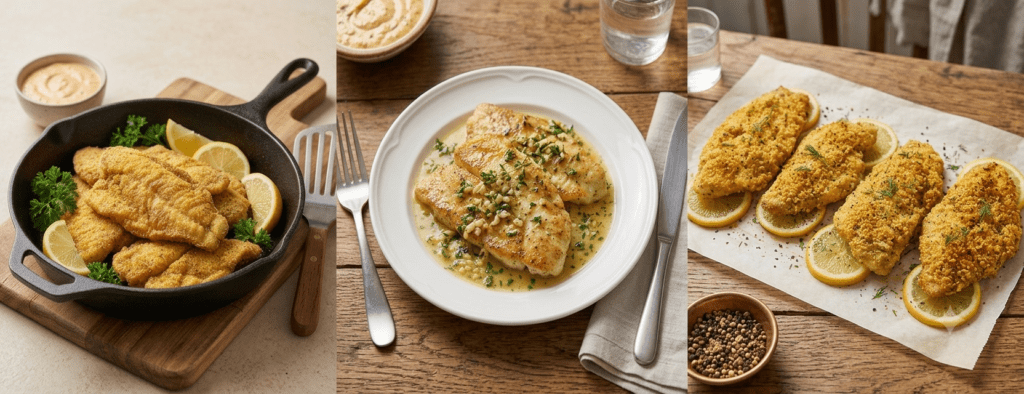
- 2. Recipe 1: Classic Southern Crispy Cast-Iron Fried Slab Crappie
- 3. Recipe 2: Garlic-Herb Butter Pan-Seared Slab Crappie
- 4. Recipe 3: Oven-Baked Lemon Pepper Slab Crappie with Parmesan Crust
- 5. Signature Dipping Sauces & Accompaniments
- 6. Cooking Temperature & Timing Matrix
- 7. Frequently Asked Questions Regarding Crappie Culinary Prep
1. Fillet Preparation & Processing Standards
The delicate, sweet, flaky white meat of a slab crappie requires proper handling from the moment it leaves the water to ensure optimum flavor and texture. Because crappie fillets are tender and lean, improper temperature control or harsh washing techniques can quickly degrade the meat quality.
Step-by-step Fillet Handling Instructions
- Icing Immediately: Place caught crappie directly into a slurry of crushed ice and clean water. Rapid chilling firms up the muscle fibers, making skinning and filleting cleaner and significantly easier.
- Rib Removal: Using a flexible 6-inch fillet knife, angle the blade along the ribcage to remove the belly bones without discarding the prime loin meat.
- Cold Salted Soak: Submerge clean fillets in an ice-cold saltwater brine (1 tablespoon kosher salt per quart of ice water) for 15 to 20 minutes. This removes lingering blood line traces and enhances firmness.
- Drying: Pat the fillets completely dry with paper towels prior to applying any cornmeal coating, flour dreadge, or liquid marinade. Wet fillets steam rather than fry, losing their signature crispiness.
2. Recipe 1: Classic Southern Crispy Cast-Iron Fried Slab Crappie
This classic golden-cornmeal recipe delivers a crunch on the outside while preserving the moisture and delicate flake of the slab fillet inside.
Ingredients
- 8–12 fresh slab crappie fillets (boneless, skinless)
- 1.5 cups yellow cornmeal (fine or medium grind)
- 0.5 cup all-purpose flour
- 1 cup cold buttermilk (or whole milk with 1 tbsp lemon juice)
- 1 tbsp Cajun or Creole seasoning mix
- 1 tsp garlic powder
- 1 tsp onion powder
- 1 tsp smoked paprika
- 0.5 tsp cayenne pepper (optional for extra kick)
- Kosher salt and freshly cracked black pepper to taste
- Peanut oil or peanut/lard blend for frying (minimum 1.5 inches deep in pan)
Step-by-Step Cooking Method
- Soak in Buttermilk: Place dried slab fillets into a glass bowl, pour cold buttermilk over them, and let rest in the refrigerator for 15 minutes.
- Prepare Dredge: In a wide shallow dish, whisk together the cornmeal, all-purpose flour, Cajun seasoning, garlic powder, onion powder, smoked paprika, cayenne, salt, and black pepper.
- Heat Oil: Fill a heavy cast-iron skillet with peanut oil to a depth of 1.5 inches. Heat over medium-high until oil temperature reaches 365°F – 375°F (185°C – 190°C).
- Dredge Fillets: Lift fillets one at a time from the buttermilk, allowing excess liquid to drip off. Press firmly into the cornmeal mix, ensuring 100% full coverage on both sides.
- Fry to Golden Perfection: Gently lay 3 to 4 fillets into the hot oil without overcrowding the skillet. Fry for 2.5 to 3 minutes per side until deep golden brown and internal temperature hits 145°F (63°C).
- Drain & Rest: Transfer fried fillets immediately to a wire rack set over a baking sheet to maintain crispiness. Avoid placing directly on paper towels, which creates steam and soggy bottoms.
3. Recipe 2: Garlic-Herb Butter Pan-Seared Slab Crappie
A lighter, gourmet approach that highlights the subtle sweetness of fresh crappie without heavy breading.
Ingredients
- 6 large slab crappie fillets
- 2 tbsp unsalted butter
- 1 tbsp extra virgin olive oil
- 3 cloves garlic, finely minced
- 1 tbsp fresh lemon juice
- 1 tbsp chopped fresh parsley
- 0.5 tsp dried thyme
- Sea salt and freshly ground white pepper
Preparation Steps
- Season dried fillets lightly with sea salt, white pepper, and dried thyme.
- Heat olive oil and 1 tablespoon of butter in a stainless steel or non-stick skillet over medium-high heat until butter foams.
- Add fillets carefully. Sear for 2 minutes on the first side without moving them to form a light golden crust.
- Flip fillets gently with a thin fish spatula. Add minced garlic and the remaining tablespoon of butter to the pan.
- Baste the tops of fillets continuously with the melted garlic-butter using a spoon for an additional 1.5 to 2 minutes.
- Finish with fresh lemon juice and chopped parsley right before removing from heat. Serves hot.
4. Recipe 3: Oven-Baked Lemon Pepper Slab Crappie with Parmesan Crust
An easy, healthy baked recipe featuring a light Parmesan-herb topping that seals in moisture while providing a satisfying outer crunch.
Ingredients
- 8 slab crappie fillets
- 0.5 cup grated Parmesan cheese
- 0.25 cup panko breadcrumbs
- 2 tbsp melted butter
- 1.5 tsp lemon pepper seasoning blend
- 1 tsp garlic powder
- 1 lemon, thinly sliced into rounds
Baking Instructions
- Preheat oven to 400°F (204°C) and line a baking sheet with parchment paper.
- Arrange lemon slices in a single layer on the parchment paper and place slab crappie fillets directly on top of the slices.
- In a small bowl, combine Parmesan cheese, panko breadcrumbs, melted butter, lemon pepper, and garlic powder.
- Spoon the panko-Parmesan mixture evenly over each fillet, pressing gently so it adheres.
- Bake for 10 to 12 minutes until the fish flakes easily with a fork and the top crust turns light golden brown. Broil for 1 minute at the end if extra browning is desired.
5. Signature Dipping Sauces & Accompaniments
Homemade Cajun Remoulade Sauce
Mix 1 cup mayonnaise, 1 tbsp Dijon mustard, 1 tbsp minced capers, 1 tsp hot sauce, 1 tsp lemon juice, 1 clove minced garlic, and 0.5 tsp smoked paprika. Chill for 30 minutes before serving with fried slab fillets.
Zesty Smoky Tartar Sauce
Combine 1 cup mayonnaise, 3 tbsp finely chopped dill pickles, 1 tbsp dill pickle juice, 1 tsp chopped fresh dill, 0.5 tsp liquid smoke, and salt to taste.
6. Cooking Temperature & Timing Matrix
| Cooking Method | Target Cooking Temp | Cooking Time per Side | Recommended Fat / Oil | Ideal Fillet Thickness |
|---|---|---|---|---|
| Deep / Pan Frying | 365°F – 375°F | 2.5 – 3 minutes | Peanut Oil / Lard | Medium to Thick (0.5 – 0.75 in) |
| Pan-Searing | Medium-High Heat | 2 minutes | Butter + Olive Oil Blend | Thick Slab Loins (0.75 in) |
| Oven Baking | 400°F | 10 – 12 min (total) | Melted Butter / Spray | All Sizes |
| Air Frying | 390°F | 4 – 5 min per side | Light Cooking Oil Spray | Medium Fillets |
7. Frequently Asked Questions Regarding Crappie Culinary Prep
Does slab crappie have a fishy taste?
No. Crappie is renowned for having one of the mildest, sweetest white meats among freshwater gamefish. Any fishy odor or taste is usually the result of improper icing or delayed cleaning after catching.
Should you soak crappie fillets in milk before cooking?
Soaking fillets in cold milk or buttermilk for 15 to 30 minutes neutralizes any residual muddy tones from shallow warm water and helps breading adhere tightly during frying.
How do I keep the breading from falling off when frying crappie?
Ensure fillets are thoroughly patted dry before soaking in buttermilk, shake off excess liquid before dredging, and ensure your frying oil maintains a minimum temperature of 365°F throughout the process.