Global Drought and the Future of World Rivers:2026 How Climate Change, Growing Water Consumption, and Technology Impact Freshwater Ecosystems
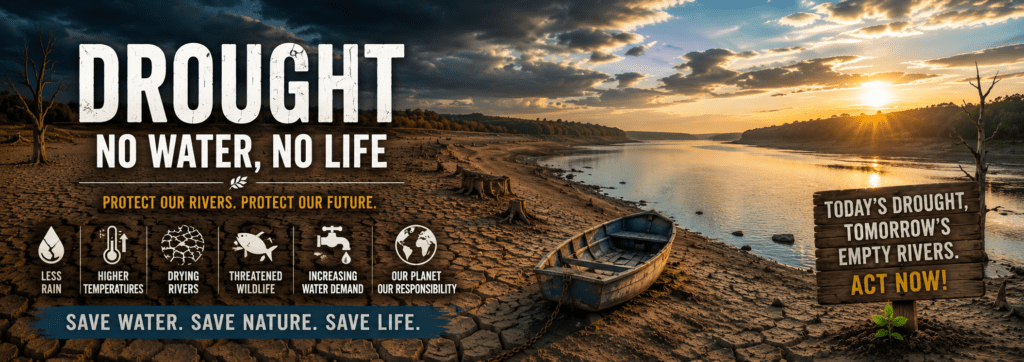
A comprehensive scientific and environmental study on the impacts of global climate disruptions, anthropogenic pressure, and modern technologies on Earth’s hydrological systems.
1. Definition of Drought, Mechanisms of Origin, and Causes of Global Frequency
Drought is a complex hydrometeorological phenomenon defined as a prolonged deficit in precipitation relative to the long-term average in a given geographical area, leading to severe disruption of the water balance. Unlike sudden natural disasters such as floods or earthquakes, drought is a “slow-onset hazard” whose consequences accumulate progressively over weeks, months, or years.
1.1. Primary Categories of Drought in Scientific Literature
In academic and scientific literature, drought is primarily classified into four main categories:
- Meteorological Drought: Occurs when precipitation in a specific region falls significantly below the multi-year average. It represents the initial phase of any dry period.
- Agricultural Drought: Takes place when soil moisture drops to a level that can no longer satisfy the physiological needs of crops, directly threatening agricultural yield and food production.
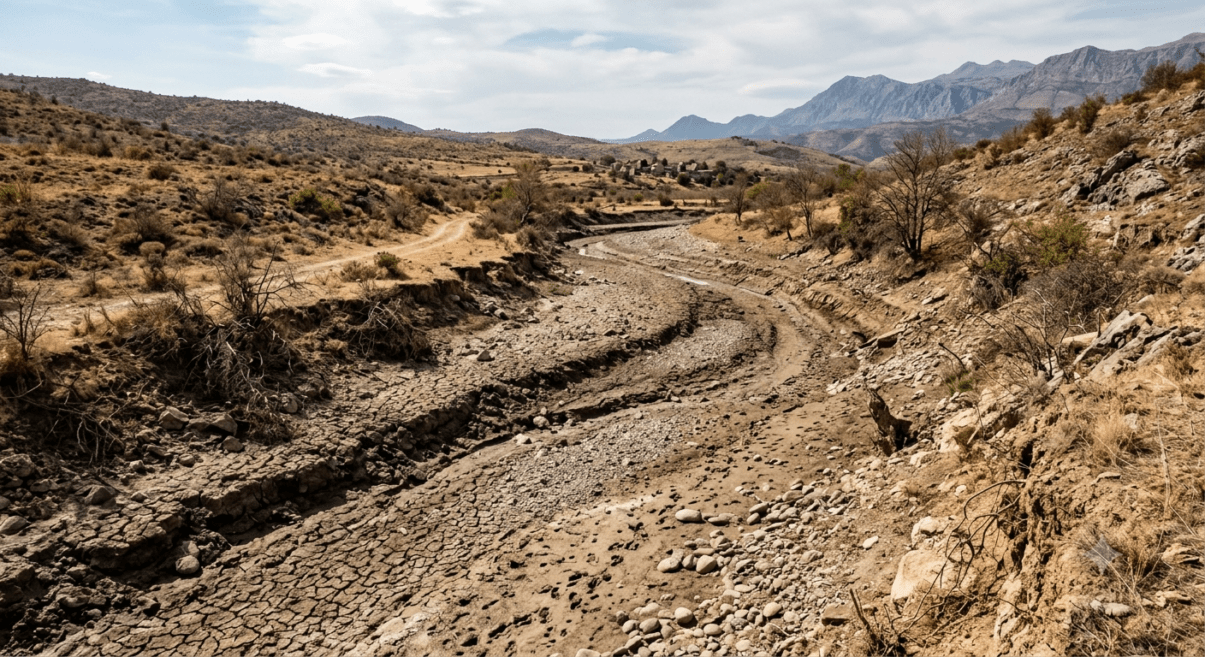
- Hydrological Drought: Manifests as a significant depletion of surface and groundwater resources, including dropping water levels in rivers, lakes, reservoirs, and aquifers.
- Socioeconomic and Ecological Drought: Arises when water deficits directly affect public supply, industry, energy generation, and the survival of natural ecosystems.
In recent decades, a drastic increase in the frequency, duration, and intensity of droughts has been observed worldwide. The primary drivers of this trend combine natural climate system variability with anthropogenic impacts that alter the planet’s global thermal and hydrological regimes.
2. Climate Change and Transformation of the Hydrological Cycle
The rise in average global temperatures directly transforms the global hydrological cycle. For every 1°C increase in air temperature, the atmosphere’s capacity to hold water vapor increases by approximately 7% (according to the Clausius-Clapeyron relation). This physical law leads to more extreme weather patterns: shorter, more intense rainfall events on one hand, and longer, hotter dry spells on the other.
Elevated air temperatures accelerate evapotranspiration—the combined process of water evaporation from soil and open water surfaces, alongside plant transpiration. When evaporation exceeds incoming precipitation, deep soil moisture deficits form, depleting the underground aquifers that sustain river baseflows during dry summer months.
| Climate Parameter | Physical Mechanism of Change | Direct Consequence on River Systems |
|---|---|---|
| Rising Air Temperature | Increased evaporation and evapotranspiration | Faster aquifer depletion and reduced baseflow in rivers |
| Melting Snowpack and Glaciers | Earlier spring runoff and reduced summer reserves | Critically low water levels in late summer/autumn for alpine and glacial rivers |
| Altered Precipitation Patterns | Concentration of rain into short, extreme downpours | Reduced groundwater recharge due to rapid surface runoff |
| Jet Stream Shifts | Formation of prolonged high-pressure blocking systems | Multi-month absence of cyclonic rainfall across entire continents |
3. Primary Sectors of Global Freshwater Consumption
Freshwater accounts for merely 2.5% of the total water resources on Earth, with the vast majority trapped in ice caps and deep underground aquifers. Accessible surface water in rivers and lakes constitutes less than 1% of total global freshwater. Our ecosystems continuously face escalating demand generated by over eight billion people.
3.1. Overview of Primary Water Exploitation Sectors
Water exploitation is divided into five primary sectors:
- Agriculture and Irrigation: The largest single consumer of freshwater globally. Extensive irrigation systems in arid and semi-arid regions consume vast quantities of water, often accompanied by low efficiency and high evaporative losses.
- Industry and Manufacturing: Covers raw material processing, chemical manufacturing, textiles, steel, paper, and food processing. Water functions as a raw material, solvent, coolant, and cleaning medium.
- Municipal Use and Domestic Demand: Encompasses potable drinking water, sanitation, public facility maintenance, and municipal infrastructure in urban and rural areas.
- Energy Sector: Thermal, nuclear, and hydroelectric power plants require massive volumes of water for cooling turbines, condensers, and driving hydroelectric generators.
- Digital Infrastructure and Data Centers: The rapid expansion of information technology, Artificial Intelligence (AI), and cloud services creates a new category of industrial water demand dedicated to cooling high-density computing servers.
| Consumption Sector | Primary Purpose of Water | Characteristic Withdrawal Type | Recycling Potential |
|---|---|---|---|
| Agriculture | Crop irrigation, livestock farming | Consumptive (high evaporation losses) | Low (up to 20%) |
| Industry | Processing, washing, chemical reactions | Combined | Moderate to High (40–70%) |
| Domestic | Drinking, sanitation, cooking | Non-consumptive (returns as wastewater) | High (post-treatment) |
| Energy Generation | Cooling reactors and condensers | Predominantly once-through cooling | Depends on cooling design |
| Data Centers | Evaporative cooling of server racks | Consumptive (evaporative loss) | Growing with modern tech |
4. Quantitative Analysis of Global Water Usage Distribution
It is estimated that humanity withdraws over 4,000 cubic kilometers of freshwater annually. While distribution varies across regions, the agricultural sector dominates freshwater withdrawal and consumption globally.
| Sector | Estimated Global Share (%) | Primary Efficiency Challenges | Consumption Trend Towards 2050 |
|---|---|---|---|
| Agriculture | 70% | Canal leakage, traditional flood irrigation | 15–20% growth due to population increase |
| Industry & Manufacturing | 19% | Wastewater pollution, outdated processes | Stabilization in developed, growth in developing nations |
| Municipal / Domestic | 11% | Distribution network leaks (up to 40%), wasteful habits | Significant increase driven by urbanization |
| Of which: Energy & Data Centers | (Included in Industry — ~10-15%) | High reliability needs, thermal load on rivers | Exponential growth in IT infrastructure |
5. Ecological Consequences of Low Water Levels on Fish, Angling, and Aquatic Ecosystems
Decreased discharge and dropping water levels trigger a cascade of negative ecological changes in freshwater ecosystems. River health relies on a dynamic balance of water volume, nutrients, sediment, and oxygen. When water levels drop below critical thresholds, drastic physical, chemical, and biological transformations occur.
5.1. Elevated Water Temperatures and Dissolved Oxygen Deficits
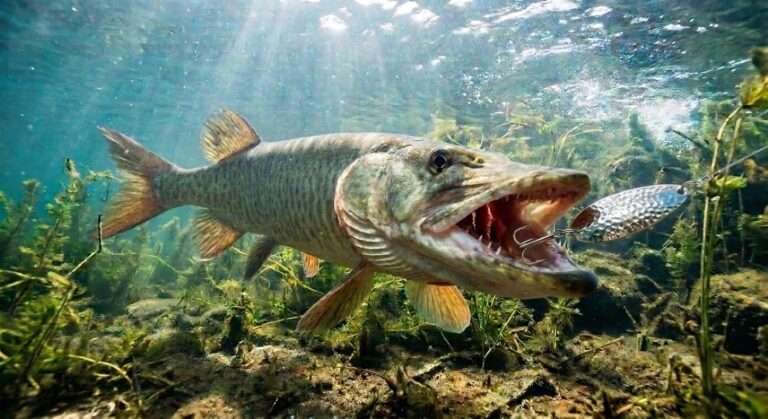
Smaller volumes of water warm up rapidly under solar radiation. The physical solubility of oxygen in water is inversely proportional to temperature: as water temperature rises, dissolved oxygen (DO) concentration drops sharply. Concurrently, fish and other aquatic organisms experience an increased metabolic rate due to heat, boosting their oxygen demand precisely when atmospheric absorption in water is lowest. These conditions lead to acute hypoxia, severe stress, and mass fish kills.
5.2. Disruption of Spawning, Migration, and Habitat Fragmentation
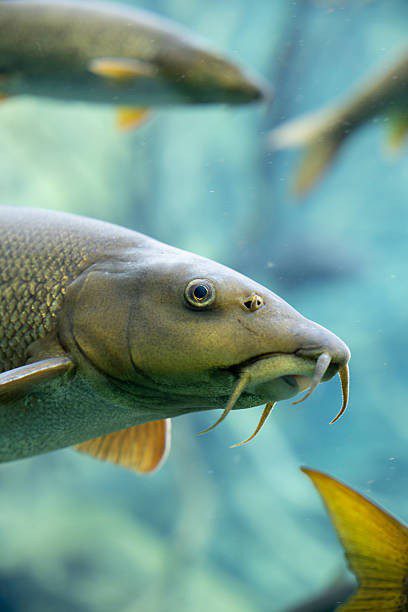
Many fish species (such as sturgeon, barbel, chub, rainbow, and brown trout) depend on seasonal hydrological signals to initiate spawning. Low water levels sever natural migratory pathways, prevent access to upstream spawning beds and floodplains, and expose eggs and fry to desiccation. Furthermore, receding waters trap fish in isolated pools along the riverbed, leaving them vulnerable to predators and starvation.
5.3. Concentration of Pollutants and Water Quality Degradation
Rivers feature natural self-purification capabilities dependent on adequate streamflow. When water volume shrinks, agricultural runoff, heavy metals, industrial chemicals, and untreated municipal wastewater remain in significantly higher concentrations. This directly poisons aquatic life and triggers harmful algal blooms (cyanobacteria) that further deteriorate water quality.
| Physicochemical Parameter | Shift During Drought | Direct Ecological Impact on Fish |
|---|---|---|
| Water Temperature | Sharp increase (+3°C to +8°C) | Thermal stress, suppressed immunity, halted spawning |
| Dissolved Oxygen (DO) | Drops below critical 4 mg/L | Asphyxiation, mortality in sensitive species (trout, zander) |
| Flow Velocity and Depth | Drastic reduction | Loss of rheophilic habitats, siltation of gravel beds |
| Nutrient Concentration (N, P) | Significant increase | Eutrophication, toxic algal blooms, fry mortality |
6. Historical Case Studies of Threatened Major Rivers
Over the past decade, major river systems across every continent experienced record-low water levels, provoking crises in navigation, energy generation, and biodiversity preservation.
6.1. Analysis of Key Imperiled Waterways
- The Danube: Europe’s second-longest river suffered consecutive severe droughts (notably in 2018, 2022, and 2024). Receding waters exposed sunken WWII warships near Prahovo, halted commercial barge traffic for weeks, and severely disrupted spawning habitats for endangered sturgeon species.
- The Rhine: A crucial economic artery for Western Europe, the Rhine dropped to critical levels near Kaub, Germany, rendering the river impassable for fully laden cargo vessels. This forced industrial manufacturers to curb production and shift freight to overburdened rail networks.
- The Yangtze: Asia’s longest river endured its worst recorded drought in 2022. Drying tributaries and reservoirs forced major hydroelectric plants to reduce output, resulting in industrial power rationing and threatening the habitat of the endangered Yangtze finless porpoise.
- The Colorado: The lifeline of the Southwestern United States remains locked in a multi-decade megadrought. Major reservoirs Lake Mead and Lake Powell dropped to historic lows, triggering mandatory federal water supply cuts for agriculture in Arizona and Nevada.
- The Po: Italy’s longest river faced its worst drought in 70 years, allowing saltwater intrusion from the Adriatic Sea to push tens of kilometers upstream into the river delta, ruining agricultural soils and drinking water aquifers.
| River | Location | Primary Cause of Stress | Major Consequence |
|---|---|---|---|
| Danube | Europe | Low precipitation and reduced Alpine snowpack | Navigation halts, threatened fish spawning grounds |
| Rhine | Western Europe | Precipitation deficits and hot summers | Industrial logistics crisis, reduced cargo capacity |
| Yangtze | China | Extreme heatwaves and missed monsoon rains | Energy crisis, loss of freshwater biodiversity |
| Colorado | North America | Over-allocation and persistent megadrought | Depleted reservoirs, inter-state water rights disputes |
| Po | Italy | Lack of winter snow accumulation in the Alps | Delta salinization, widespread crop failure |
7. The Digital Era and Water Resources: Data Centers and AI Technologies
The rapid expansion of the digital economy, cloud computing, and advanced Artificial Intelligence (AI) models has created a growing energy and water footprint. Data centers require continuous electricity and intensive cooling solutions to prevent hundreds of thousands of high-performance processing units (GPUs and CPUs) from overheating.
7.1. Objective Assessment of IT Sector Water Stress
It is crucial to approach this topic with scientific objectivity: data centers and AI systems are not the primary driver of global droughts, nor do they represent a dominant percentage of worldwide water withdrawals. Agriculture and traditional power plants consume hundreds of times more water. However, data centers present a localized challenge, as facility construction often concentrates near major urban hubs or regions experiencing existing hydrological stress.
| Sector / Activity | Estimated Annual Global Consumption | Relative Share of Total Water Use |
|---|---|---|
| Global Agriculture | ~2,800 km³ | 70% |
| Global Industry | ~800 km³ | 19% |
| Municipal / Domestic | ~450 km³ | 11% |
| Data Centers Globally (Total) | ~1.5 – 2.5 km³ | < 0.1% |
8. Advanced Technologies for Water Optimization and Reduction
In response to escalating water stress, technological innovations are emerging to drastically lower freshwater dependency across industrial manufacturing, energy production, and IT infrastructure.
8.1. Technological Innovations Reducing Water Footprints
- Closed-Loop Cooling Systems: Unlike traditional open evaporative towers that lose significant water volumes through evaporation, closed-loop systems continuously recirculate coolant, reducing water consumption by over 90%.
- Liquid Immersion Cooling: An advanced methodology where servers and processing components are submerged directly in non-conductive dielectric fluid. The fluid transfers heat away efficiently without requiring water evaporation.
- Reclaimed and Treated Wastewater Usage: Industrial plants and data infrastructure increasingly connect to municipal wastewater treatment facilities, utilizing recycled “gray water” instead of drinking-quality freshwater from river basins.
- Energy-Efficient Processors & Optimized AI Architecture: Designing microchips with lower energy demands per compute cycle directly reduces thermal output and subsequent cooling needs.
- Integration with Renewable Energy (RE): Transitioning away from thermal power generation (which requires massive cooling water volumes) to solar and wind energy (which consume negligible operational water) significantly eases pressure on rivers.
| Cooling Technology | Water Consumption per Unit | Energy Efficiency (PUE) | Local Source Impact |
|---|---|---|---|
| Open Evaporative Towers | High (significant evaporation) | Moderate (1.3 – 1.5) | High — pulls large volumes of freshwater |
| Closed-Loop Recirculation | Extremely Low (makeup water only) | Good (1.2 – 1.3) | Low — minimal replenishment required |
| Liquid Immersion Cooling | Zero (waterless operation) | Excellent (1.05 – 1.1) | None — zero reliance on surface water |
| Dry Air Cooling | Zero | Variable (ambient-dependent) | None — zero surface water impact |
9. Water Resource Management Strategies: Governments, Industry, and Citizens
Protecting river ecosystems demands a coordinated approach across all tiers of society.
9.1. The Role of Governments and Public Policy
Nations must adopt modern legislative frameworks for Integrated River Basin Management (IRBM). Key actions include enforcing stricter water extraction permits, modernizing agricultural infrastructure (transitioning from open canal flooding to drip irrigation), and reforesting watersheds to reduce erosion and improve soil moisture retention.
9.1.1. Legal Protections and Environmental Flows
Regulatory frameworks must mandate strict “environmental flow” baselines, preventing water diversions from pushing river discharge below ecological survival limits.
9.2. Corporate Responsibility and Industry Standards
Businesses must adopt Corporate Water Stewardship practices, evaluate the full water footprint of their supply chains, and invest on-site in wastewater treatment and closed-loop recycling equipment.
9.3. Citizen Contributions and Community Action
Individual citizens can reduce municipal pressure through household water conservation, minimizing food waste (particularly water-intensive livestock products), and participating in community watershed restoration projects.
| Level of Action | Primary Action Item | Expected Environmental Benefit |
|---|---|---|
| Governments & Regulators | Municipal network leak repair programs | Saves up to 30% of treated river water loss |
| Agricultural Sector | Transition to precision drip irrigation | Reduces water use by 40–50% while maintaining crop yields |
| Industrial Operators | Mandatory wastewater recycling loops | Prevents chemical discharge and reduces fresh withdrawals |
| Communities / Citizens | Low-flow fixture adoption & rainwater harvesting | Eases demand on local aquifers and reservoir supplies |
10. The Role of Anglers in Protecting Rivers and Lakes
Recreational anglers represent the frontline stewards of freshwater environments. Spending millions of hours along riverbanks, anglers possess a unique opportunity and duty to safeguard aquatic habitats during environmental crises.
10.1. Crucial Angler Actions During Hydrological Crises
Key practices for anglers during severe drought and low-water conditions include:
10.1.1. Suspending Fishing Activity to Prevent Fish Stress
When water temperatures exceed 20°C (for salmonids like trout) or 26°C (for coarse fish and predators), dissolved oxygen drops drastically. Angling in these conditions inflicts extreme physiological stress that is frequently fatal, even when practicing “Catch and Release.” Responsible sportsmanship dictates voluntary fishing pauses.
10.1.1.1. Physiological Impact of Heat and Lactic Acid Accumulation
Fighting on a line in oxygen-depleted water forces fish into anaerobic exertion, leading to severe lactic acid accumulation in muscle tissue and delayed post-release mortality.
10.1.2. Reporting Environmental Infractions and Monitoring
Anglers are often the first to spot illegal irrigation pumps, unauthorized industrial effluents, or sudden flow drops caused by improper hydroelectric dam operation. Prompt reporting to conservation authorities prevents widespread ecological damage.
10.1.3. Riparian Habitat Protection and Restoration
Preserving natural riparian vegetation (trees and shrubs along banks) provides vital shade that reduces water warming, stabilizes soil, and reduces bank erosion during flash floods.
| Environmental Condition | Recommended Angler Action | Primary Ecological Goal |
|---|---|---|
| Water temperature above critical thresholds | Cease targeting sensitive species voluntarily | Prevents post-release mortality from hypoxia |
| Extremely low river discharge | Avoid wading through shallow gravel beds | Protects delicate fish spawn, fry, and aquatic insects |
| Fish trapped in isolated pools | Organize rescue operations with wildlife authorities | Saves fish stocks from suffocation and land predators |
| Unlawful pumping or pollution spotted | Report immediately to environmental agencies | Halts unauthorized water depletion and chemical damage |
11. Future Scenarios for World Rivers by 2050 and 2100
The future of global rivers depends on rapid climate mitigation and sustainable water management. Scientific projections outline stark differences between unmitigated emissions and proactive sustainability pathways.
| Parameter | Pessimistic Scenario (SSP5-8.5) | Sustainable Scenario (SSP1-2.6) |
|---|---|---|
| Average Temp Rise by 2100 | +3.5°C to +5.0°C increase | Capped at +1.5°C to +2.0°C increase |
| Summer Drought Duration | Extends by 200–300% relative to present | Stabilizes with minor frequency increases |
| Alpine European Rivers | Permanent loss of 80% summer flow due to glacier loss | Seasonal flow retained with partial ice mass preservation |
| Freshwater Biodiversity | Loss of over 50% of endemic river species | Protection and gradual recovery of threatened stocks |
| Major River Navigability | Disrupted for more than 4 months annually | Sustained through modern vessel design adaptation |
12. Frequently Asked Questions (FAQ)
1. What is hydrological drought, and how does it differ from meteorological drought? Meteorological drought refers strictly to a precipitation deficit over a specific timeframe. Hydrological drought occurs later, when that lack of rainfall reduces groundwater levels, river flows, lakes, and reservoir storage.
2. Are climate changes the sole cause of shrinking rivers? No. While climate change acts as a primary accelerator, excessive agricultural extraction, deforestation in watersheds, and unmanaged river damming also severely reduce streamflow.
3. Why is dissolved oxygen so critical for fish survival? Fish extract oxygen dissolved in water through their gills. As water temperatures rise, oxygen solubility decreases. Without adequate oxygen, fish suffer acute stress, suffocation, and mass mortality events.
4. Which river species are most vulnerable to drought and thermal stress? Salmonid species (such as brown trout, rainbow trout, and grayling) are highly sensitive because they require cold, oxygen-rich water. Rheophilic species like barbel and chub are also vulnerable when flow velocity drops.
5. How do low water levels affect fish spawning? Low water cuts off access to shallow spawning beds and backwaters. If eggs are already laid in shallow areas, receding water levels leave them exposed to dry air, destroying entire generations.
6. How much water does agriculture consume globally? Agriculture accounts for approximately 70% of total global freshwater withdrawals, primarily due to expansive and inefficient surface irrigation methods.
7. Are AI systems and data centers the main culprits behind global water scarcity? No. Data centers consume less than 0.1% of global freshwater withdrawals. While localized water management around facilities is necessary, agriculture and energy generation consume hundreds of times more water.
8. What is “Immersion Cooling” in data center technology? It is a cooling method where server components are submerged directly in a specialized, non-conductive liquid. This approach completely eliminates evaporative water loss during cooling operations.
9. How do hydroelectric dams impact rivers during drought periods? Dams hold back water in reservoirs to maintain power generation, which can severely reduce downstream river flow below the ecological minimum required for aquatic life to survive.
10. How does salinization harm river deltas during drought? When freshwater discharge from a river decreases, dense ocean saltwater pushes miles upstream into the delta, contaminating freshwater habitats, soil, and municipal drinking sources.
11. What is drip irrigation technology? It is a high-efficiency agricultural system that delivers water directly to plant roots in precise, minimal quantities, reducing evaporative losses by up to 50% compared to traditional spray sprinklers.
12. Why is bankside vegetation (riparian trees) important against drought? Tree canopies shade the water surface, reducing thermal heating and evaporative loss. Tree roots also anchor riverbanks, retaining soil moisture and mitigating erosion during sudden rainstorms.
13. How can individual households reduce freshwater demand? By repairing household pipe leaks, installing low-flow faucet aerators, collecting rainwater for landscaping, and running dishwashers and washing machines only with full loads.
14. Can wastewater recycling help save river ecosystems? Yes. Treating and reusing municipal and industrial wastewater drastically lowers the need to withdraw fresh water from river systems and aquifers.
15. How can invasive species spread be limited during dry periods? By maintaining healthy native fish populations and adequate environmental flows. Invasive species often tolerate warm, stagnant, and polluted water far better than sensitive native fish.
16. Why should anglers avoid fishing when water temperatures are high? Fighting a fish on tackle in warm, low-oxygen water causes extreme metabolic exhaustion and lactic acid buildup, leading to high post-release mortality even if the fish swims away initially.
17. What should you do if fish are trapped in isolated pools as a river dries up? Immediately notify local fisheries management, conservation officers, or angling clubs to organize official rescue operations and relocate the fish back into the main river channel.
18. How does glacier melt impact long-term river flows in Europe? Glaciers act as natural reservoirs, slowly melting during hot summers to feed rivers like the Rhine and Rhône. As glaciers disappear, these rivers will lose critical baseflow during dry summer months.
19. What is an “environmental flow” requirement? It is a legally mandated minimum water volume that must remain in a river channel at all times (even downstream of dams) to support aquatic life and ecosystem integrity.
20. Is there hope for restoring global river health? Yes. By combining carbon emission reductions, smart water technologies in farming and industry, and active river restoration projects, freshwater ecosystems can recover effectively.
Conclusion: Rivers are the lifeblood of our planet. Preserving freshwater ecosystems requires immediate alignment among technological innovation, agricultural efficiency, policy enforcement, and community stewardship to match human demand with nature’s hydrological limits.
Misconceptions About “Prophetic” Deep-Sea Fish Surface Emerging: Physical Explanation
Sensationalist claims often surface in popular belief and media suggesting that the emergence of deep-sea species and benthic (bottom-dwelling) fish (such as the oarfish/Regalecus glesne) to the water surface serves as an “omen” or “prophecy” of natural disasters. The scientific reality is entirely different and directly linked to thermal shifts within the water column.
During extreme heatwaves and hydrological disruptions, thermal stratification occurs, creating hypoxic or anoxic “dead zones” along the seabed. As deep-water layers experience oxygen depletion or abnormal temperature shifts driven by changing currents, bottom-dwelling species are physiologically forced to abandon their natural habitats. They migrate upward toward the surface or coastal shallows in a desperate search for cooler, oxygenated water. The surfacing of benthic fish is not a mystical warning, but a direct biological survival mechanism triggered by thermal stress and suffocation near the ocean floor.